Sorry to anyone that’s been coming for the space pictures, only to be swamped by the slew of leadership- and management-related posts. There should be only 2 more “previous” LinkedIn posts to move over here, and then I plan to have a weekly update focused on leadership & management, with the space posts happening “whenever there’s a clear night sky in Seattle” (so … yeah, who knows?).
But to keep the space people happy, and because I’ve wanted to do it for a while, here’s a post of my current top 10 space pictures, in no specific order. You can find all of these images in the Galaxies, Nebulae, or Solar System Objects pages (none of the star clusters made my top 10, but they’re nice! Go check ’em out!).
Let me know your favorite, or if you have any that you’d like me to revisit.
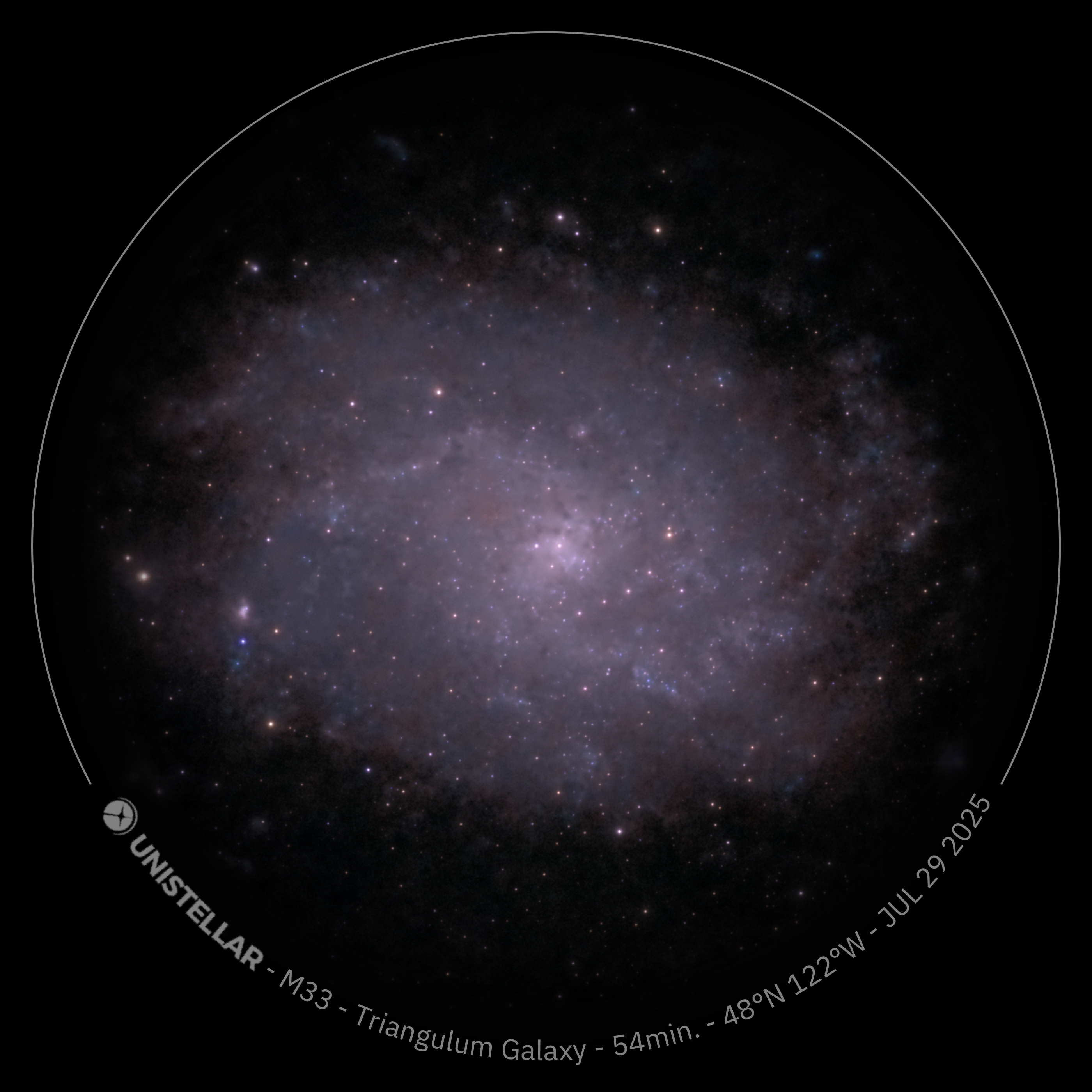
M33 – Triangulum Galaxy
2025-07-29
54m
The Triangulum is a great galaxy for the eVscope, because it’s large, distinct, and relatively bright. You can really see the different colors in the stars – some are red giants, others are blue hypergiants, and even others just appear white. If you have the time and a good clear night, spend an hour focused on this galaxy, and you’ll be happy with what you can capture.
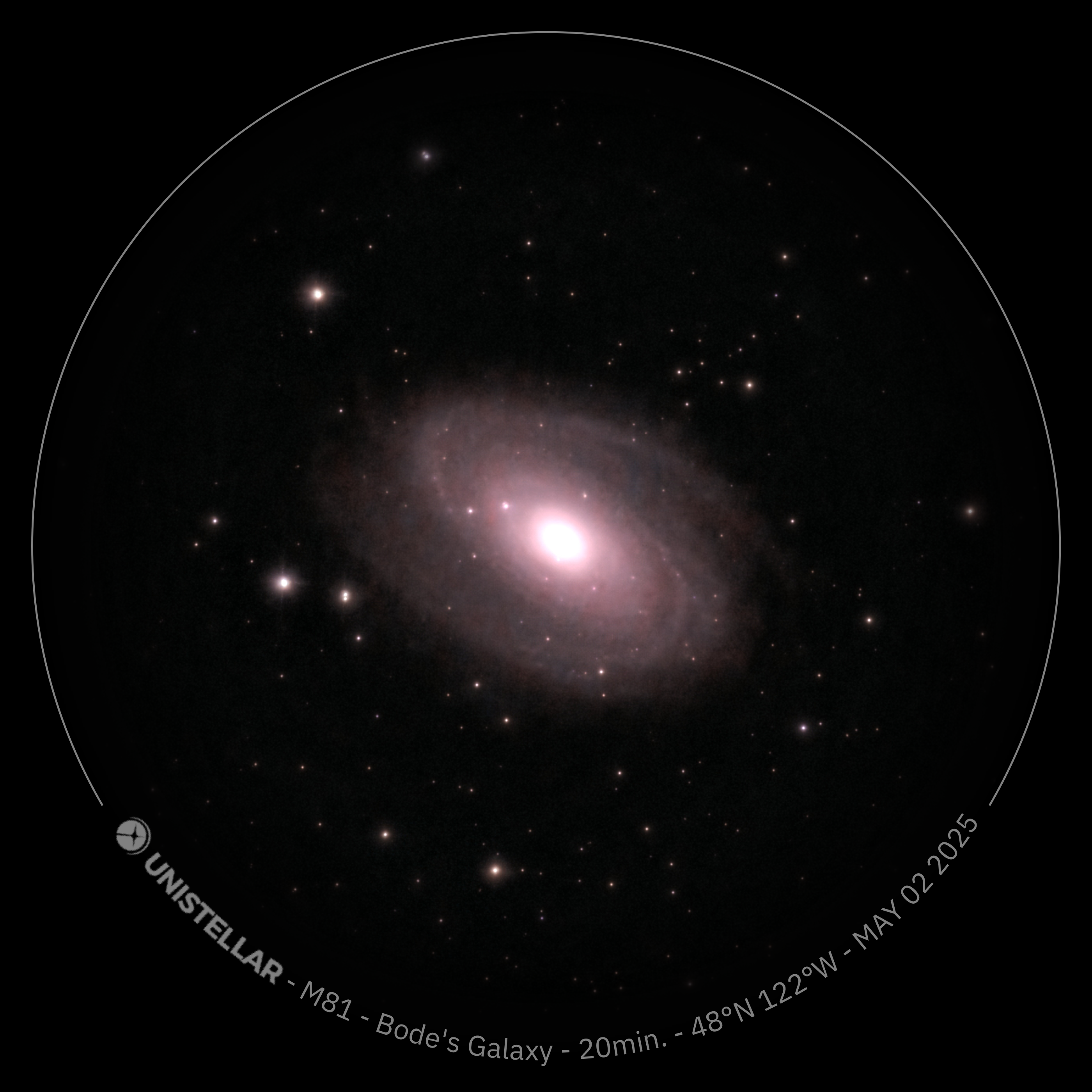
M81 – Bode’s Galaxy
20m
2025-05-02
Bode’s is a great target, and really benefits from the color-stretching software update. The bright center really pops out, and the wide spirals are somewhat unique (at least for what you can get with an eVscope).
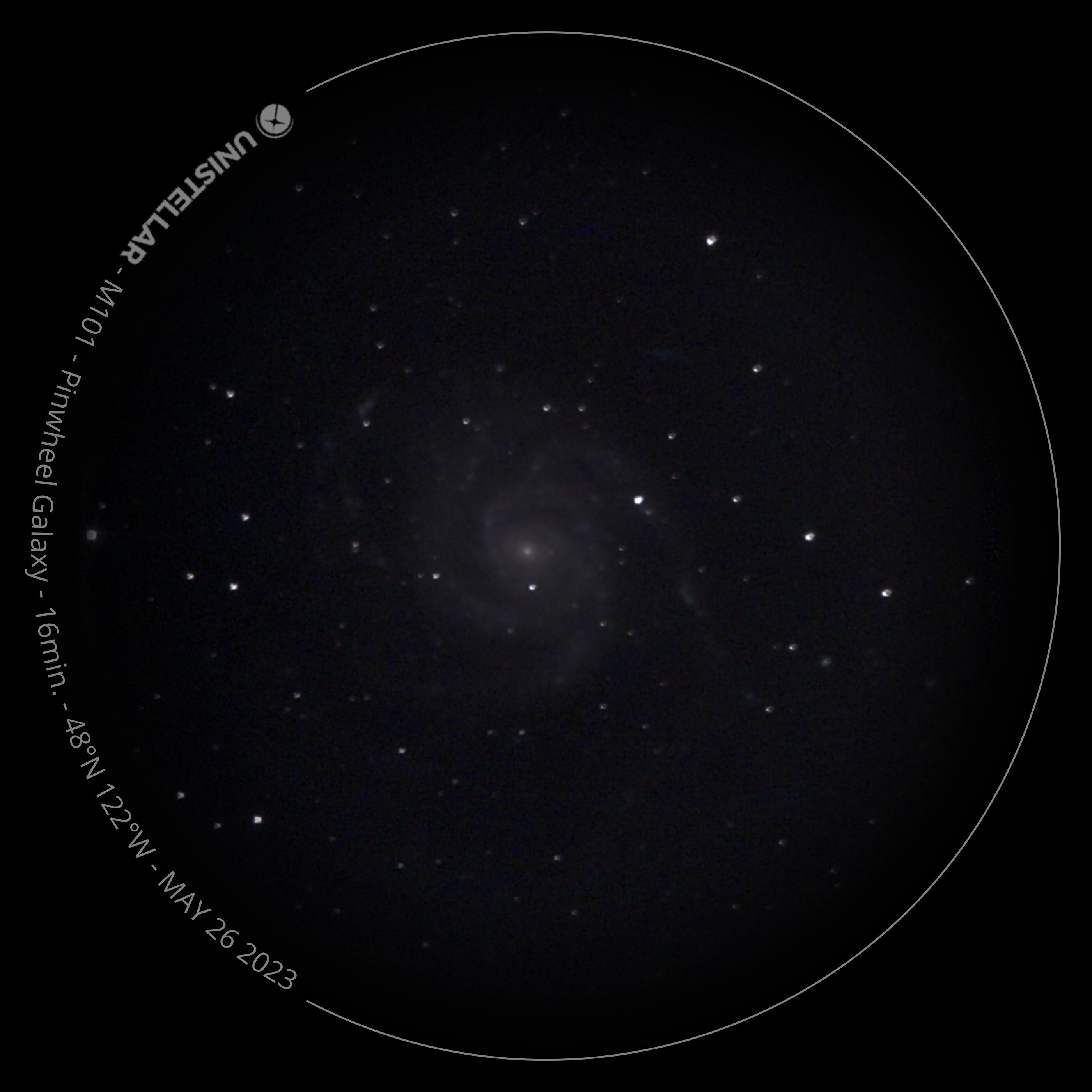
M101 – Pinwheel Galaxy
16m
2023-05-26
This is the one photo that literally made me jump for joy when I saw it. I’ve wanted to witness a supernova during my lifetime, and I got to catch one here! The bright star in the right-most arm of the Pinwheel Galaxy is a supernova that exploded a day or two before this photo. Go to the Galaxies page to see before & after photos, and you can clearly see the bright new star appearing, and then fading away over the ensuing months.
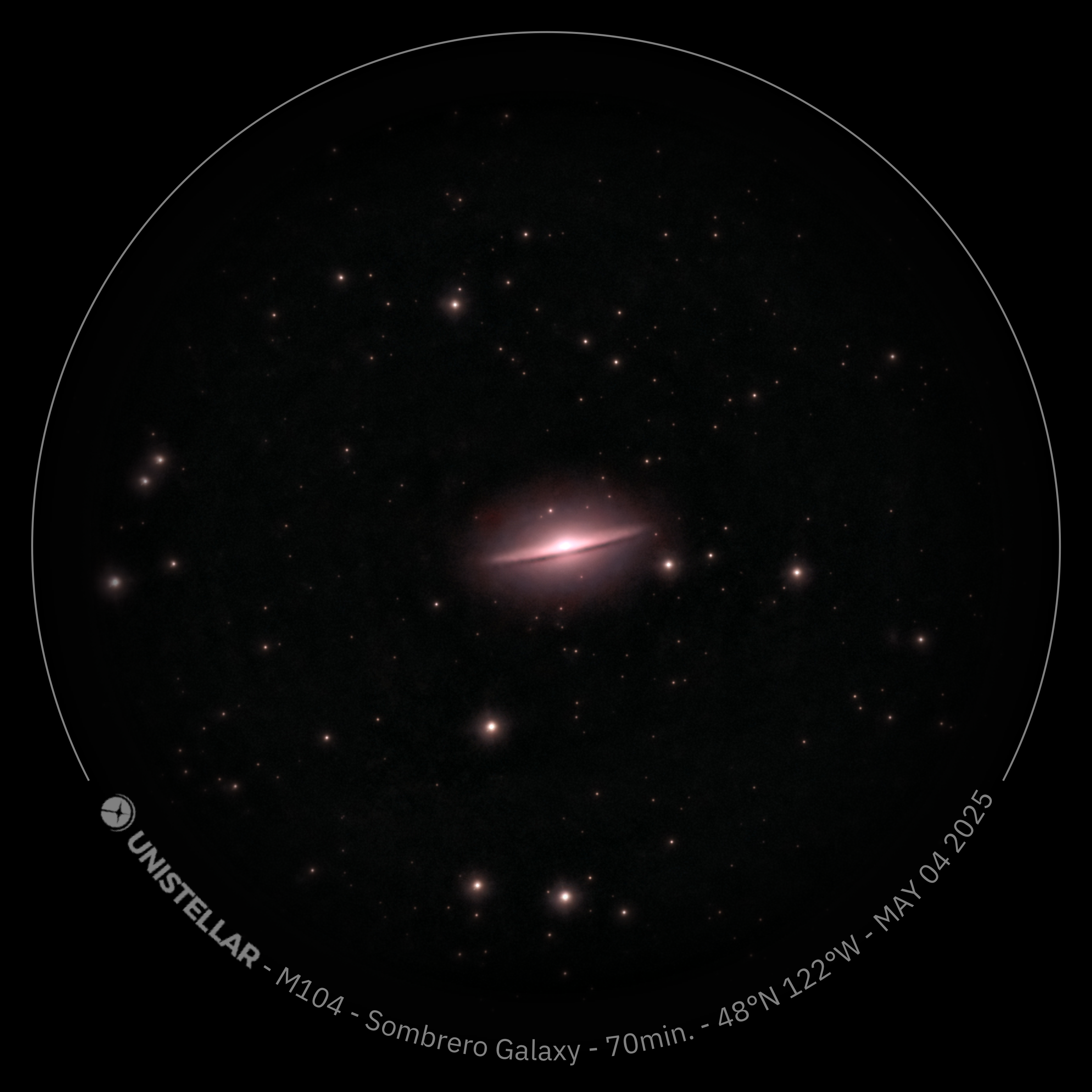
M104 – Sombrero Galaxy
70m
2025-05-04
The Sombrero is nice because it’s bright enough that you can get a reasonably good picture with a much shorter dwell time (5-10 minutes). But as with so many of these deep sky objects, if you can leave it running – like I did here, for 70 minutes – you can get even more striking images. I really like the sharp contrast between the bright core and the thick, light-obscuring dust on the edge of the galaxy.
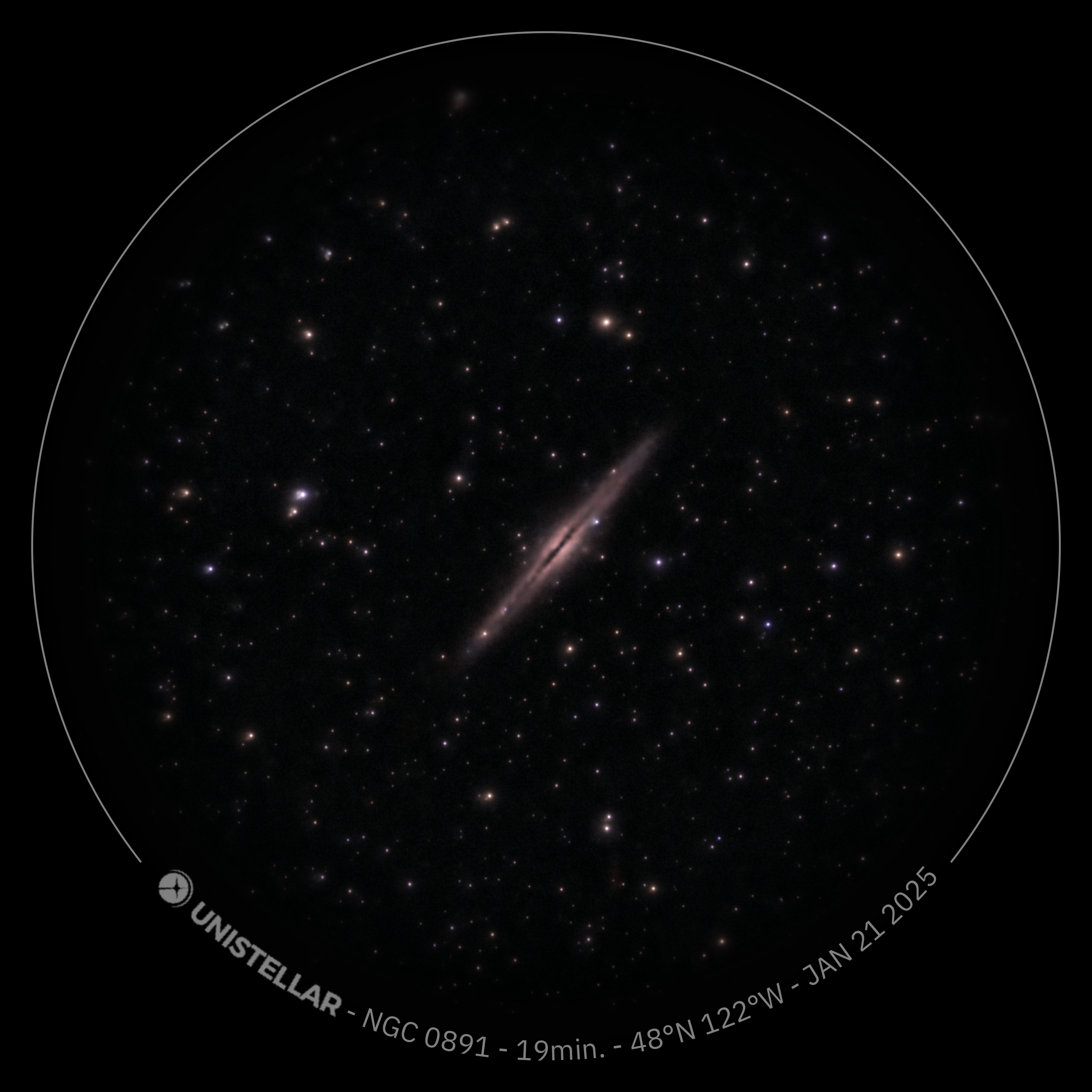
NGC 0891
19m
2025-01-21
This is definitely in the top 3 for me. It’s so distinct, and so perfectly edge-on. Just like we have problems seeing things outside the Milky Way if they’re in line with (and therefore blocked by) our galactic plane, if there are any intelligent species in this galaxy, they almost certainly will never know that we exist, since we’re positioned perfectly along the plane of THEIR galaxy.
B33 – Horsehead Nebula
55m
2025-01-25
Another in my top 3, and I’ve rotated it 90 degrees to make the horse’s head upright. If you want to catch this one with your own telescope, you need a very clear night, a very long dwell time, and use the enhancement software. I love this photo.

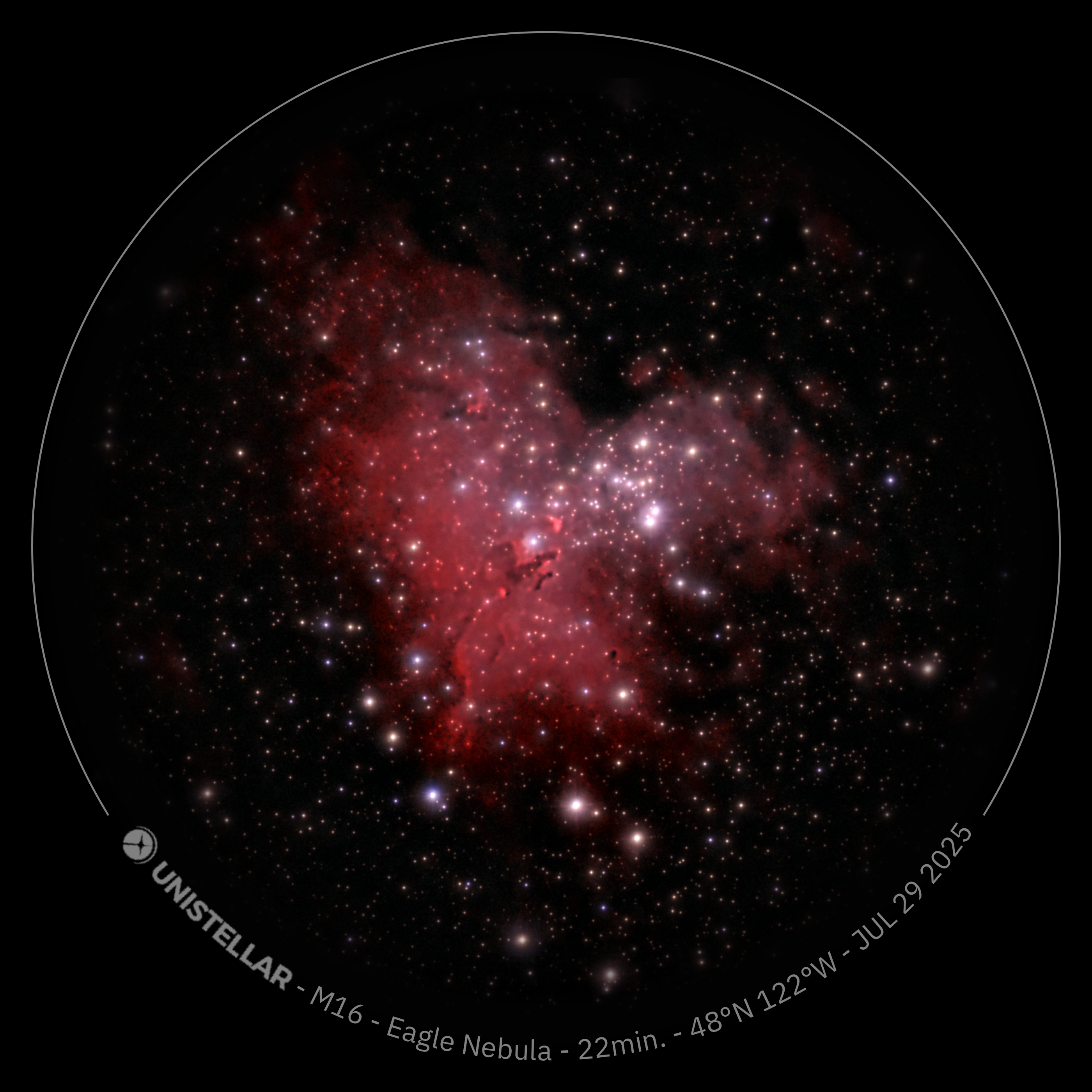
M16 – Eagle Nebula
2025-07-29
22m
Anyone that’s seen the “Pillars of Creation” photo from the Hubble Telescope (or the updated one from the James Webb) can recognize those dark pillar-shaped splotches are in the middle of this nebula. And I got ’em! On my telescope! From my back yard! These are pillars of light-obscuring dust and gasses, and they are light-years tall. I love how you can clearly make out the three-dimensional nature of these massive clouds of gas and dust – the sky isn’t just a flat black sheet with flickering pinpricks of white light! It has depth, and color, and immeasurable beauty.
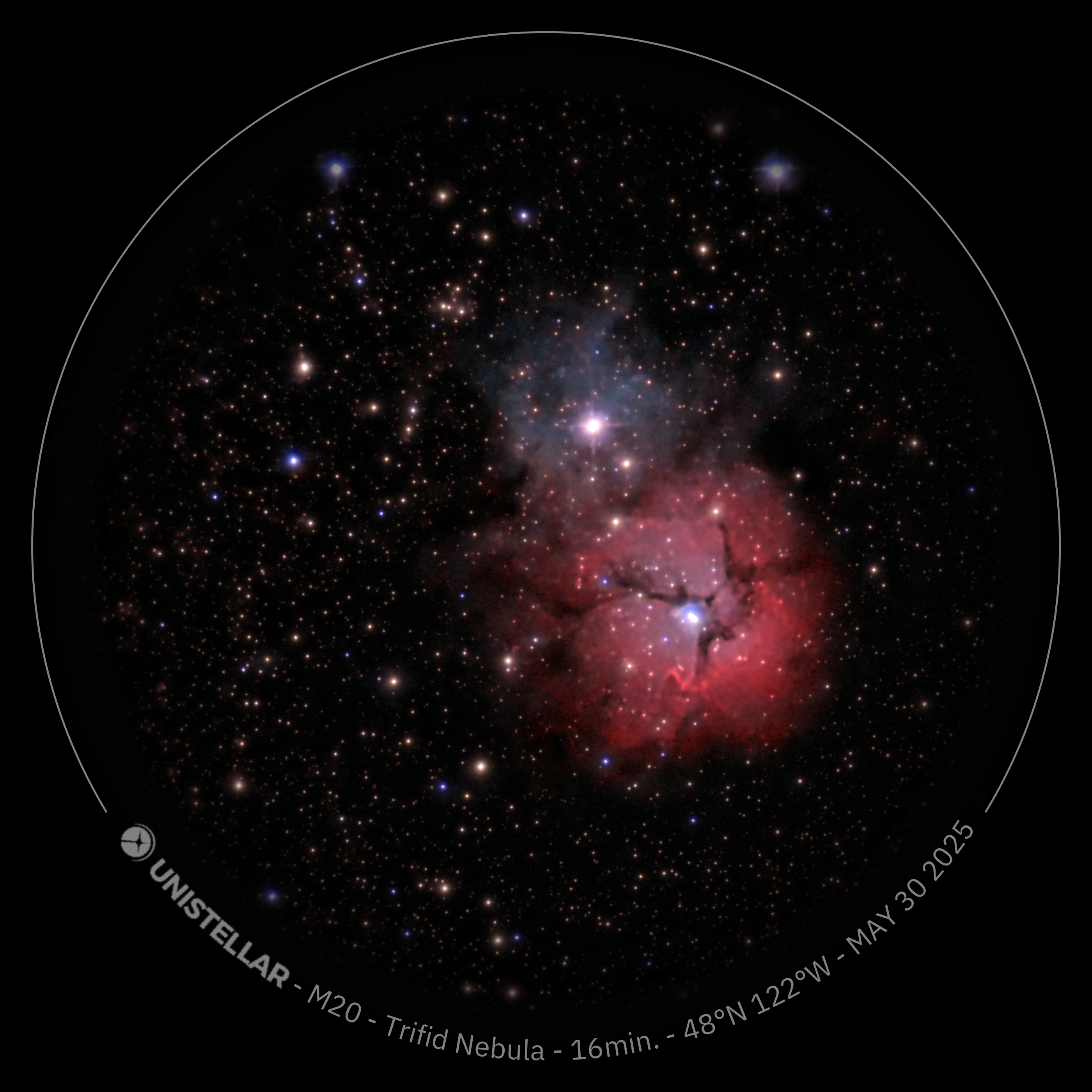
M20 – Trifid Nebula
16m
2025-05-30
The Trifid Nebula is actually three nebulae: a dense, red, emission nebula, a wispier blue reflection nebula, and a spiky, shadowy dark nebula in front. The VVT software update really makes this an excellent nebula for the eVscope to image. I really want to go back here on a clear night for a hour-plus dwell time, but I’ve not yet had the chance.
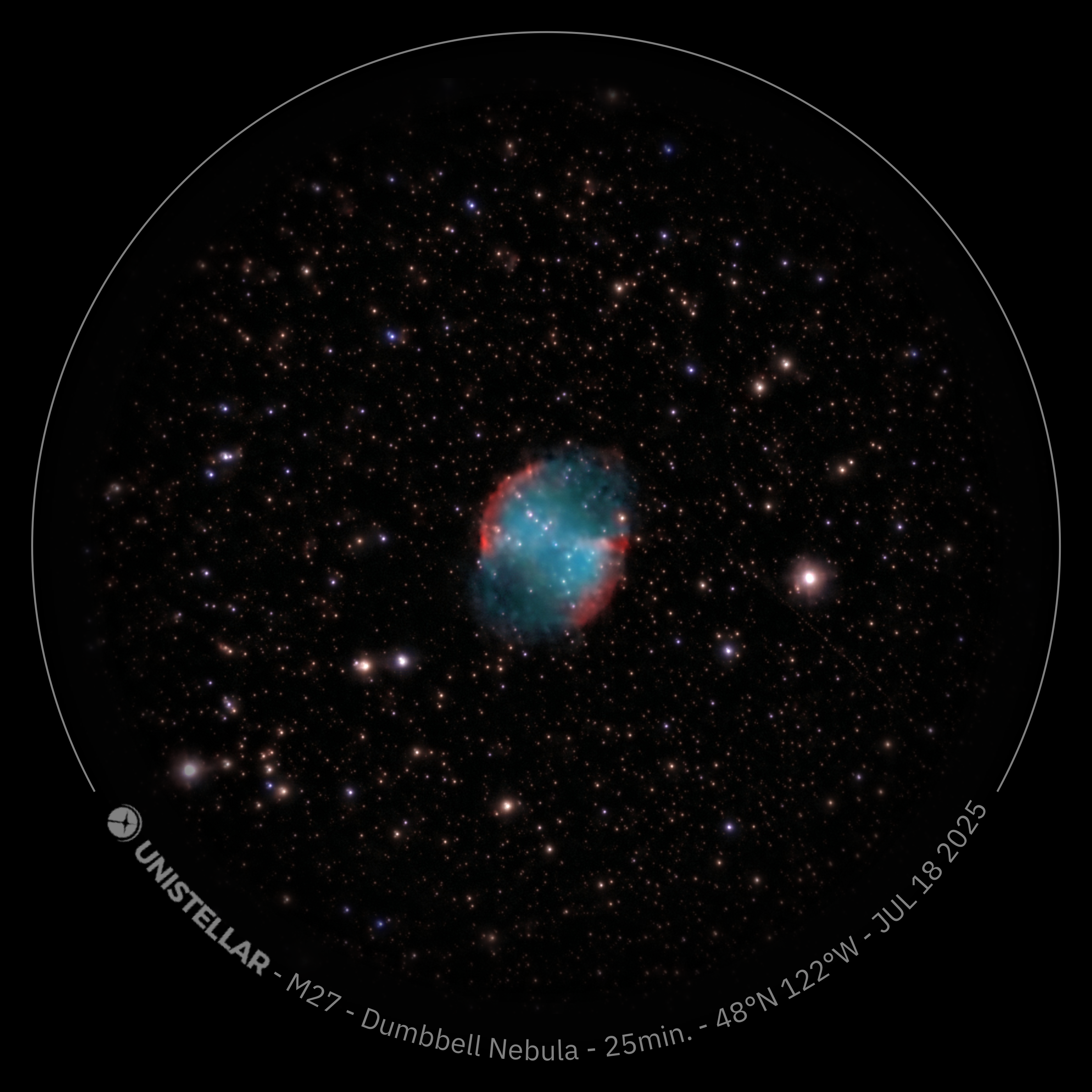
M27 – Dumbbell Nebula
25m
2025-07-18
The Dumbbell is a favorite for Unistellar enthusiasts, because of its distinct shape and colors. The red is mostly hydrogen gas, which was sprayed and ejected off of the roiling surface a massive star, as it went through its violent death throes. The blue is more abundant in oxygen, which was created in the star’s core, during last few seconds before it finally ran out of fuel and collapsed under its own incredible weight. It fused hydrogen, carbon, and neon into oxygen, silicon, and iron, and then exploded back out. The huge, expanding sphere of ionized oxygen gas (plus dust and other stuff) chased the hydrogen that was burped out during the previous years or centuries, creating … this!
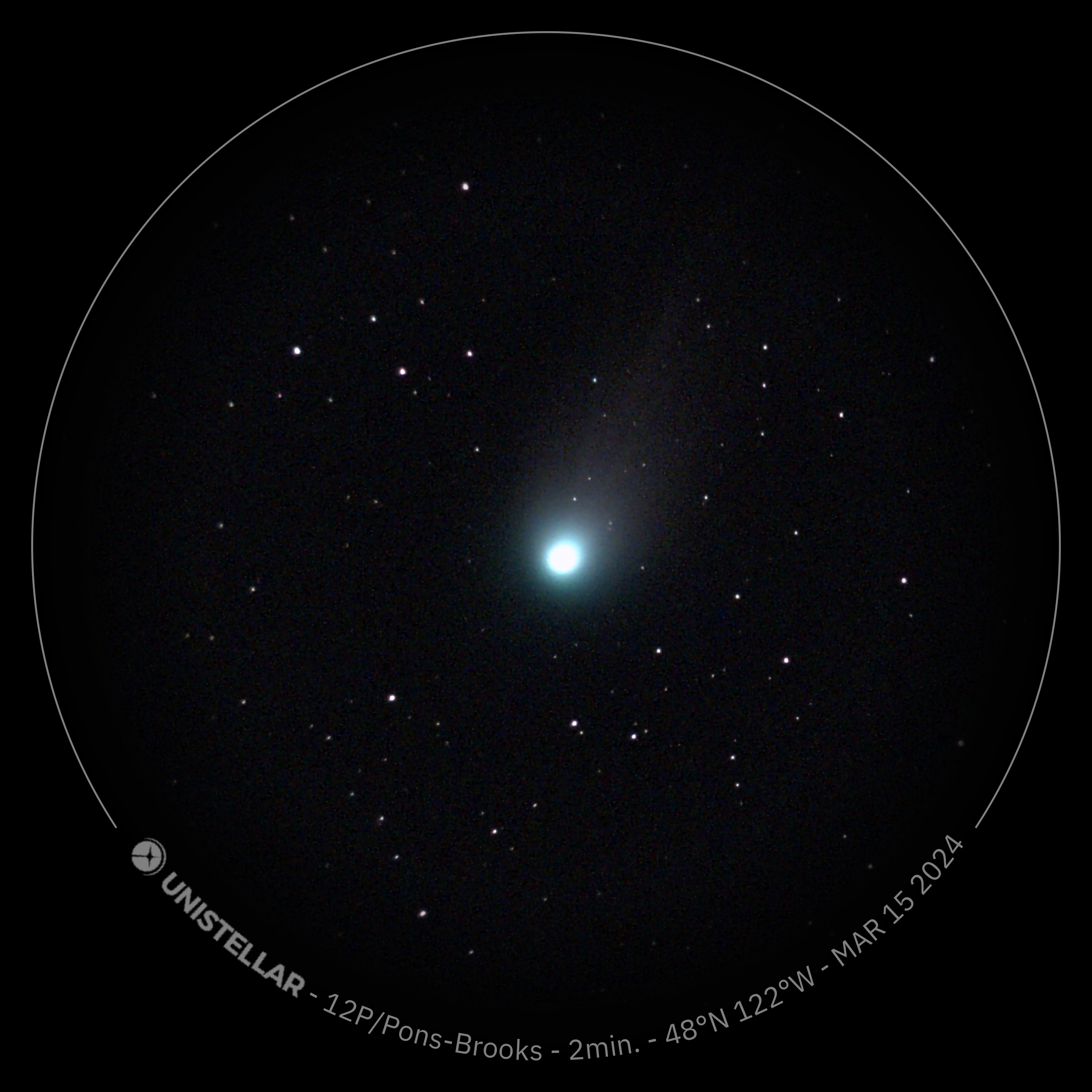
Comet 12P/Pons-Brooks
2m
2024-03-15
I have captured several comets, but I like this one the best, because of its rare blue-green color. This is before the color stretching software launched; I wonder what it would’ve been like with it turned on. The green is apparently “dicarbon,” which is what it sounds like: two carbons, in a single molecule. It’s rare on Earth because it’s quite reactive, but on this comet, warmed by the sun and in the depths of space, exploding chunks or rock and ice, and outgassing water and dust, it’s apparently unusually abundant.
Discover more from Space on the back porch
Subscribe to get the latest posts sent to your email.

