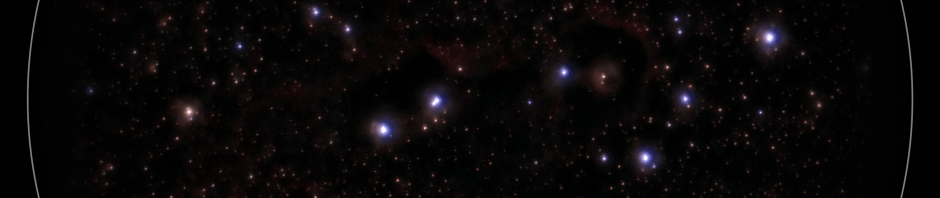
Finally! It’s been weeks of high clouds, rain, smoke from forest fires, and nearly everything else imaginable that’s prevented me from getting the telescope back out on the back porch. But a few nights ago, we had a big thunderstorm roll through (which is quite rare for Seattle, actually), and the next day, we had clear blue skies. I’ve had two good nights since then, and I took advantage.
I’d tried a couple times to hunt the elephant, unsuccessfully. This time, I’d done my research. I wanted the exact right ascension and declination of the key part of the elephant’s trunk nebula, and one google search later, found this: https://noirlab.edu/public/images/noao-ic1396hapeman/ … which led me to the WorldWide Telescope, which is AWESOME.
By using that tool, I could figure out the exact coordinates, and I plugged ’em into the telescope, and told it to start a long dwell. It came up with this:
IC1396 – Elephant’s Trunk Nebula
53m
2025-10-13
It’s the right spot, and it’s a long dwell time, and you can baaaaarely make out the hints of a nebula.

Compare that to online pictures of the nebula, and you’ll get a sense of my disappointment.
If I were to speculate – and it’s pure speculation – I’d guess that the Unistellar Vivid Vision Technology (VVT) software is programmed on the basis that “the background is black,” rather than – as in the case above – “everything in the background is slightly red.” The elephant’s trunk nebula is HUGE – about five or six times the angular size of the full moon – and so ALL of the sky in that area is slightly red. As a result, you get pictures like the one above – some red highlights, and you can tell that it’s kinda there, but not a great nebula picture.
The other speculation (and it’s possible) is that the nebula is REALLY dim, and I shouldn’t be surprised that I’m not getting a great photo of it from the greater Seattle metro area. Which do you think? I’m not sure.
I was happy that I could put that one to bed, though – I now know that I’m not likely to get a better shot of the nebula in the near future.
But it was two clear nights in a row, with no moon, so … more pictures!
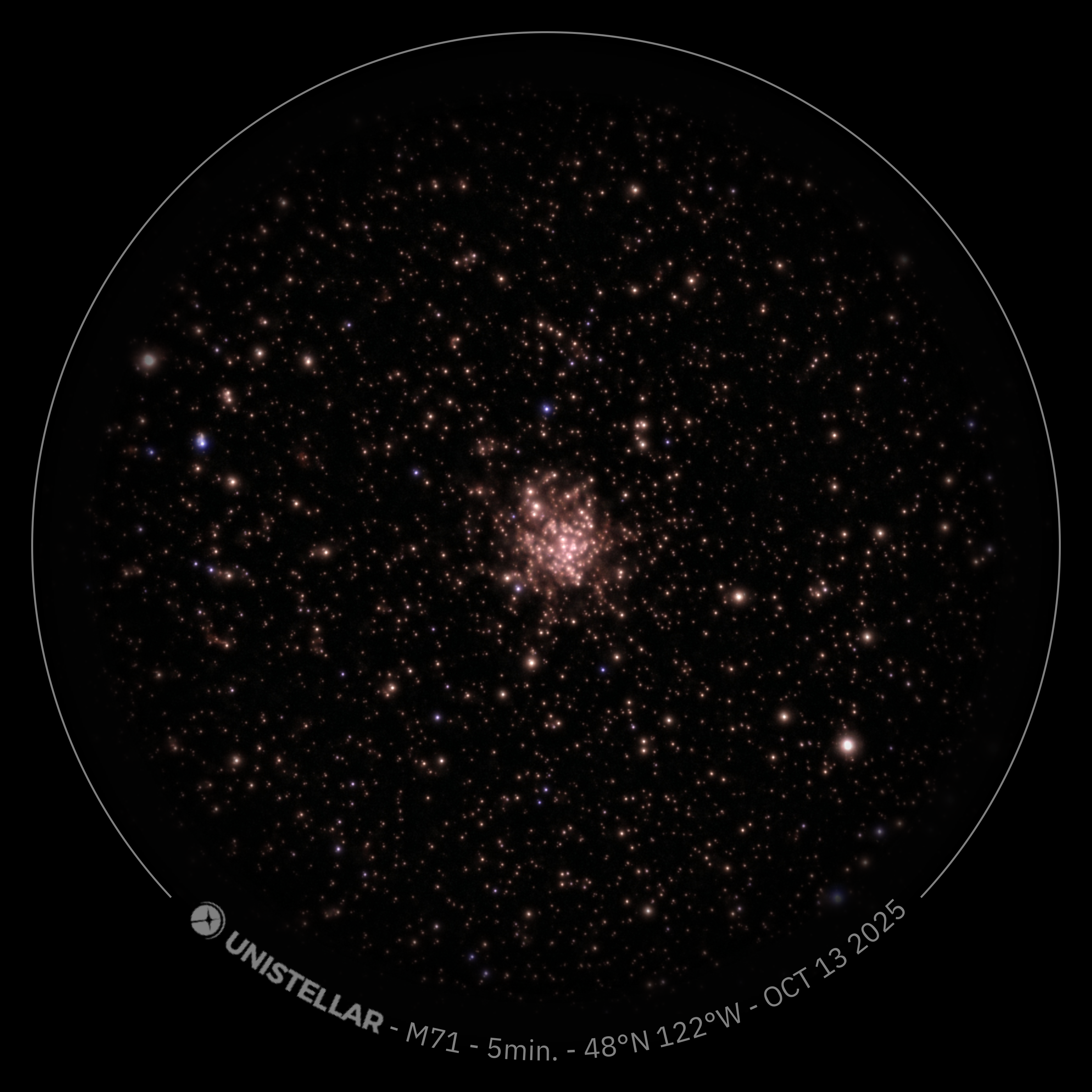
M71
5m
2025-10-13
The M71 globular cluster is a new one for me. It’s only about 27 light-years across, and is about 13,000 light-years away.
M15 – The Great Pegasus Cluster
6m
2025-10-13
M15 is one of the most densely packed clusters in the Milky Way, with over 100,000 stars inside a diameter of only 175 light-years. Its bright center is a dense sphere of closely-packed stars, possibly orbiting a central black hole.

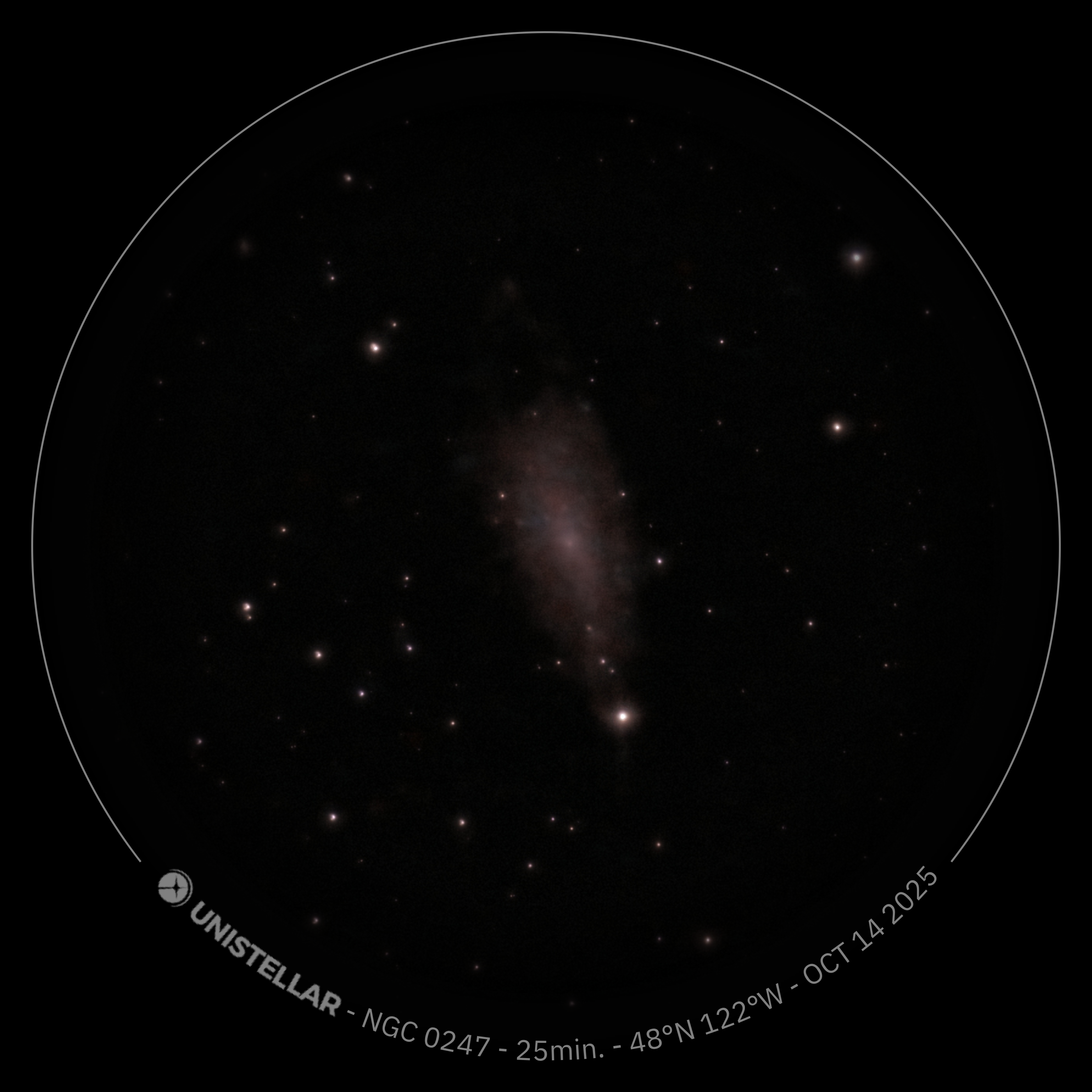
NGC 0247 – The Claw Galaxy
25m
2025-10-14
I think it’s called the claw because of the large void on one side of the spiral disk – and you can see it here. I think another attempt, with a longer dwell (this one got interrupted) might be worthwhile.
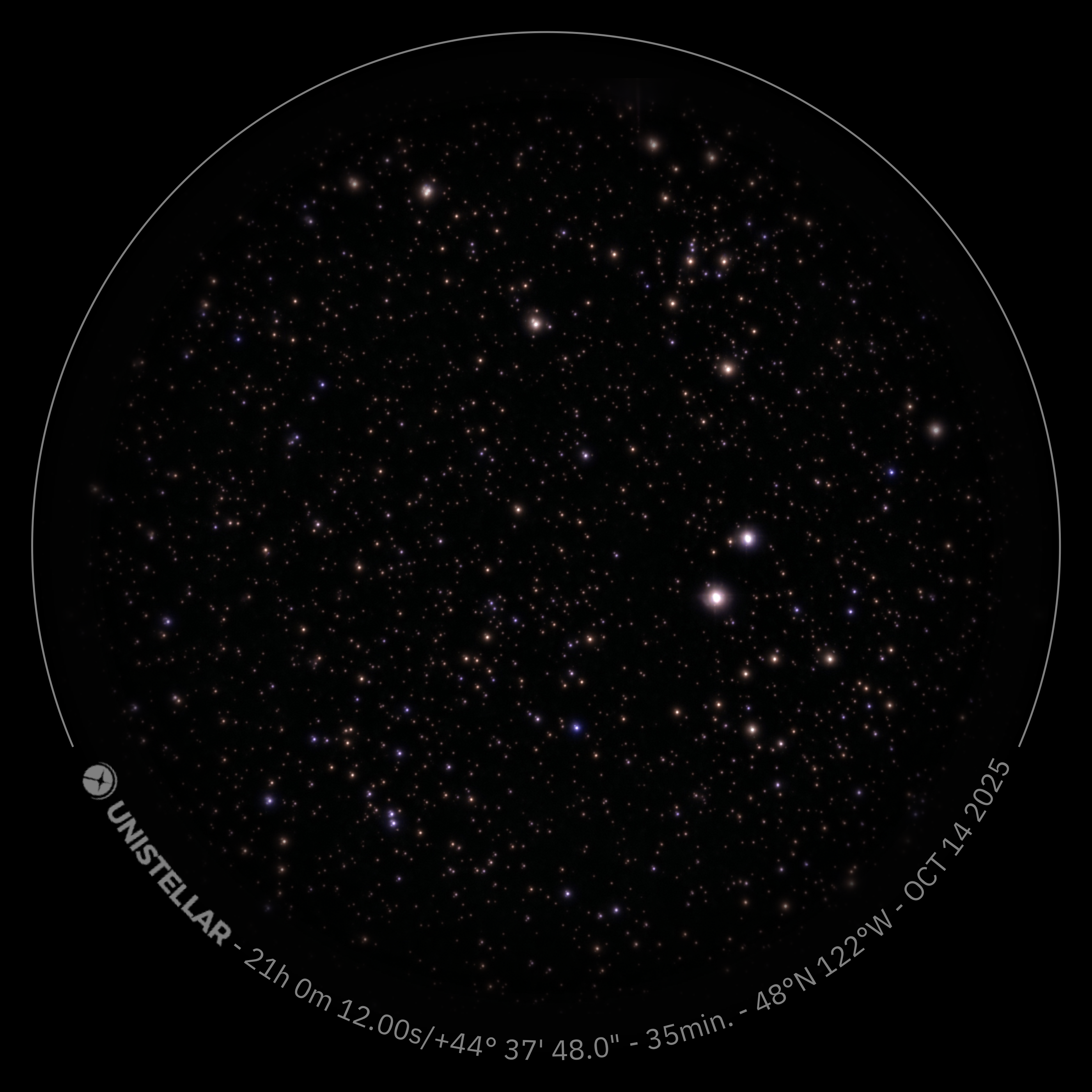
NGC 7000 – The North America Nebula
35m
2025-10-14
This might be the new elephant – the North America Nebula is about 3 to 4 moon-widths across, and I just picked a spot inside it and took a picture. Turns out, I picked one of the most boring spots. Note to self: next time try 20h58m25s / +43:24:26 or 21h00m21s / +43:53:23.
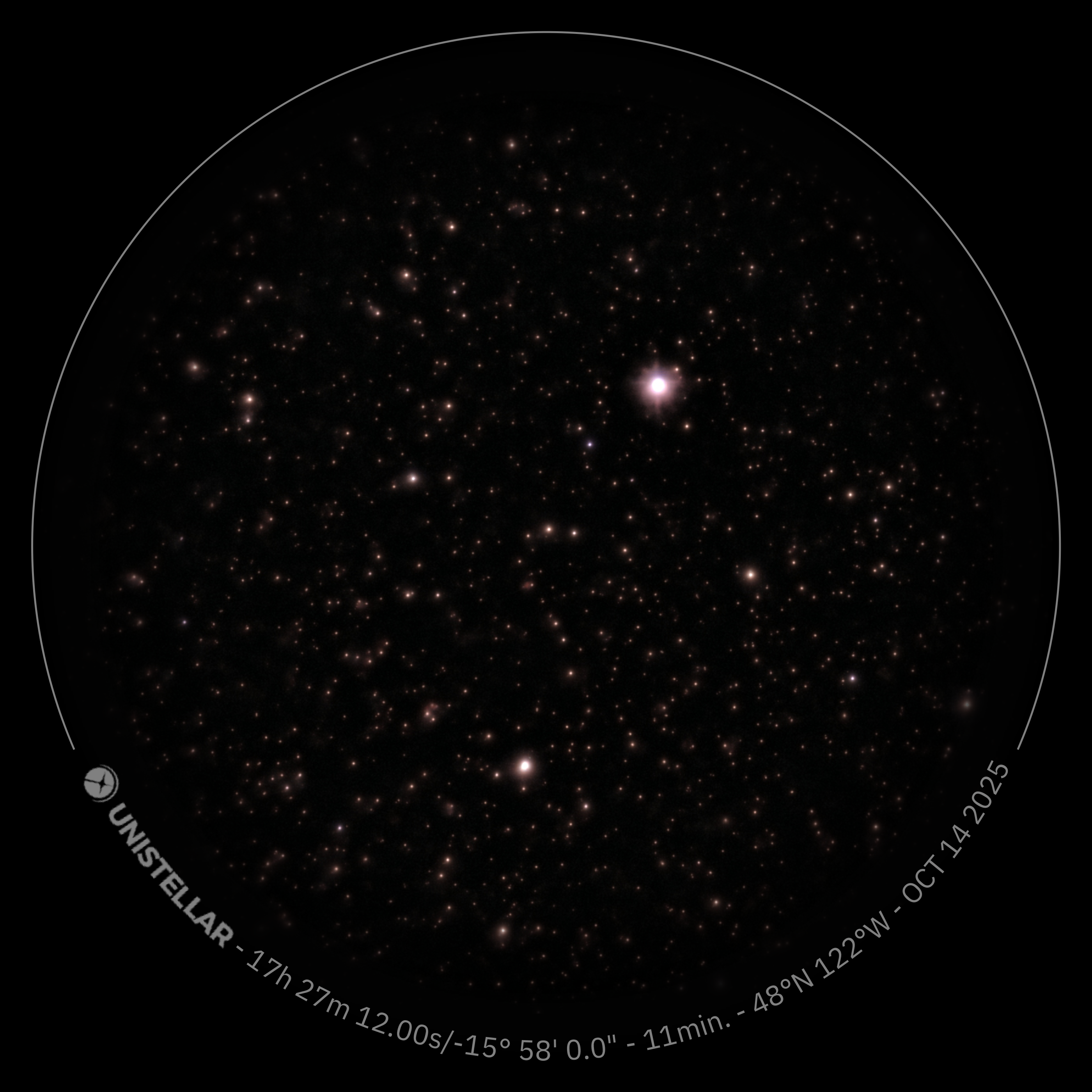
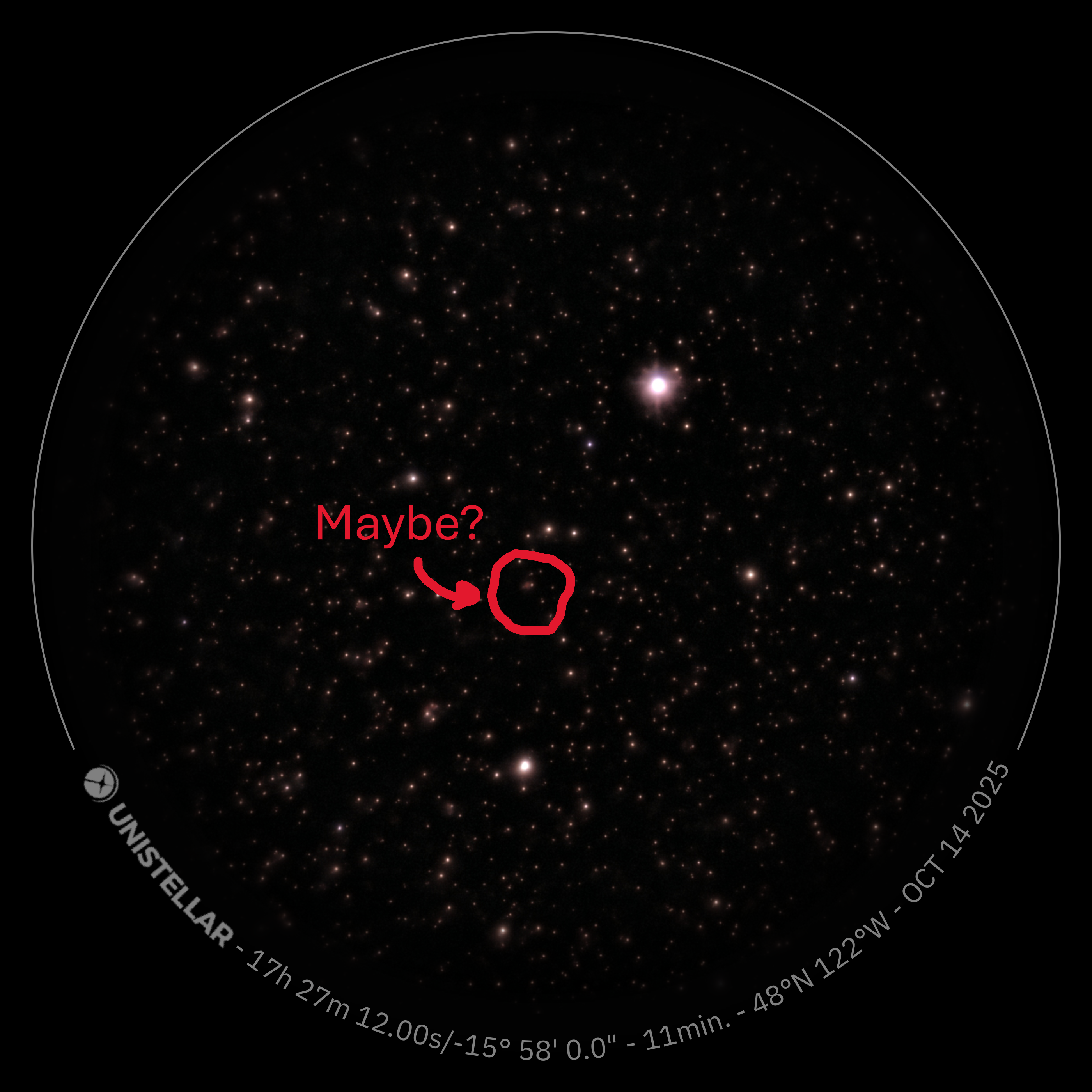
Comet C/2025 R2 (SWAN)
11m
2025-10-14
I’m not sure which one of these smudges is the comet. I created the before-after below with what I think is the comet circled, but … yeah, I might be wrong.
M110
5m
2025-10-13
Not a great photo – it cut off after only 5 minutes (I’m not sure why). M110 is a dwarf galaxy orbiting / interacting with the Andromeda Galaxy (like M32).

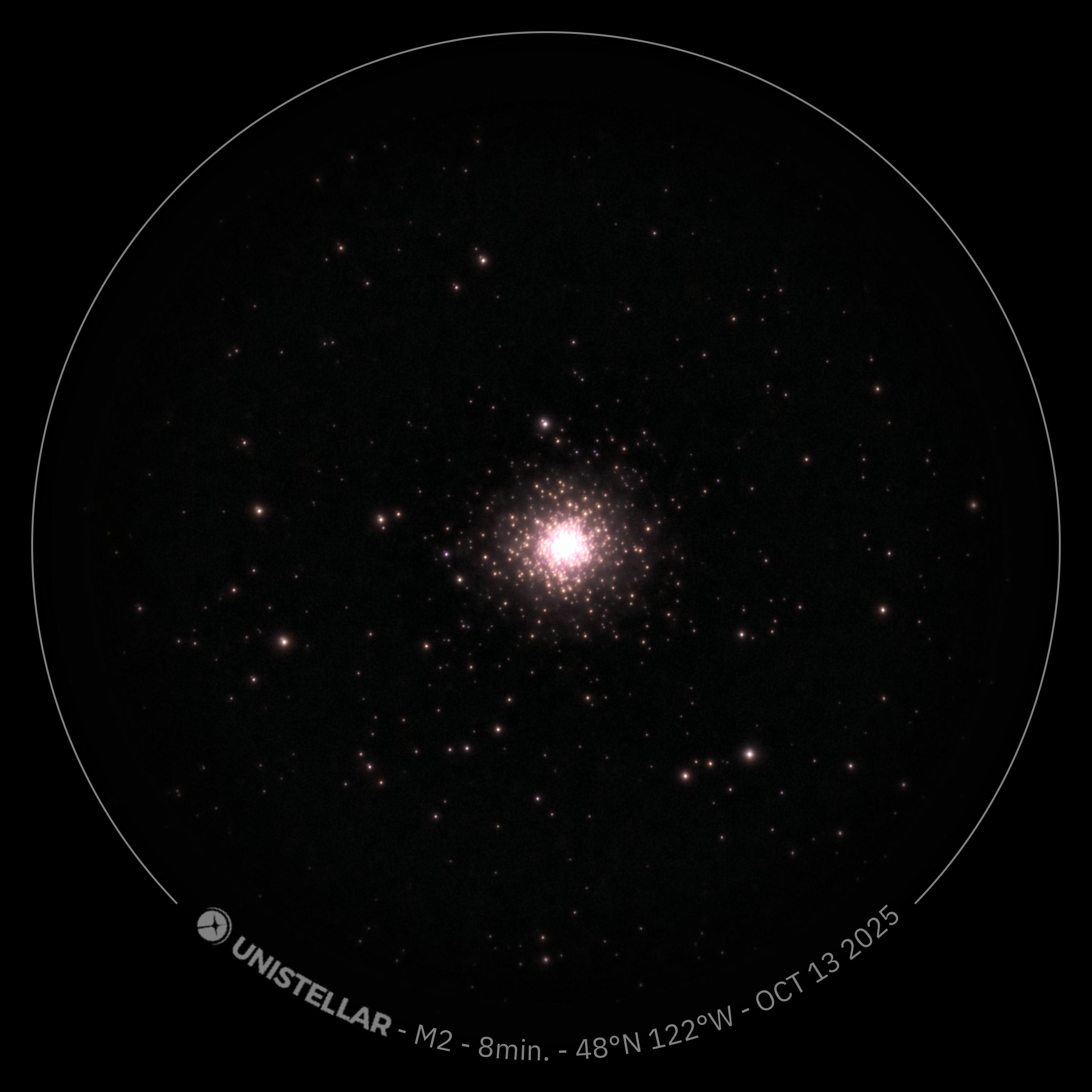
M2
8m
2025-10-13
M2 is a dense little globular cluster in Aquarius. It’s both one of the oldest (about 12.5 billion years old) and one of the largest (175 light-years in diameter) clusters in the Milky Way. It’s possibly part of an ancient galaxy that collided with the Milky Way 8-11 billion years ago.
As always, the above images will be added to their respective pages.
Discover more from Space on the back porch
Subscribe to get the latest posts sent to your email.


