I use a Unistellar eVscope 2, purchased in 2022. I’ve taken a lot of pictures, but since I’m in Seattle (USA) city limits, I have to deal with rain, clouds, light pollution, and low haze (from being in a wet environment close to sea level). Even so, I’ve managed to get some pretty good shots. These are pictures of planets, the moon, and the occasional comet.
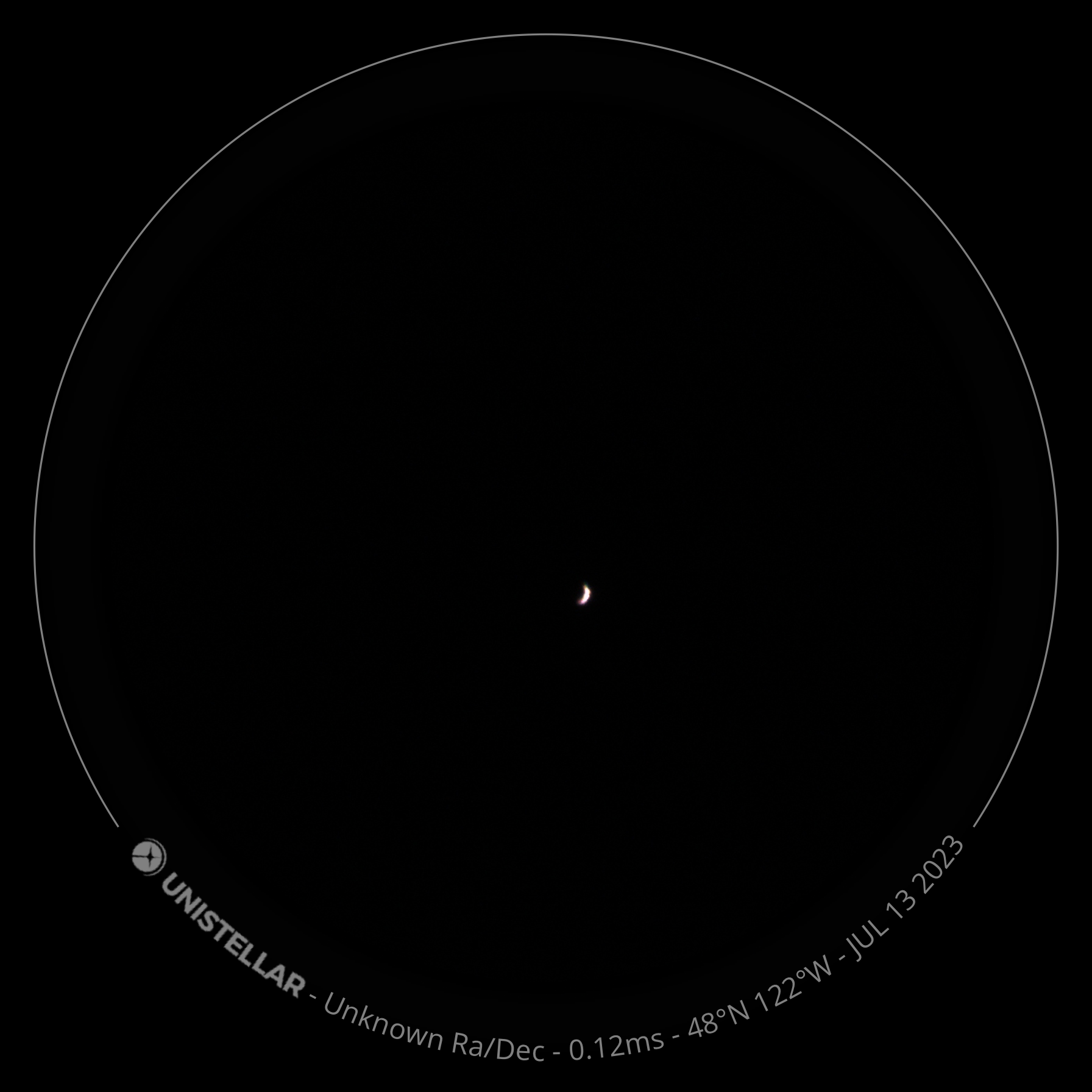
Venus
snapshot
2023-07-13
If you play with the brightness and gain on the eVscope, you can get a clear enough resolution of Venus to see that, despite being one of the brightest lights in the night sky, it’s never more than a thin crescent from our perspective.
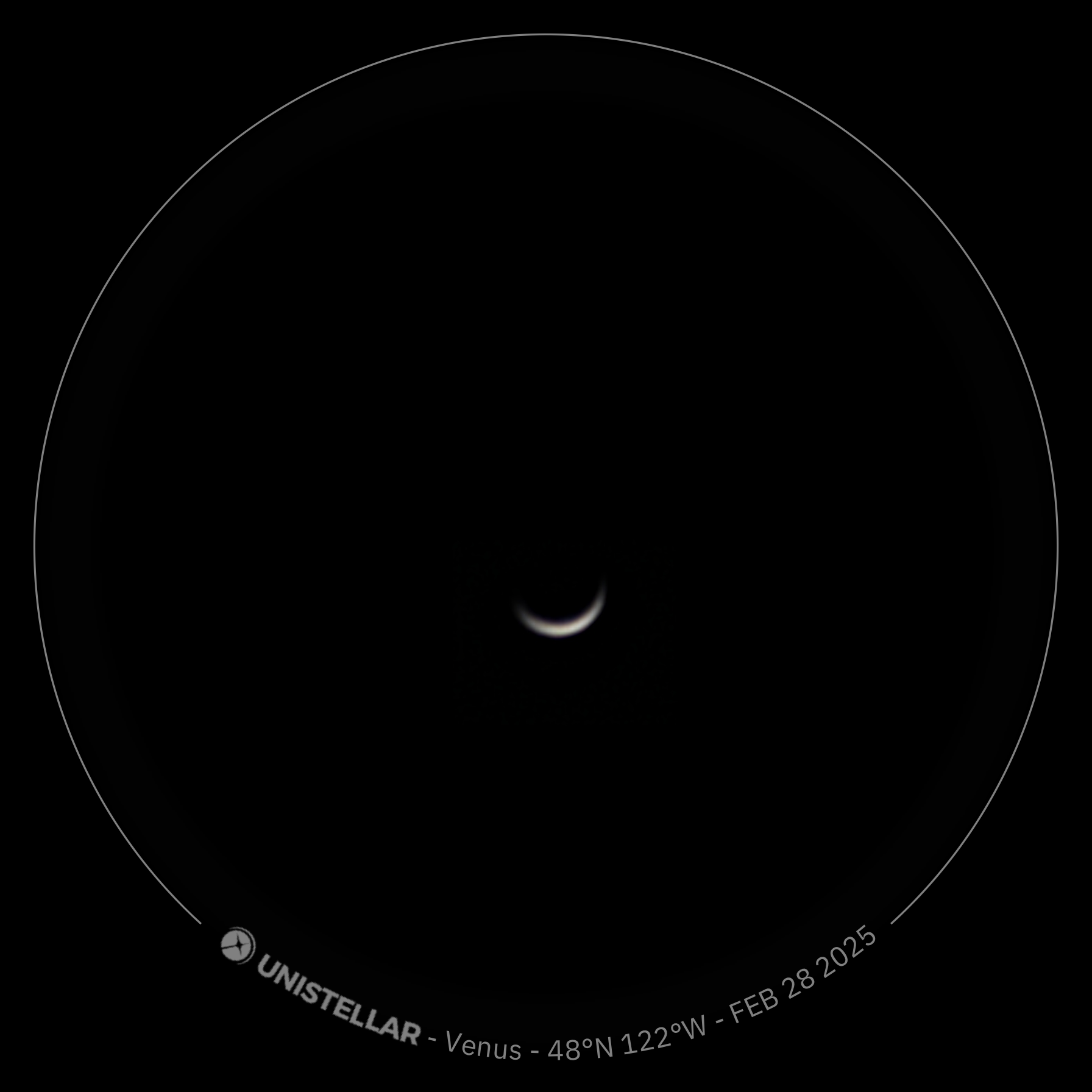
Venus
snapshot
2025-02-28
Improvements to the software meant you could get much better pictures of planets, like Venus here.
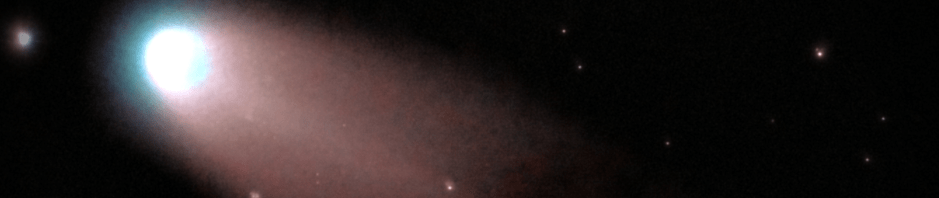
Comet C/2022 E3 (ZTF)
snapshot
2023-01-28
I was able to get a couple shots of C/2022 E3 (ZTF) as it zipped past in January 2023.
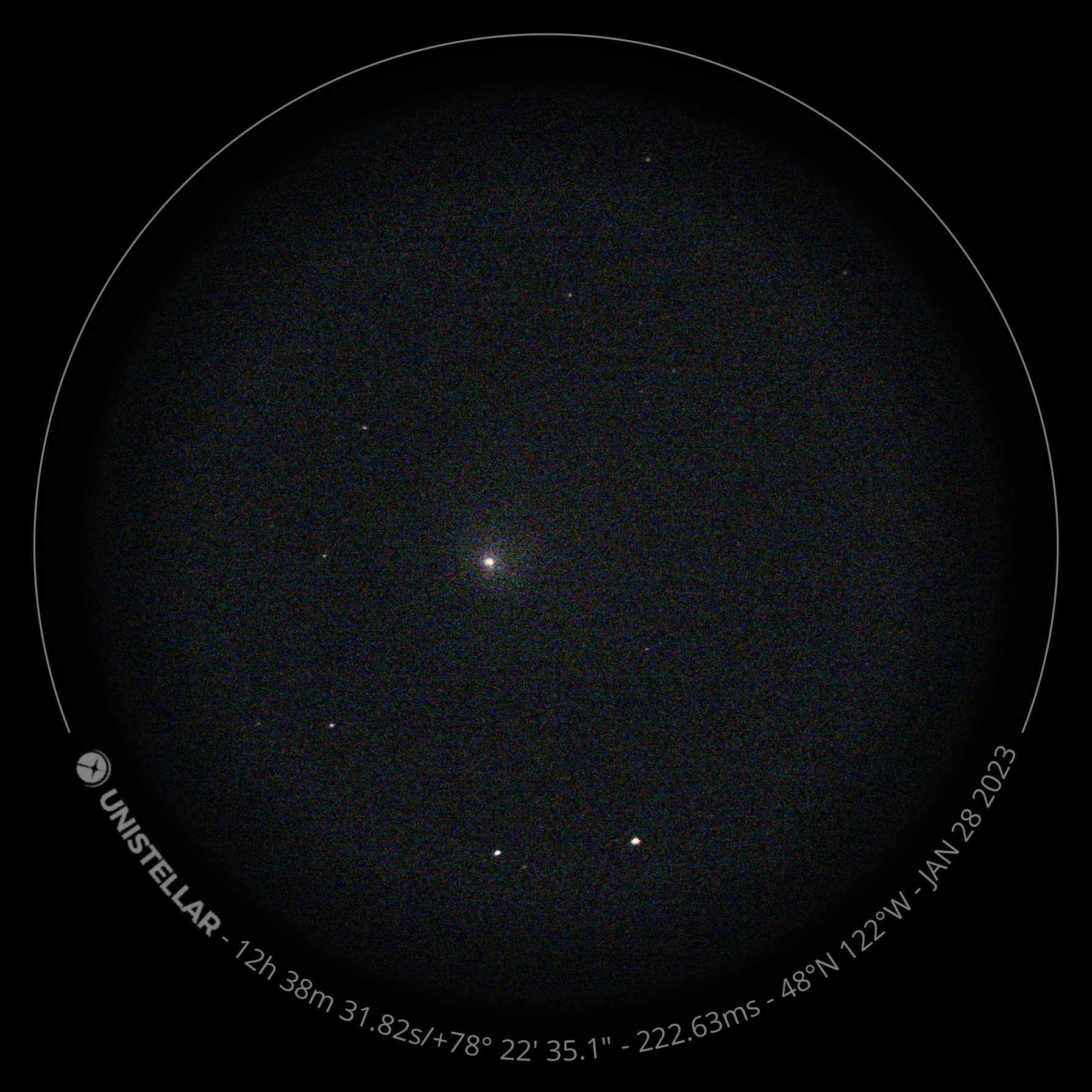
Comet C/2022 E3 (ZTF)
3m
2023-01-28
In this picture, you can see how fast the comet is moving – the stars are single points of light, but over the 3 minutes of this exposure, you can clearly see that the comet’s center has moved slightly, creating a bright streak.
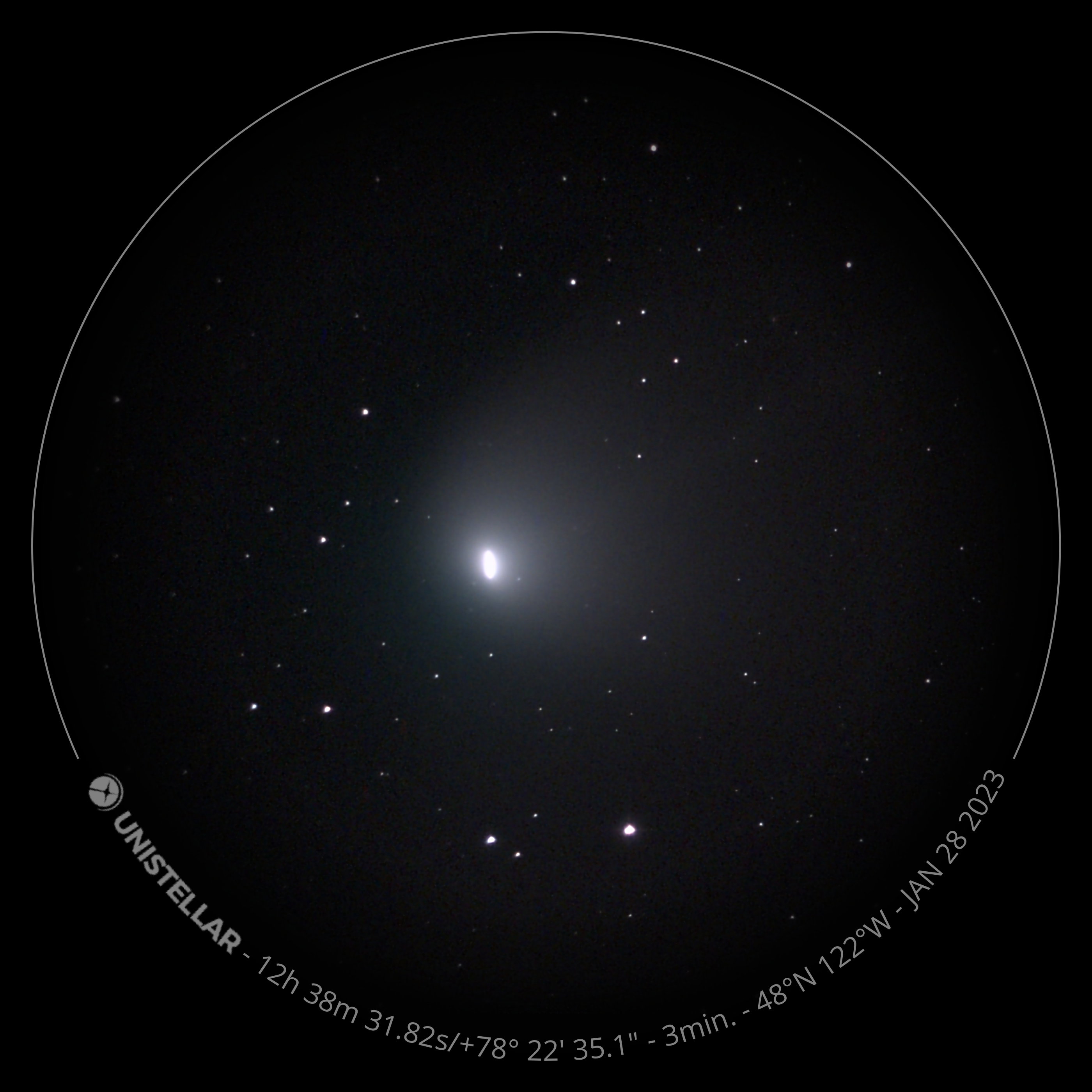
Comet C/2022 E3 (ZTF)
68s
2023-01-28
Given the previous image, I took a shorter exposure to see if I could get a more distinct center while still capturing the coma.
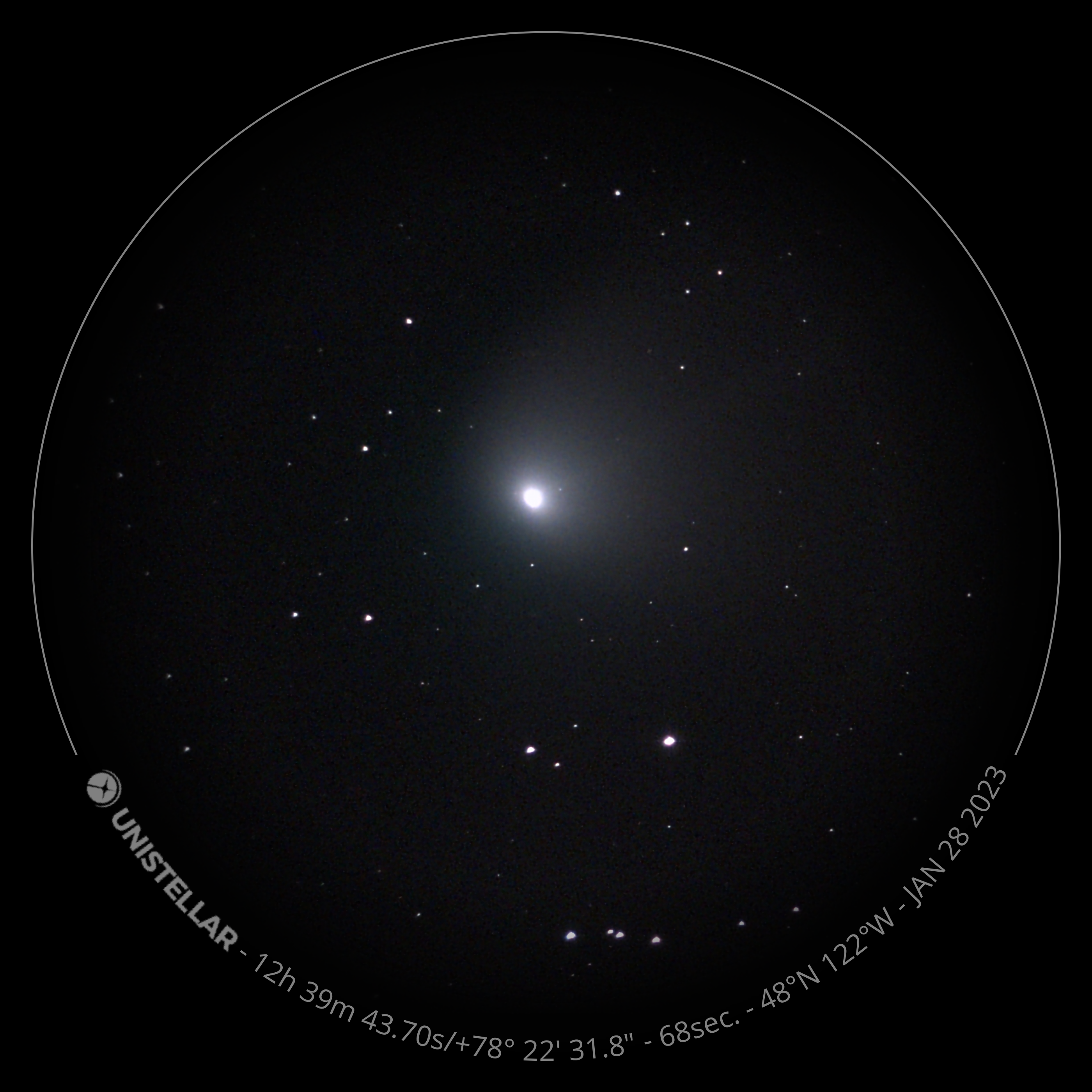
Comet 12P/Pons-Brooks
36s
2024-03-15
The first attempt at this one wasn’t as good.
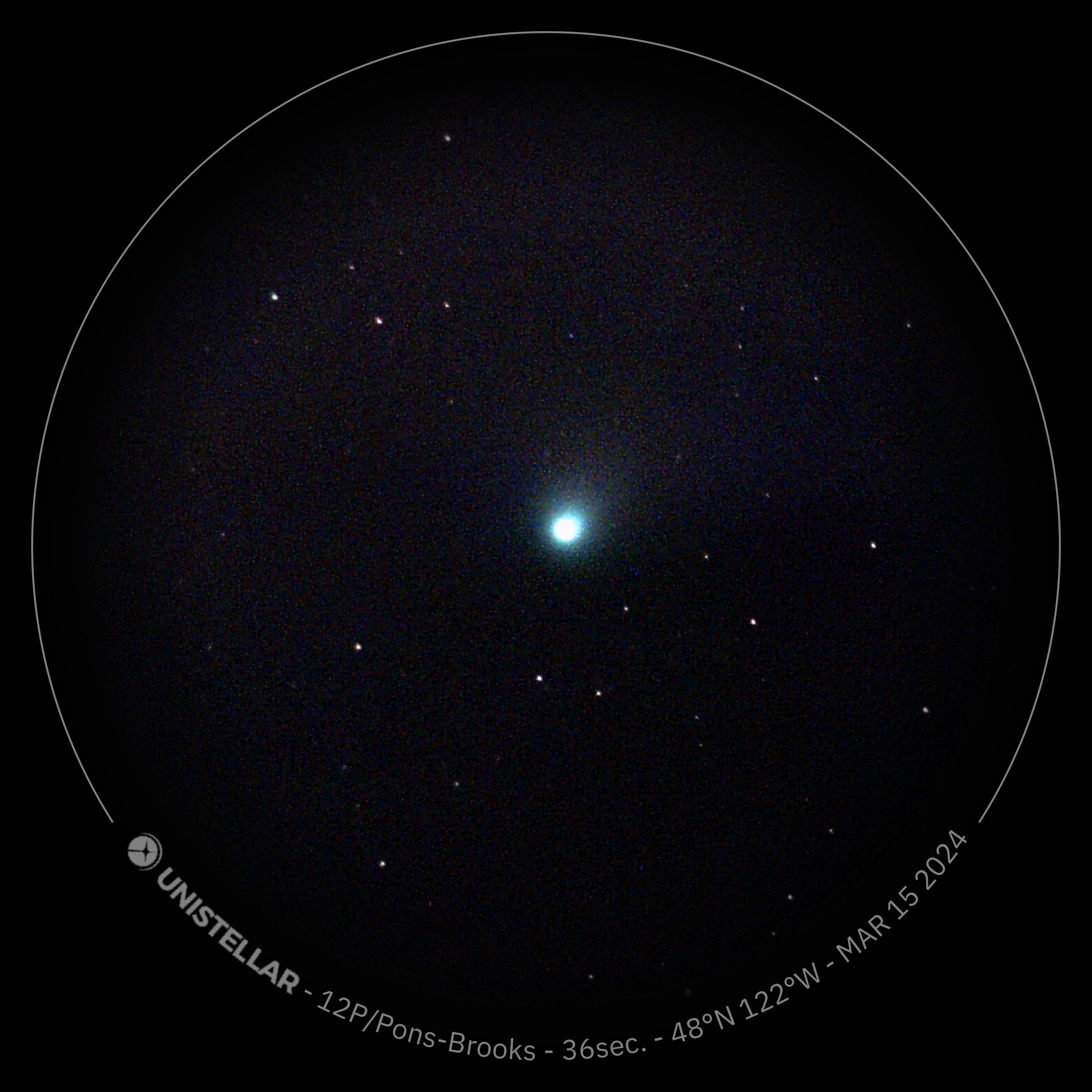
Comet 12P/Pons-Brooks
2m
2024-03-15
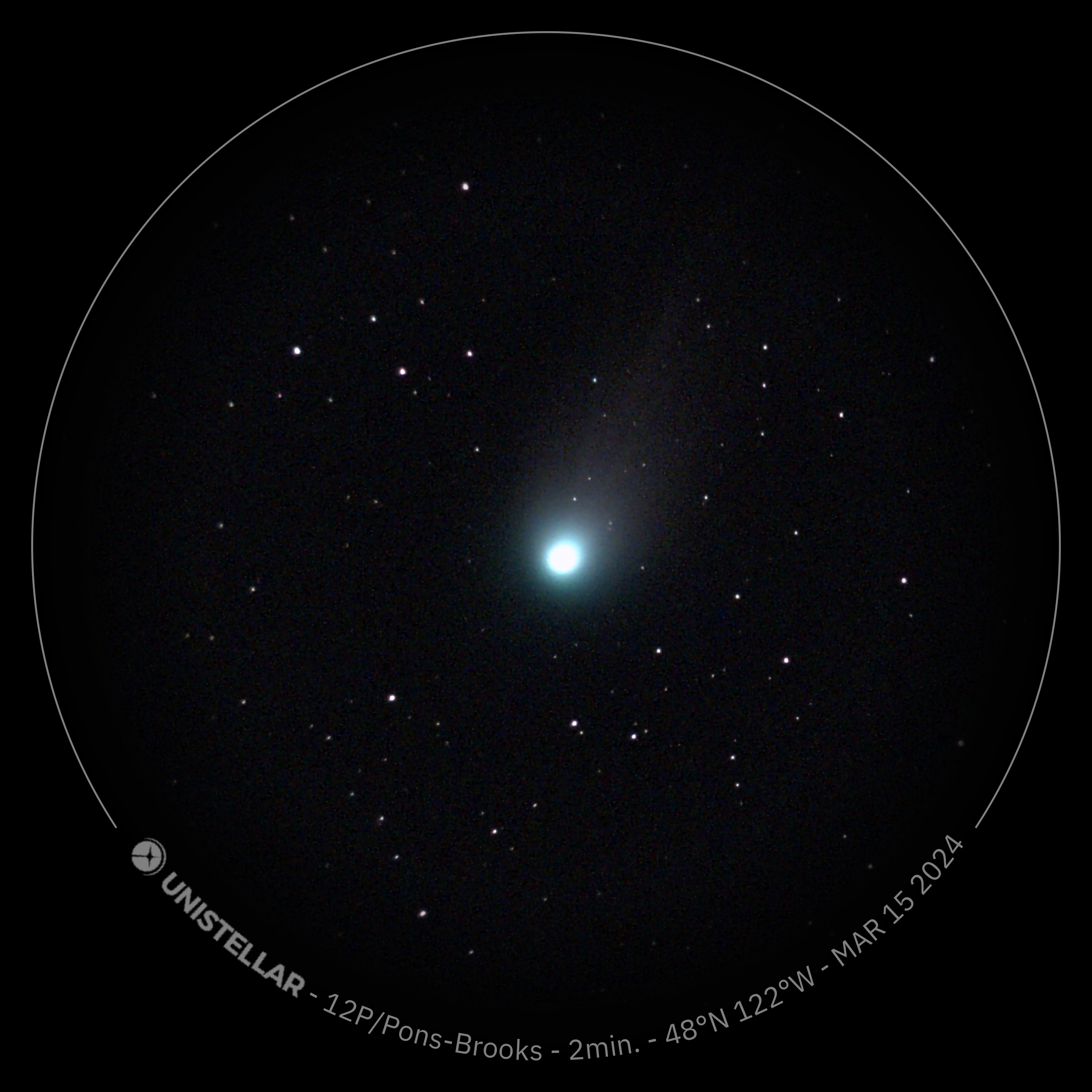
A much better image. What’s distinctive about this comet is is blue-green coma, unlike any of the other comets I’ve gotten pictures of.
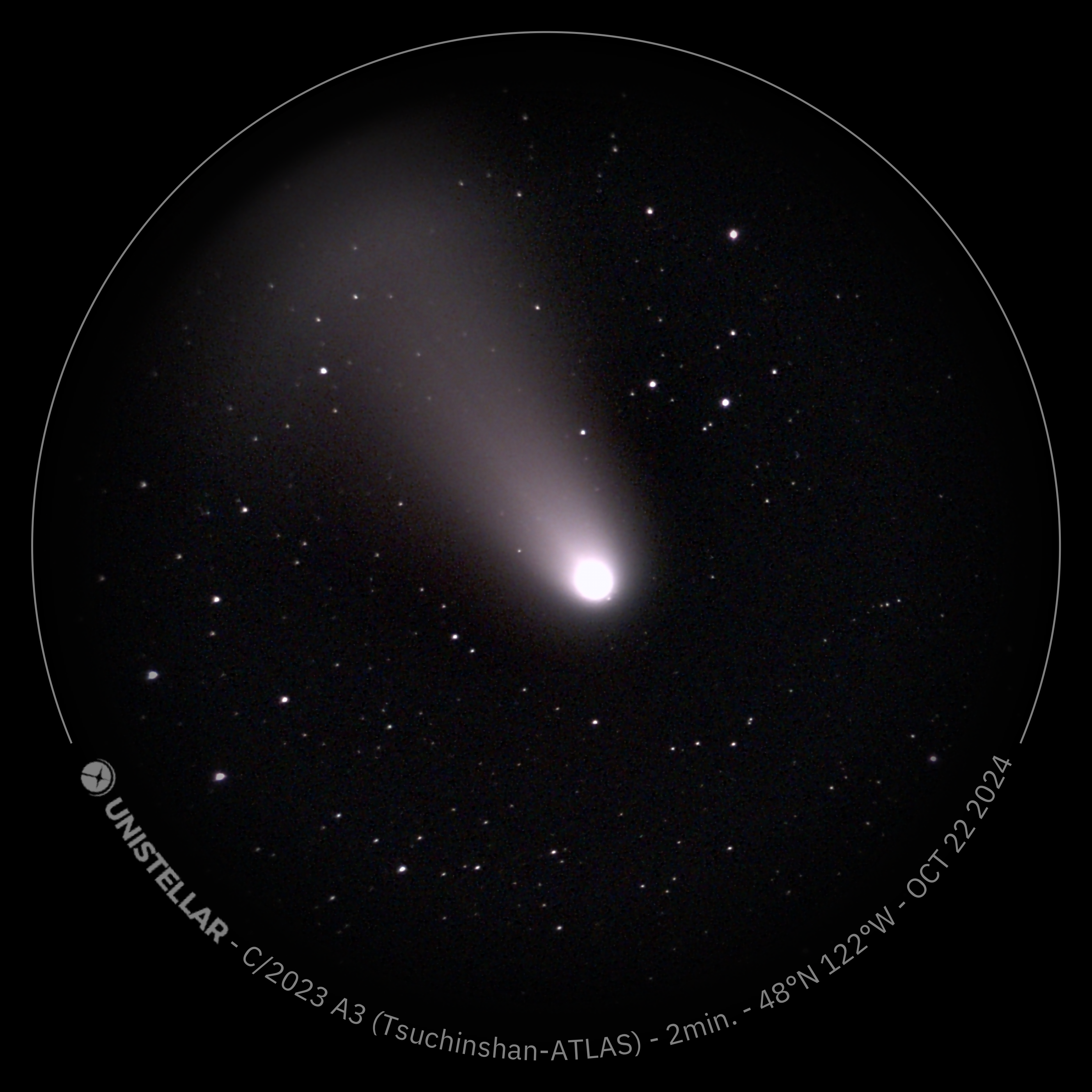
Comet C/2023 A3 (Tsuchinshan-ATLAS)
2m
2024-11-22
While this is a good shot of the tail, the wash-out in the upper left is more an effect of humidity than the actual comet tail.
Comet C/2023 A3 (Tsuchinshan-ATLAS)
32s
2024-11-22
You get a better image of the nucleus here, but lose a lot of the tail.

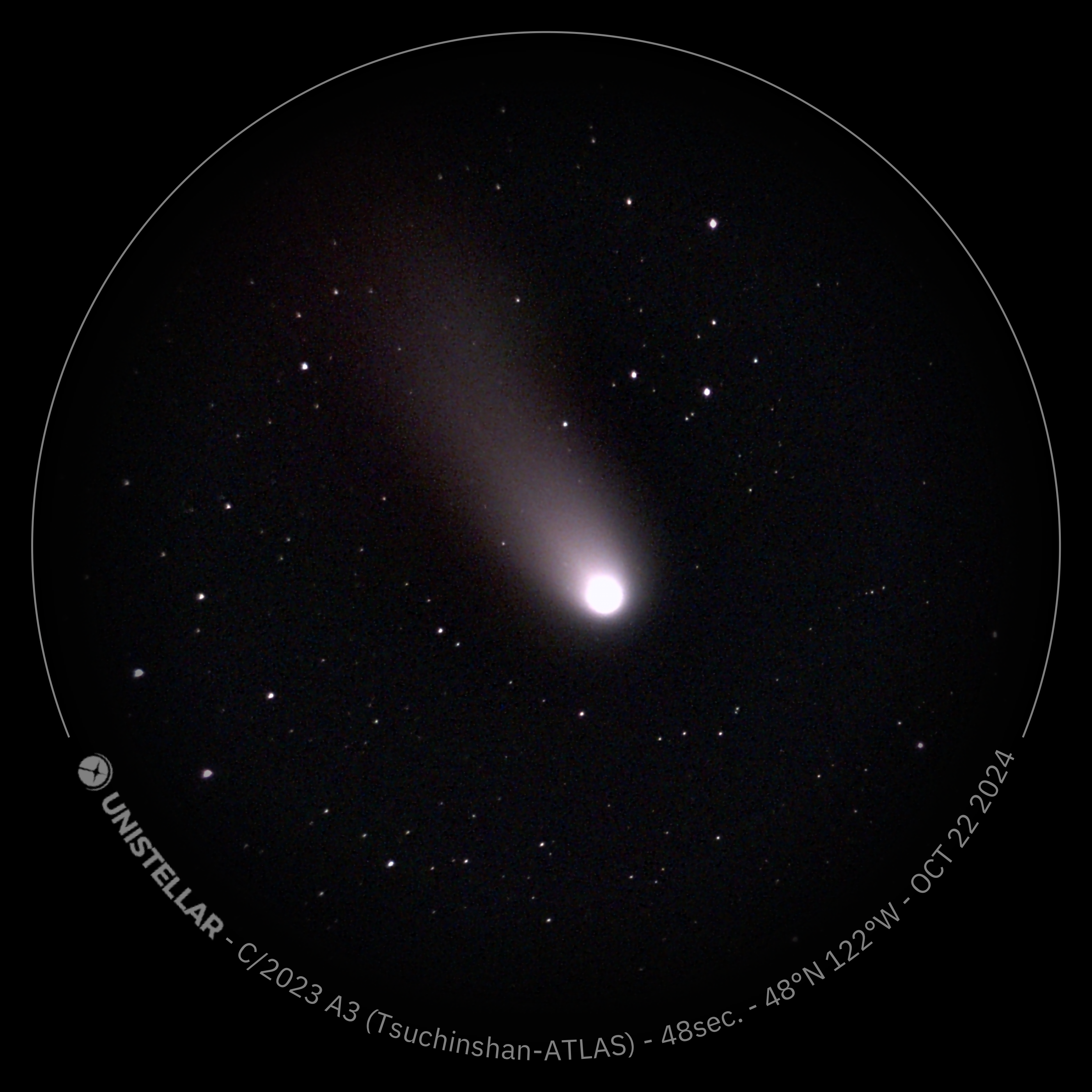
Comet C/2023 A3 (Tsuchinshan-ATLAS)
48s
2024-11-22
A slightly longer exposure, with a slightly better tail.
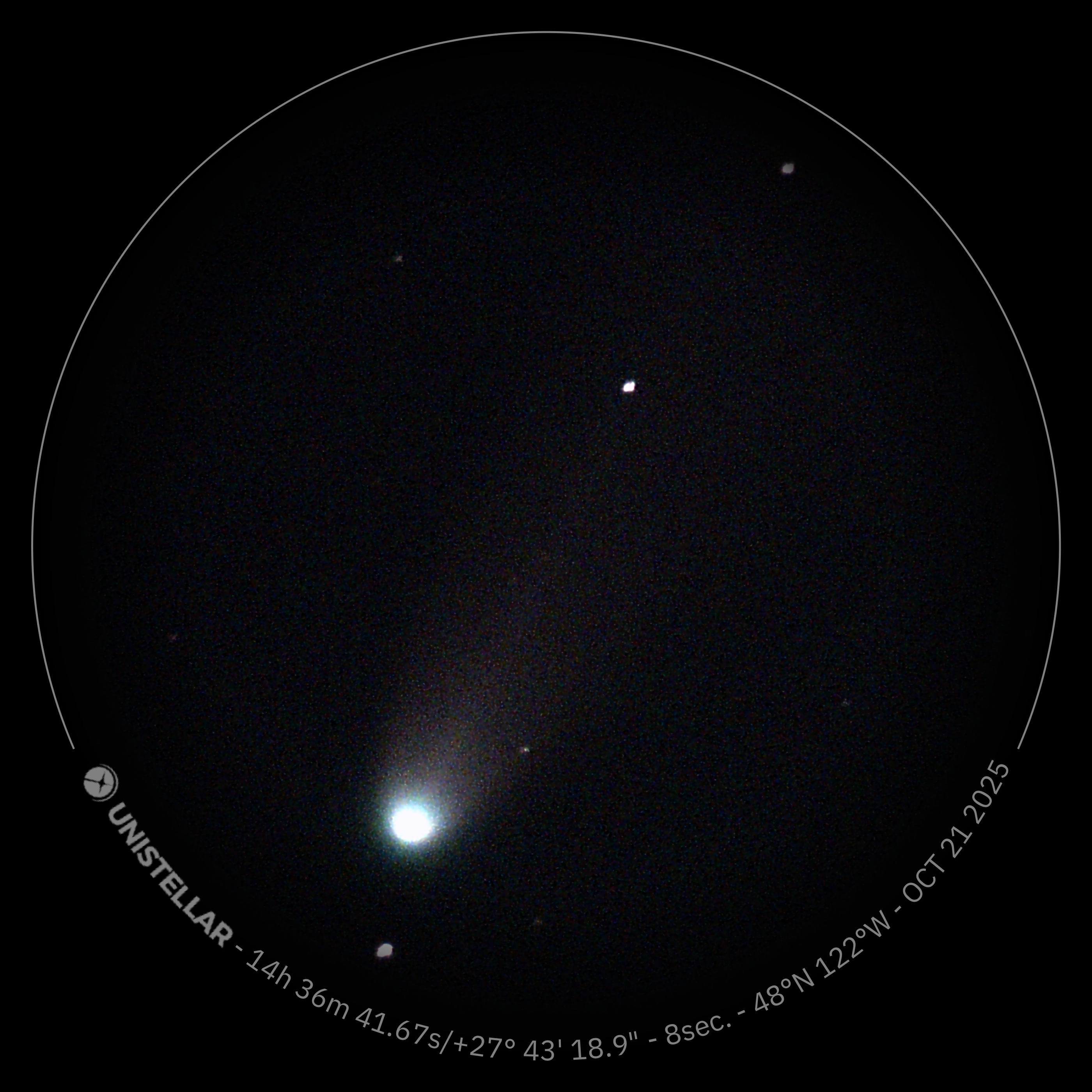
Comet C/2025 A6 (Lemmon)
8s
2025-10-21
The best “short” shot I got of it this night, showing what it would look like if you used a pair of binoculars (which I also did). The tail was VERY long – about 3 or 4 diameters of the moon, I’d estimate.
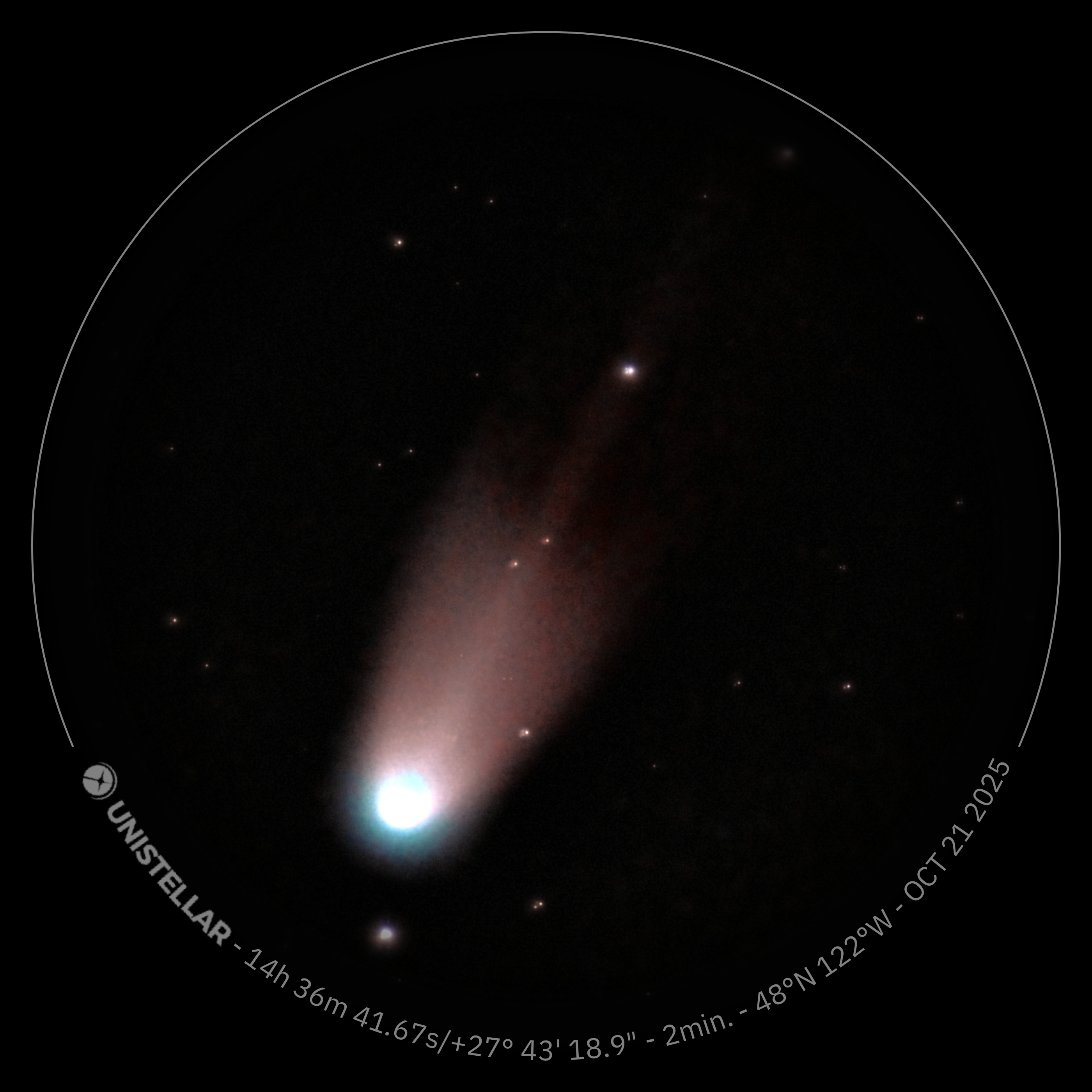
Comet C/2025 A6 (Lemmon)
2m
2025-10-21
The first of the two decent dwells that I got, showing a beautiful pair of bright tails.
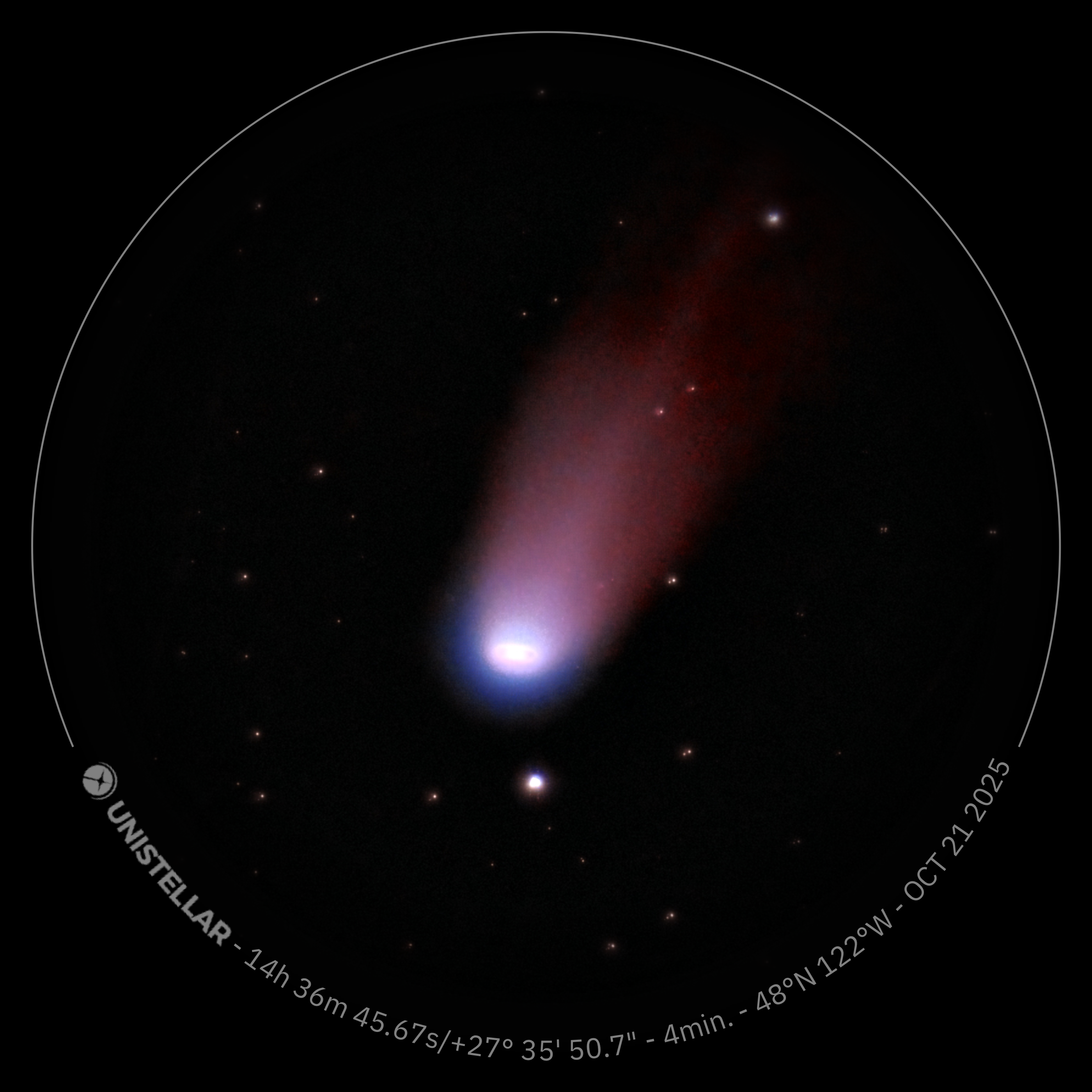
Comet C/2025 A6 (Lemmon)
4m
2025-10-21
You can really see how fast the comet is moving relative to the stars – compare the wide bright line at the center of the coma with the smaller circular dot from the 8s shot above.
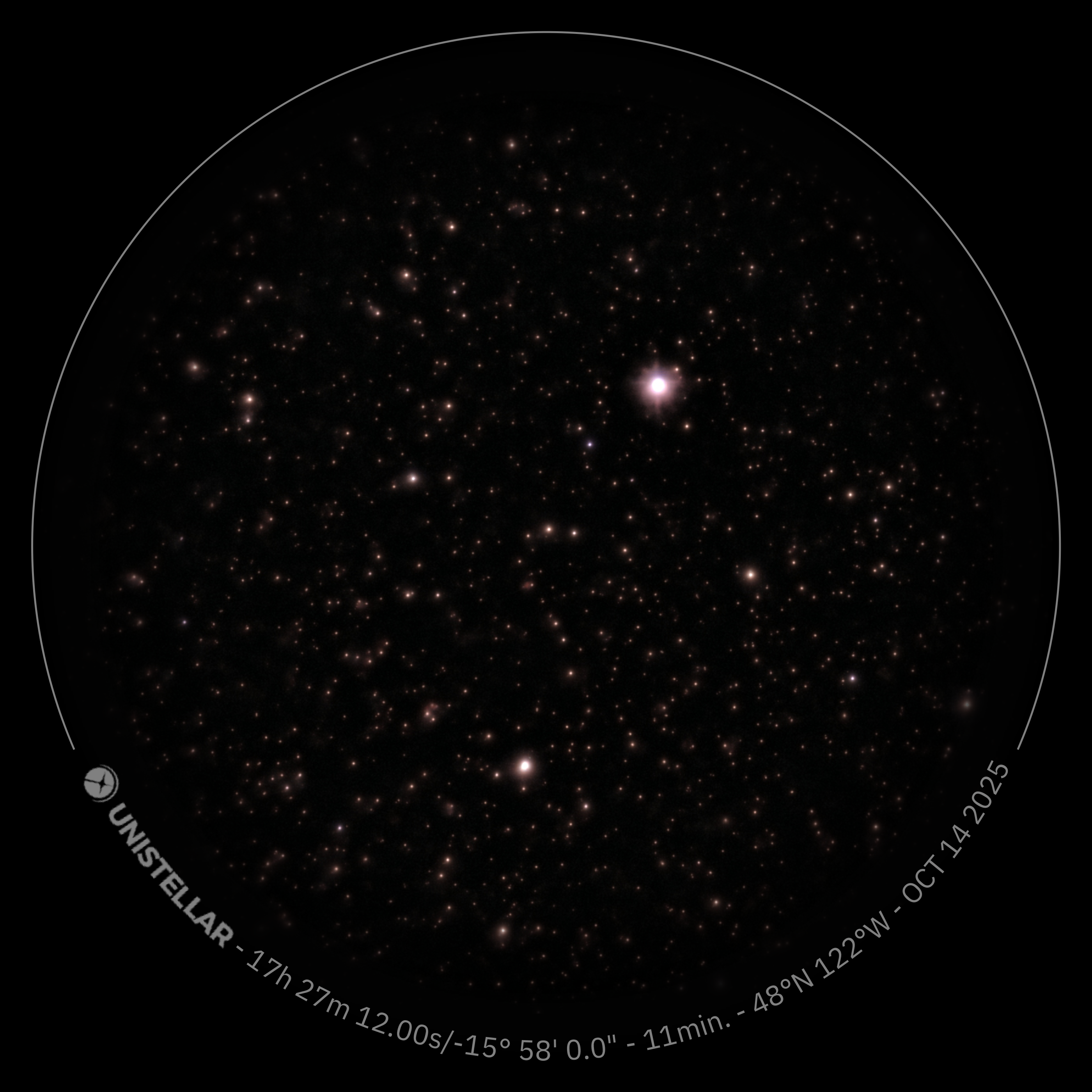
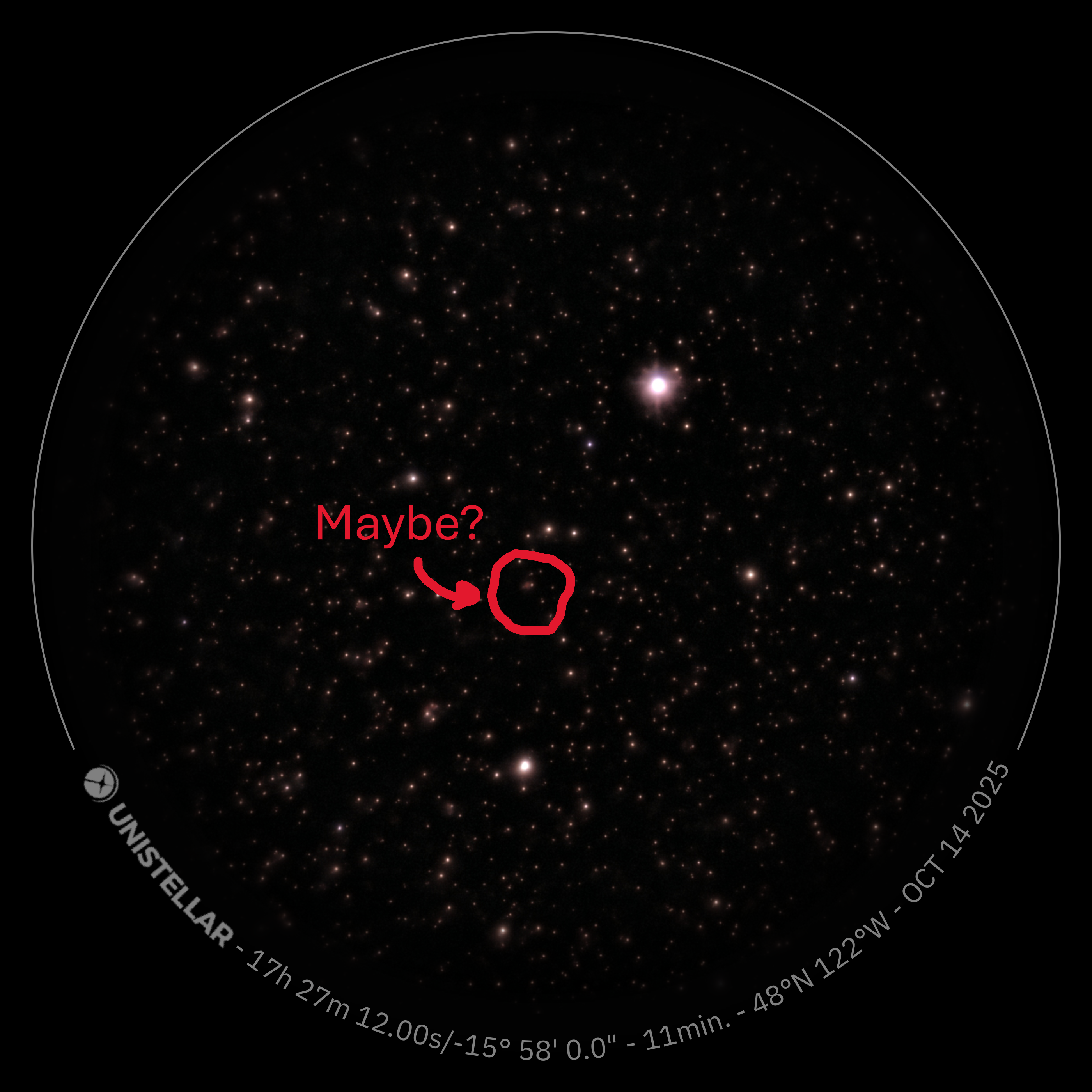
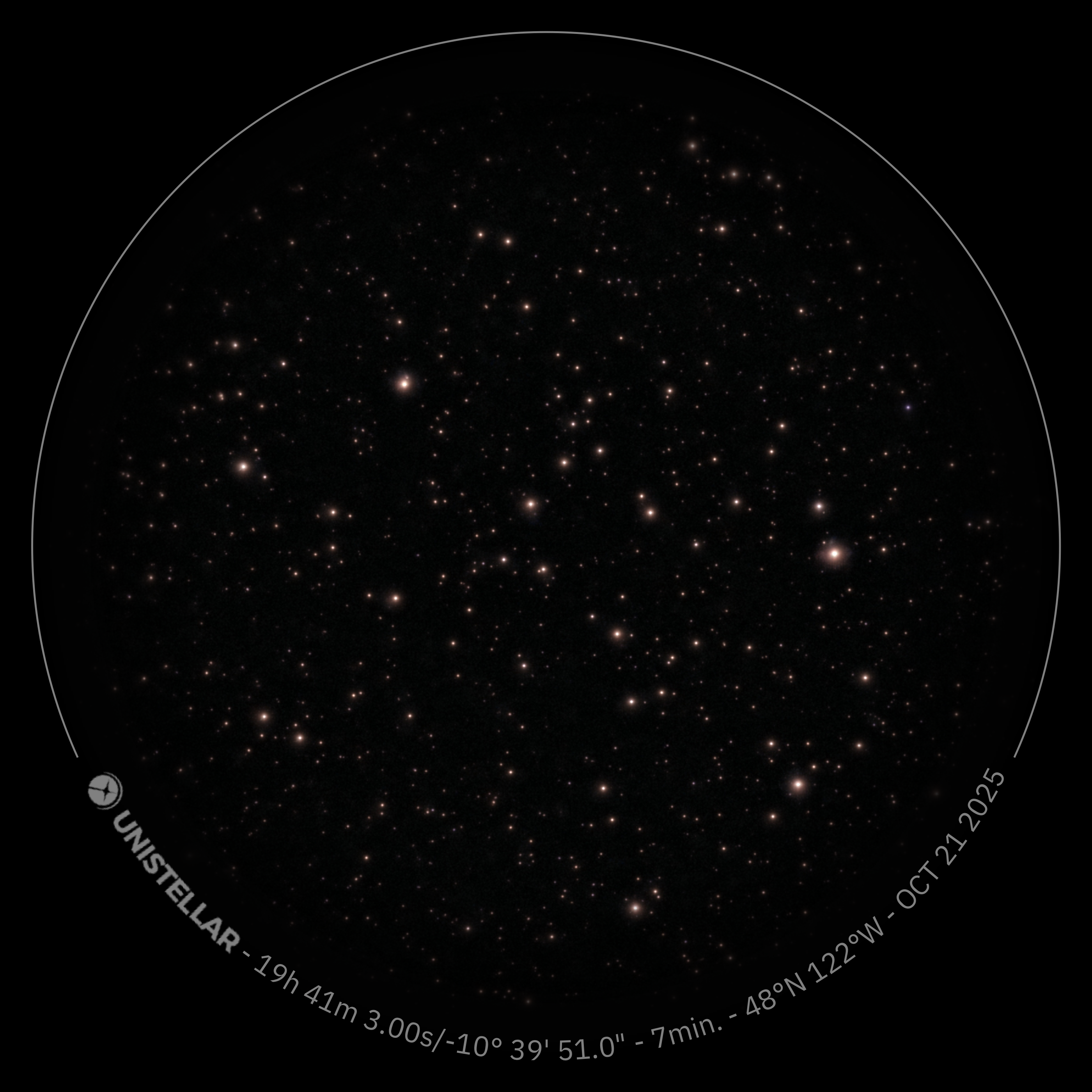
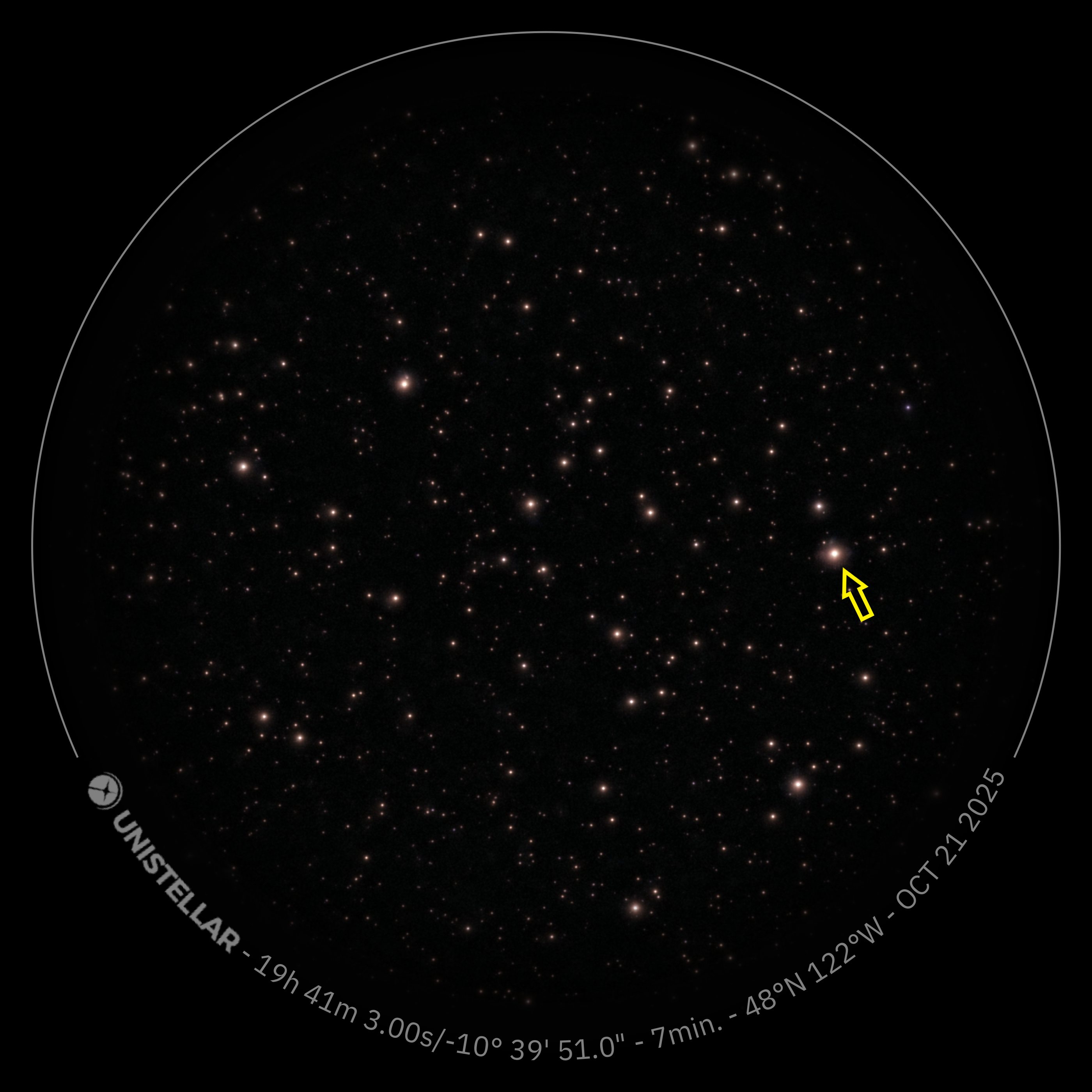
Comet C/2025 R2 (SWAN)
7m
2025-10-21
My second attempt to catch Swan in about a week, and this was about as unsuccessful as the first attempt. Like the last one, if it’s there, it’s small. Check my work on this star finder? I highlighted it (I hope?) with the yellow arrow below.
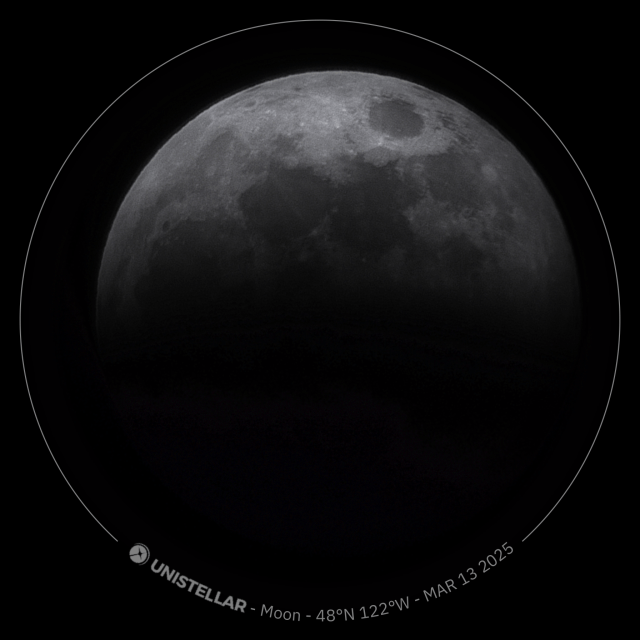
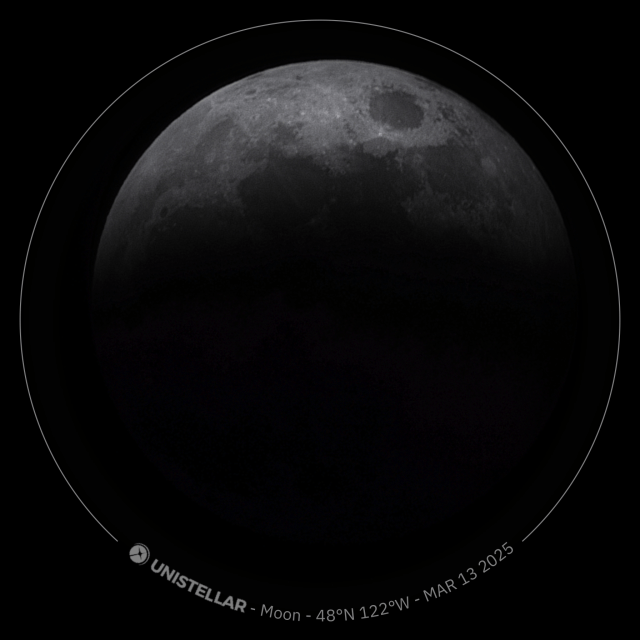
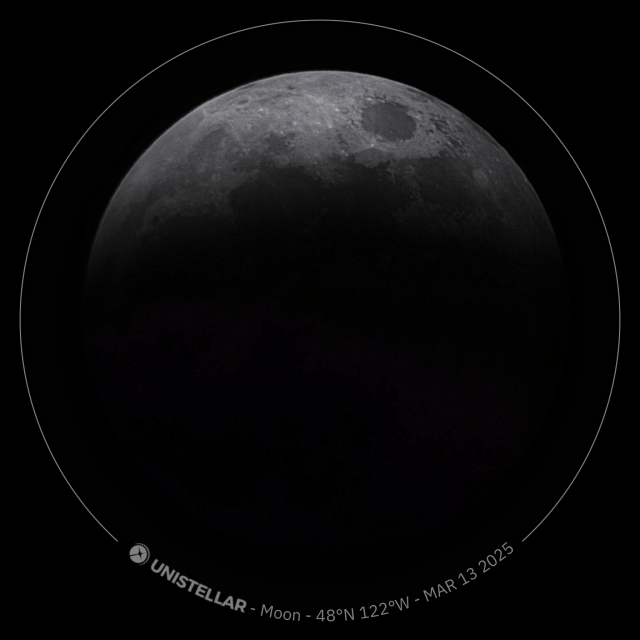
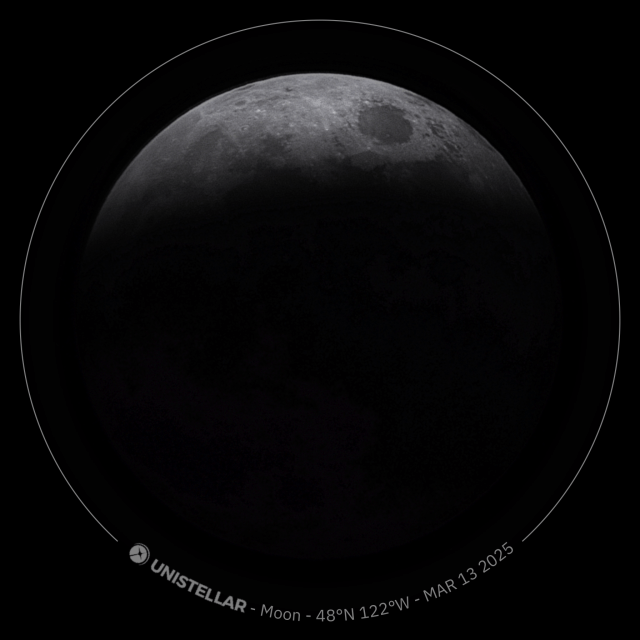
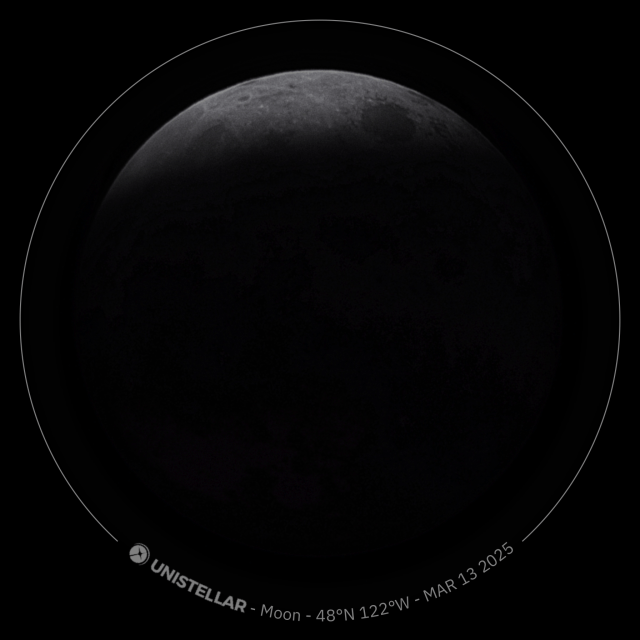
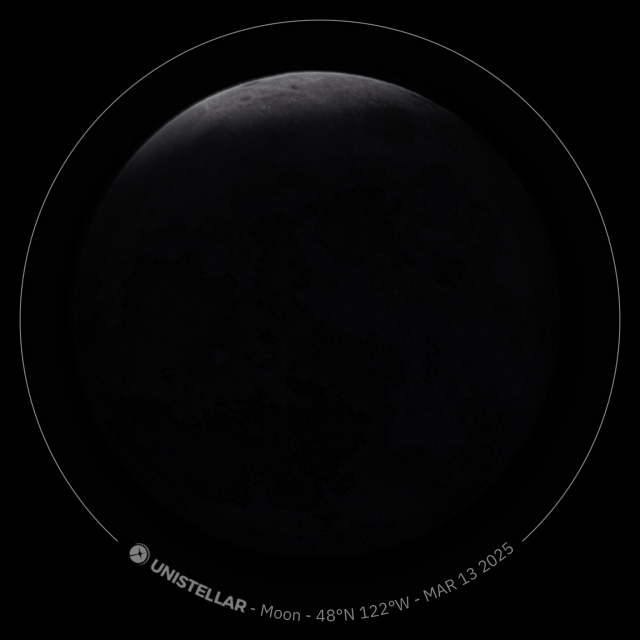
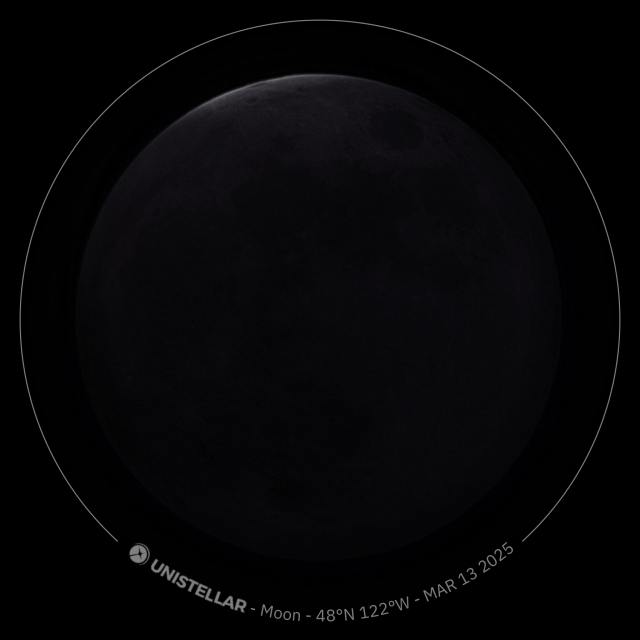
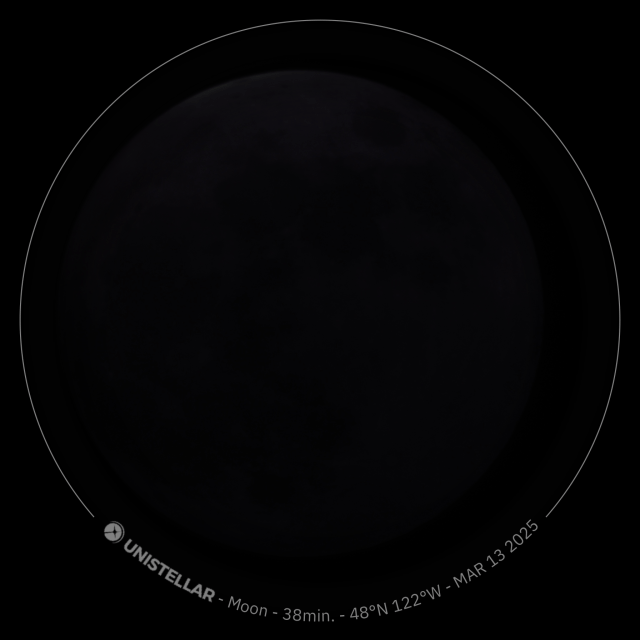
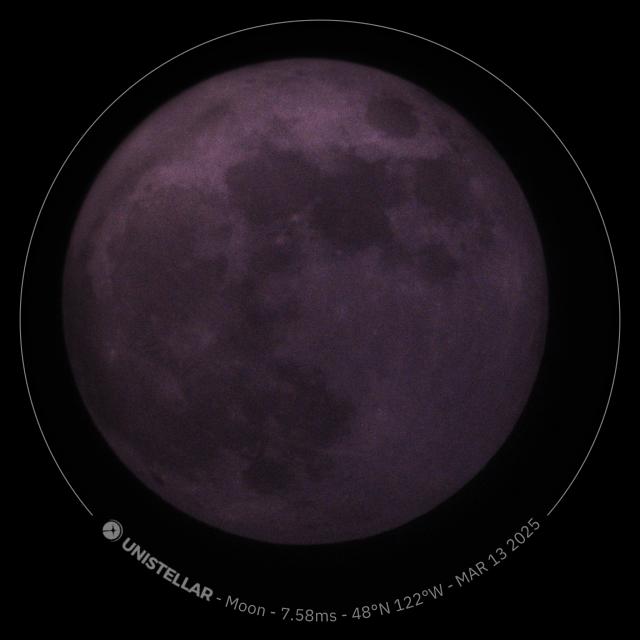
There was a lunar eclipse in March of 2025, and these are the shots I got of it. In the last one, I tweaked the exposure and gain to get an image of the purple-red moon, which was (at that point) entirely in the shadow of the Earth.
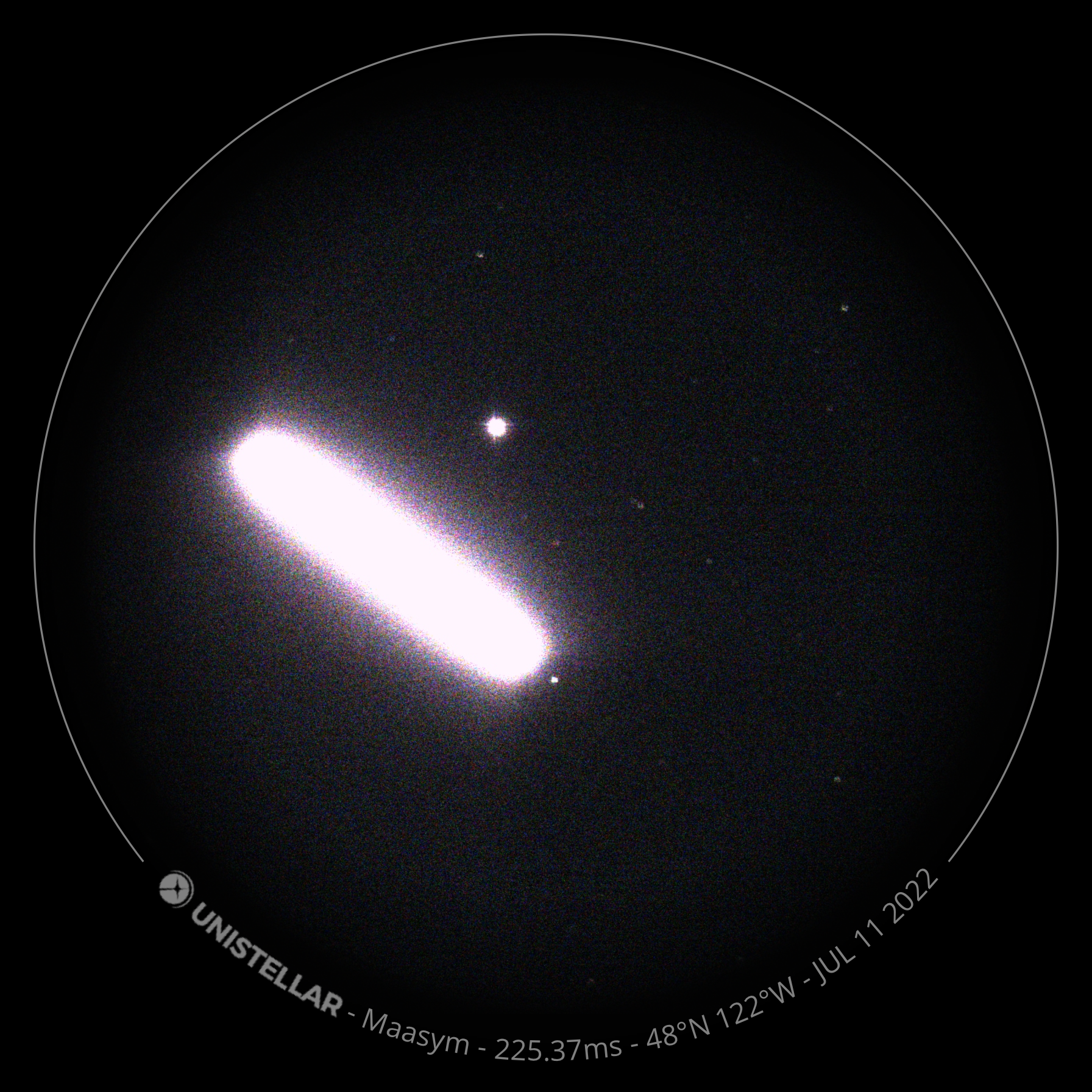
Maasym
snapshot
2022-07-11
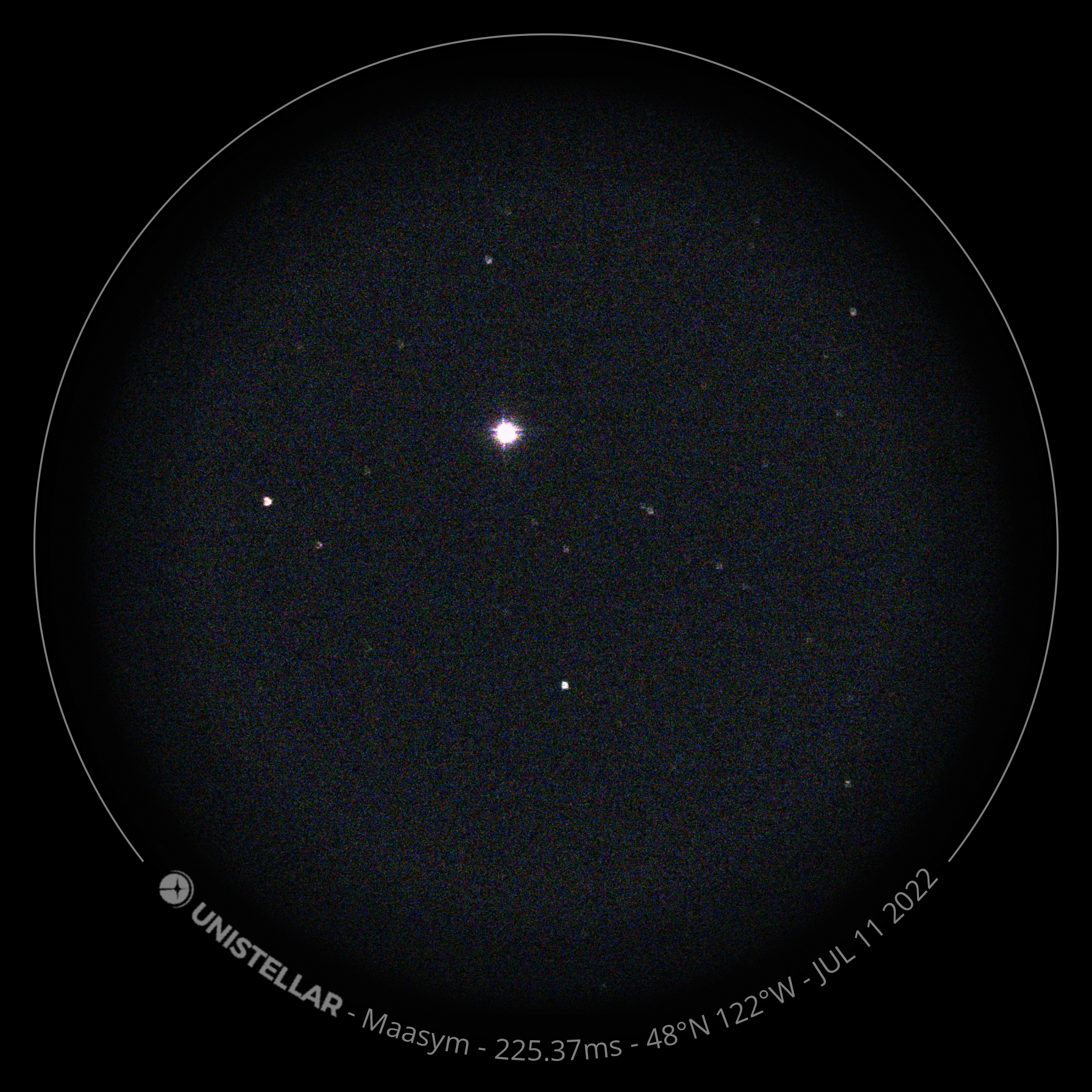
So why is a picture of an otherwise nondescript-yet-named star in the “solar system” group? Because…
The International Space Station
snapshot
2022-07-11
Because, on that day, the ISS passed overhead; I checked the track, and this was the best named star that it passed close to. I was very lucky to capture this image.
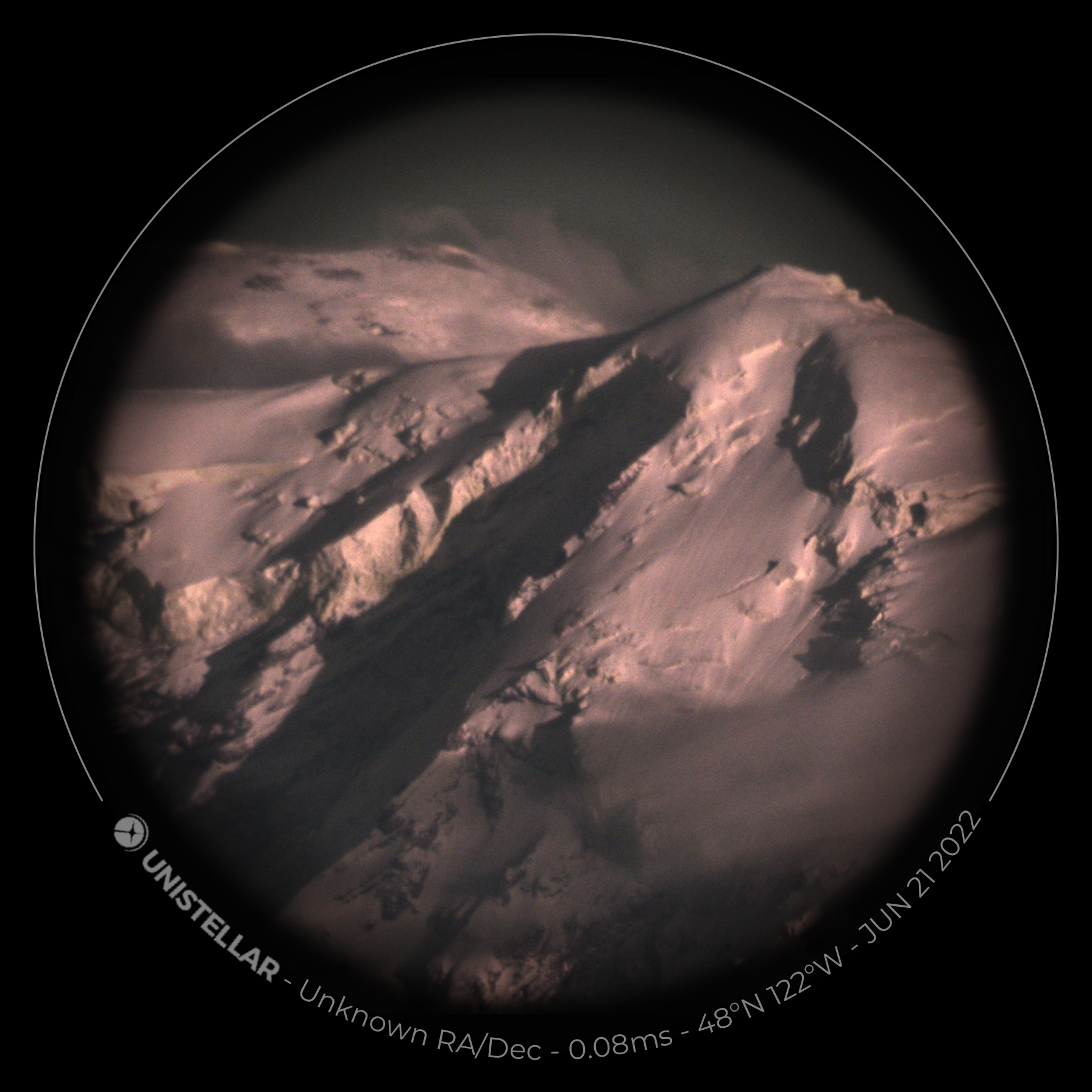
Mt. Rainier
snapshot
2022-07-21
After I got the telescope, I wanted to calibrate, focus, and play around with it. The mountain is about 60.6 miles (97.6 km) from my home. This is just the very tip of the top of the mountain.
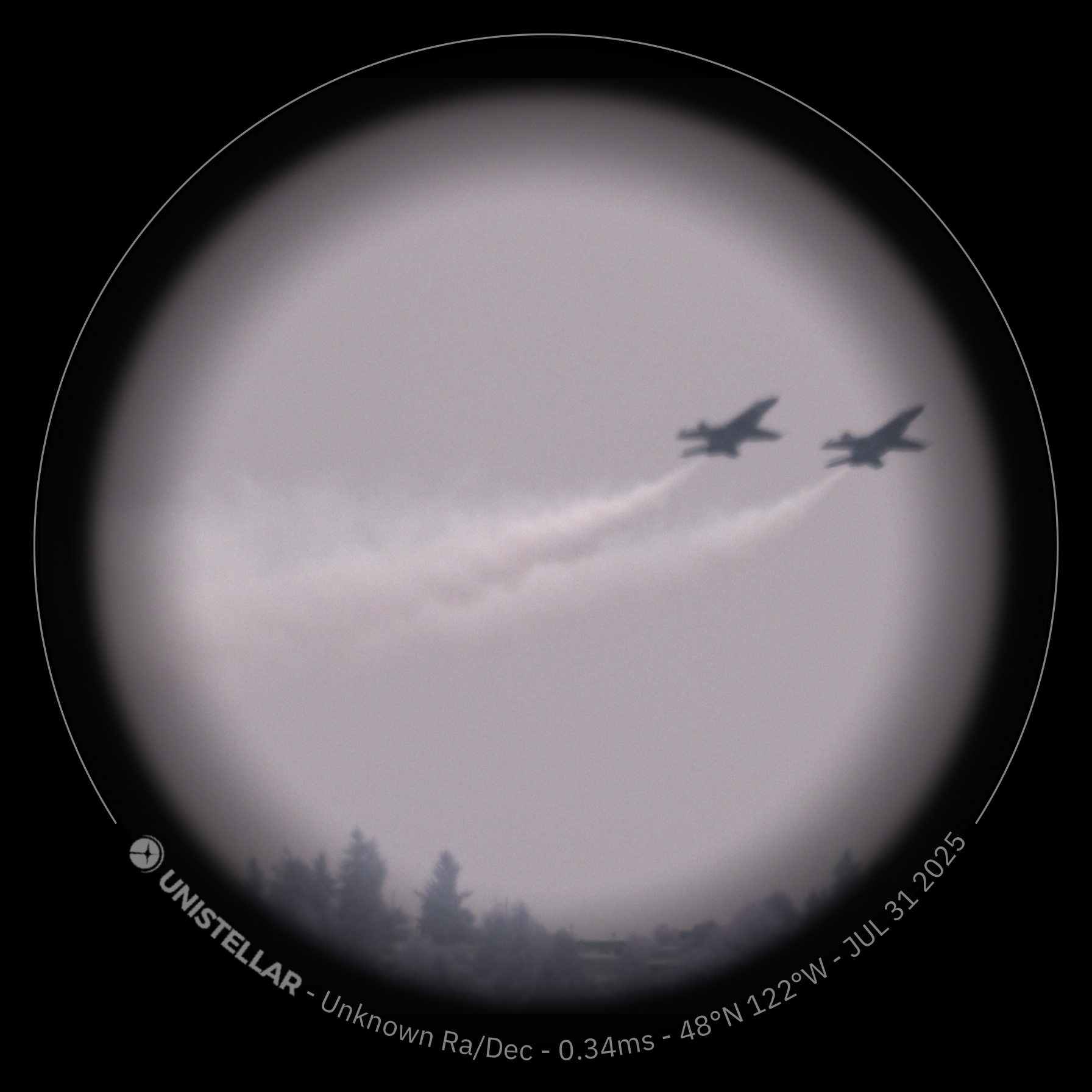
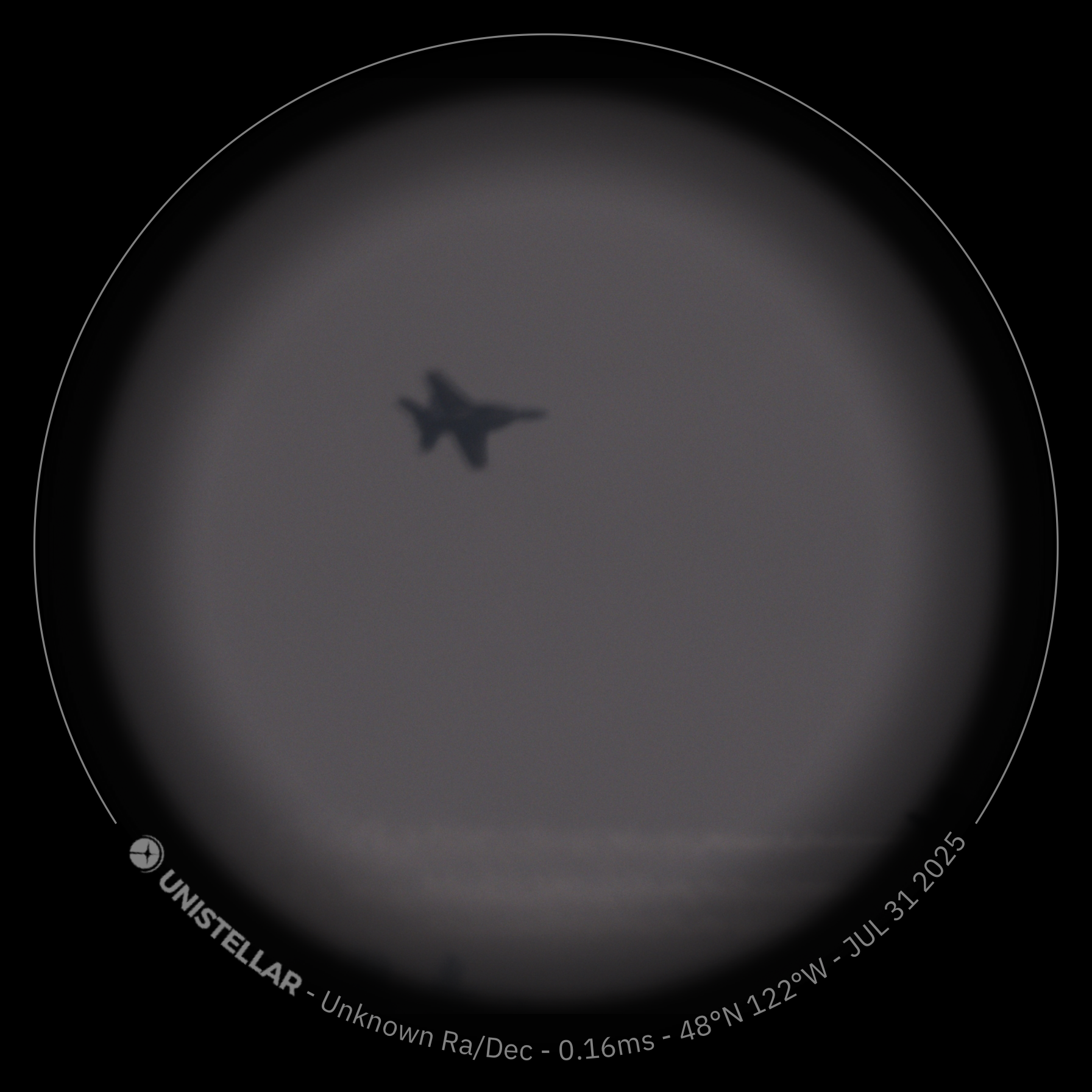
Blue Angels
2025-07-31
snapshot
Seafair 2025 practice. I guess they’re solar system objects? Definitely not galaxies. Maybe arguably star clusters? But that’s a stretch.
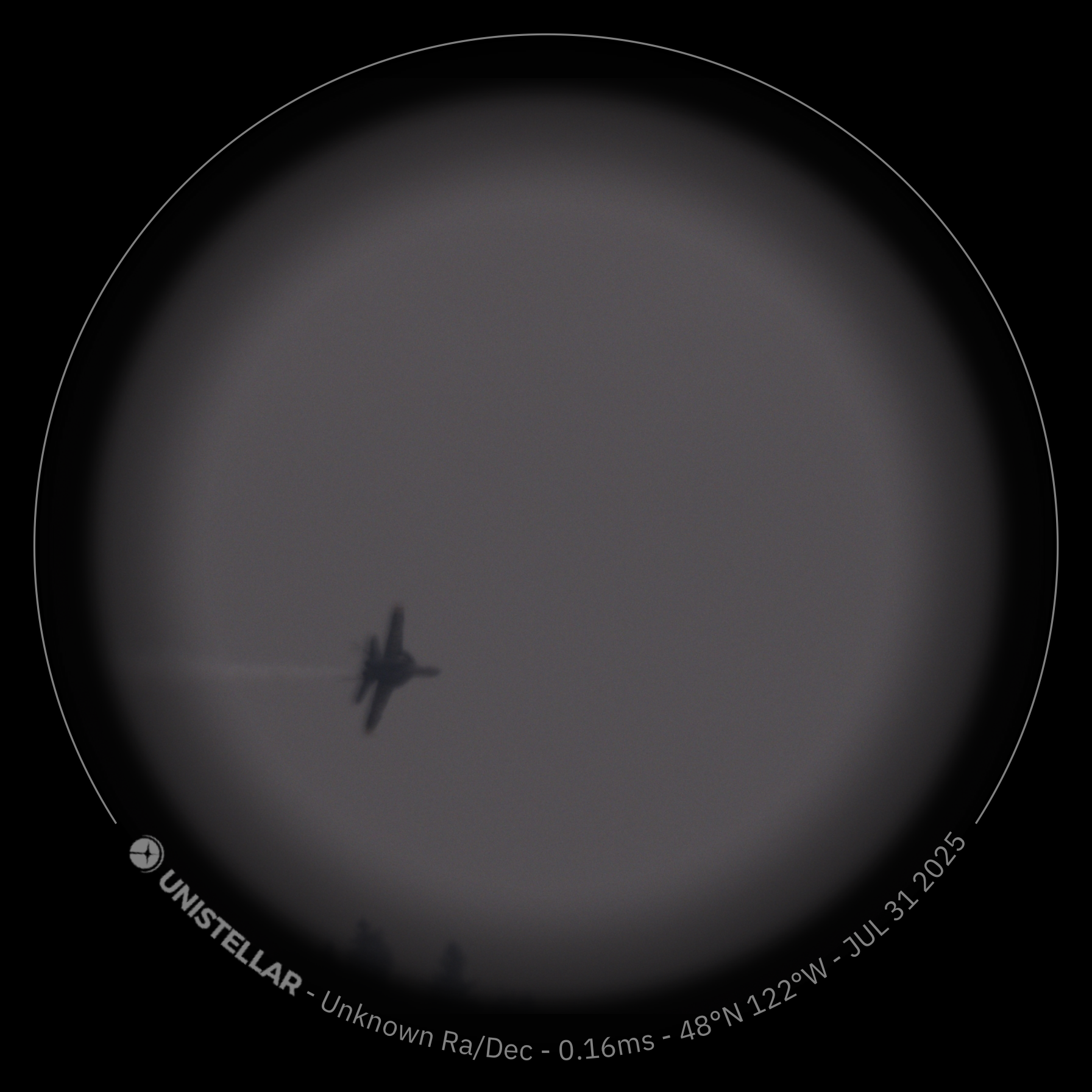
Blue Angels
2025-07-31
snapshot
Seafair 2025 practice
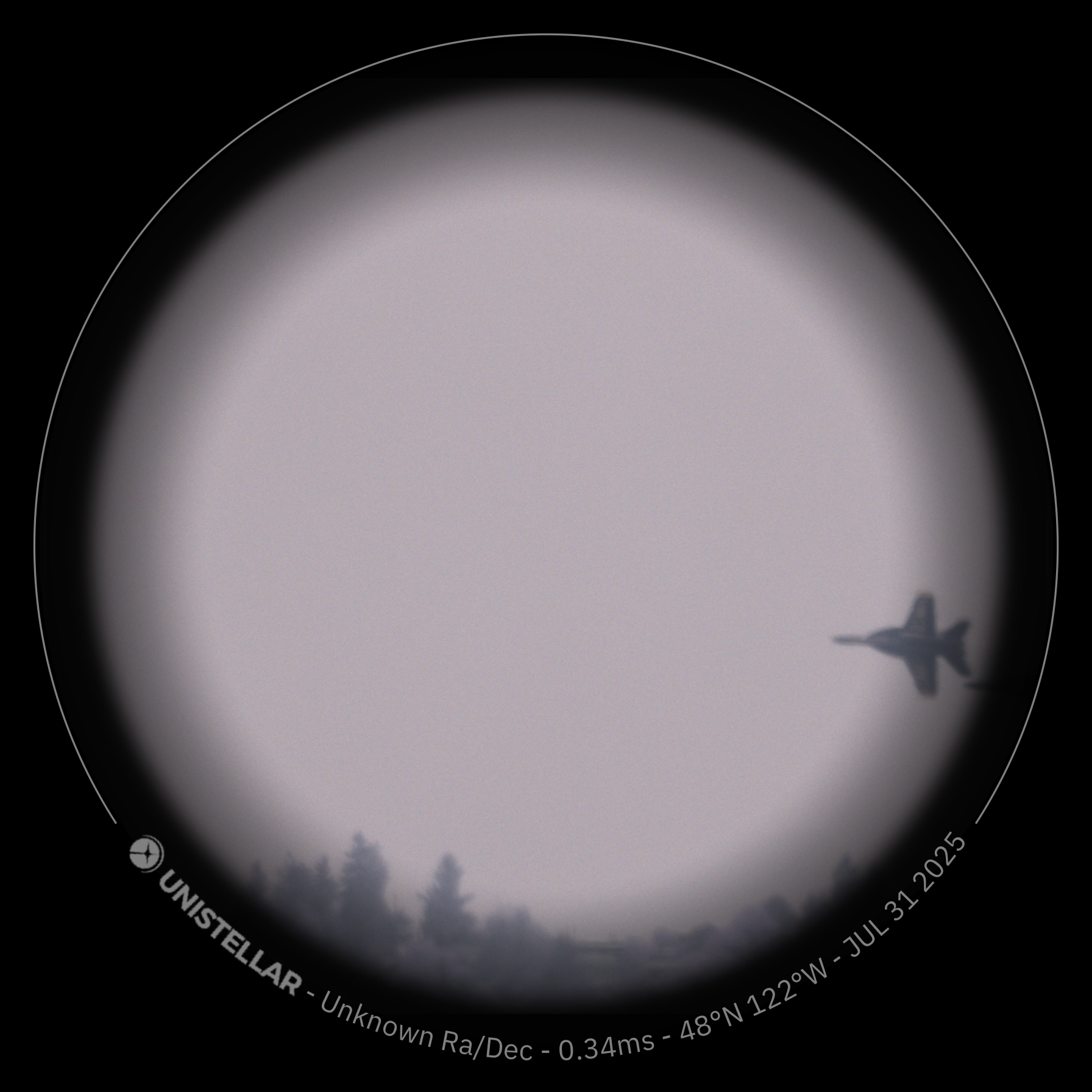
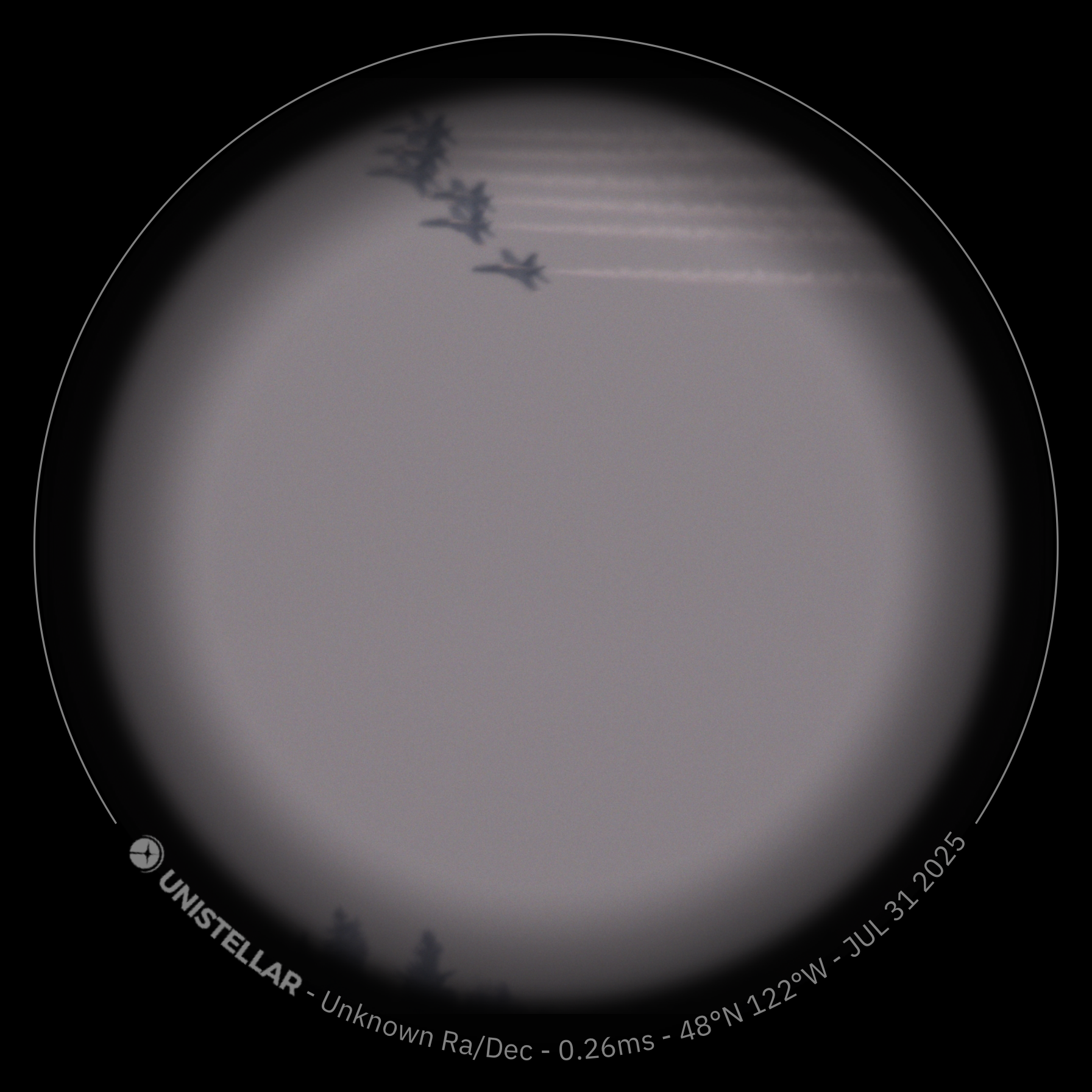
Blue Angels
2025-07-31
snapshot
Seafair 2025 practice
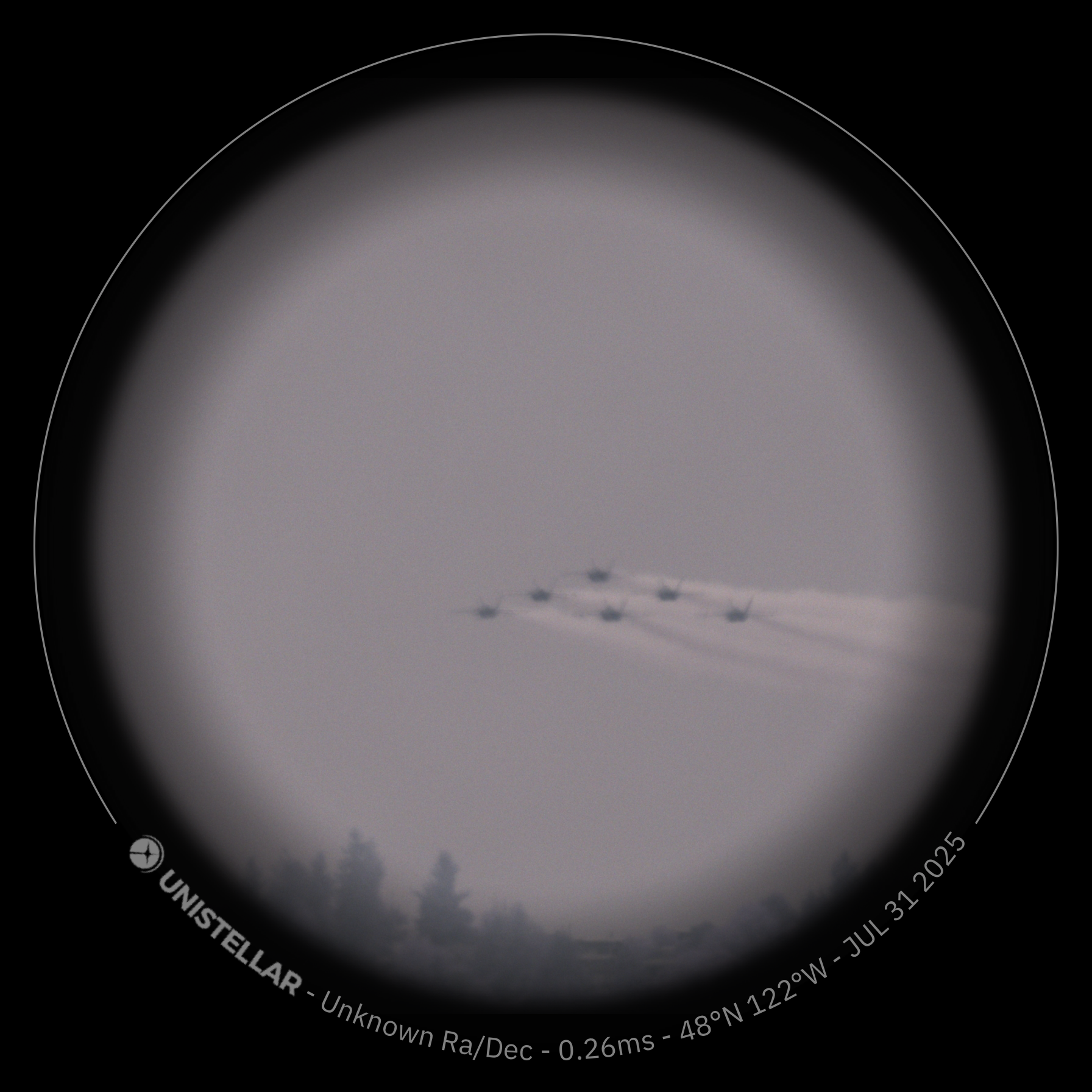
Blue Angels
2025-07-31
snapshot
Seafair 2025 practice
Blue Angels
2025-07-31
snapshot
Seafair 2025 practice
Blue Angels
2025-07-31
snapshot
Seafair 2025 practice
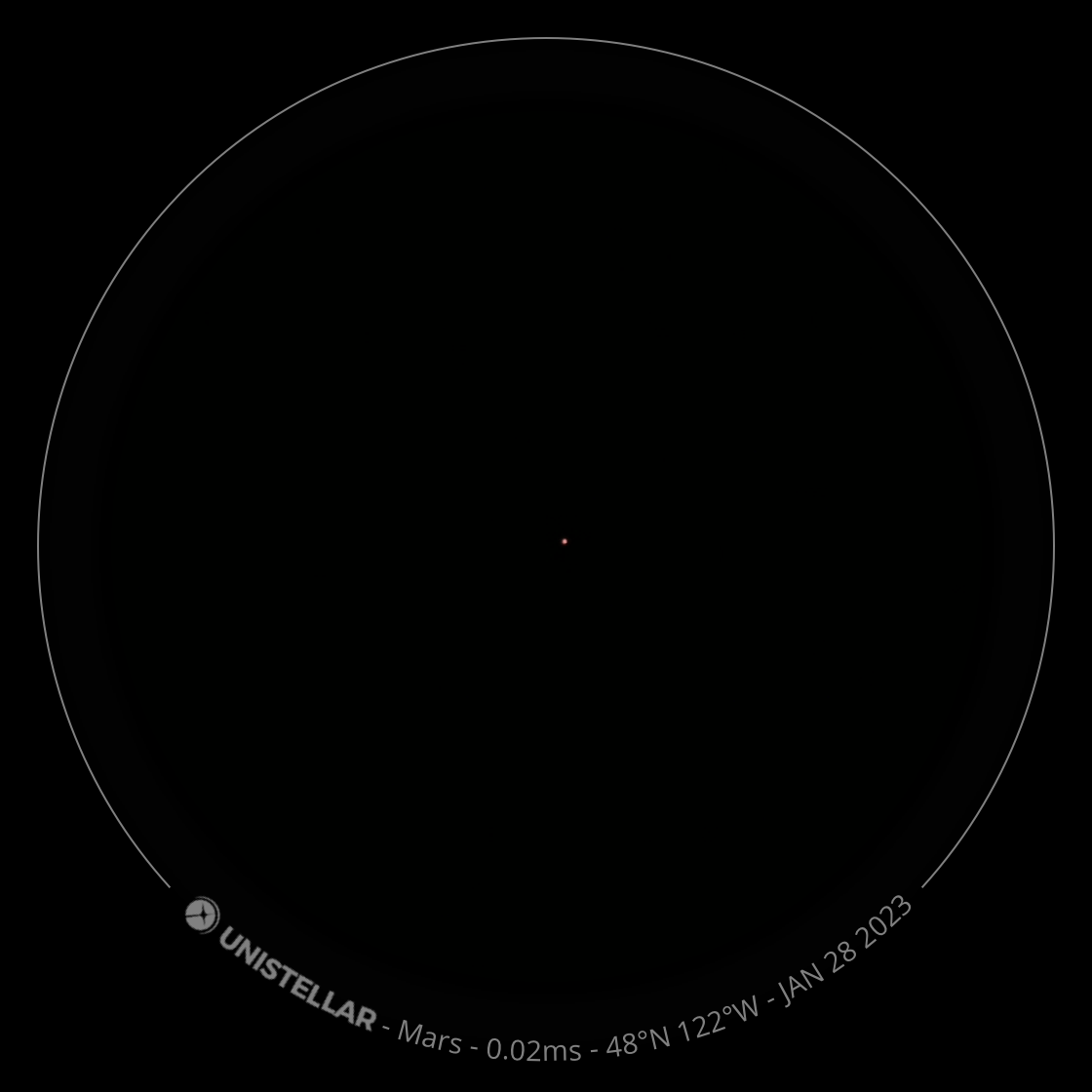
Mars
snapshot
2023-01-28
Mars is small in the eVscope’s field of view, but distinctly red.
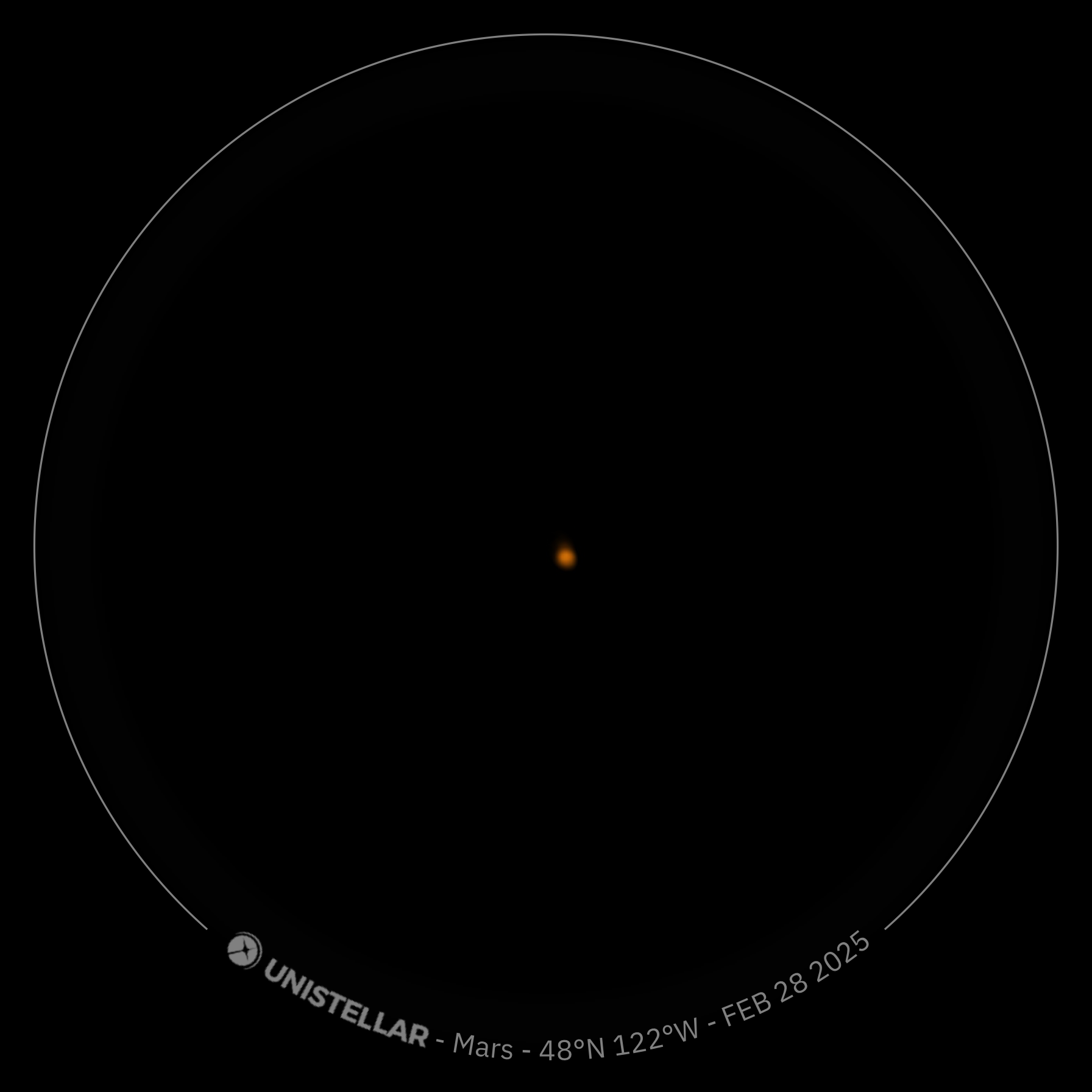
Mars
snapshot
2025-02-28
Improvements to the software meant that I could get (slightly) better pictures of the planets, like Mars.
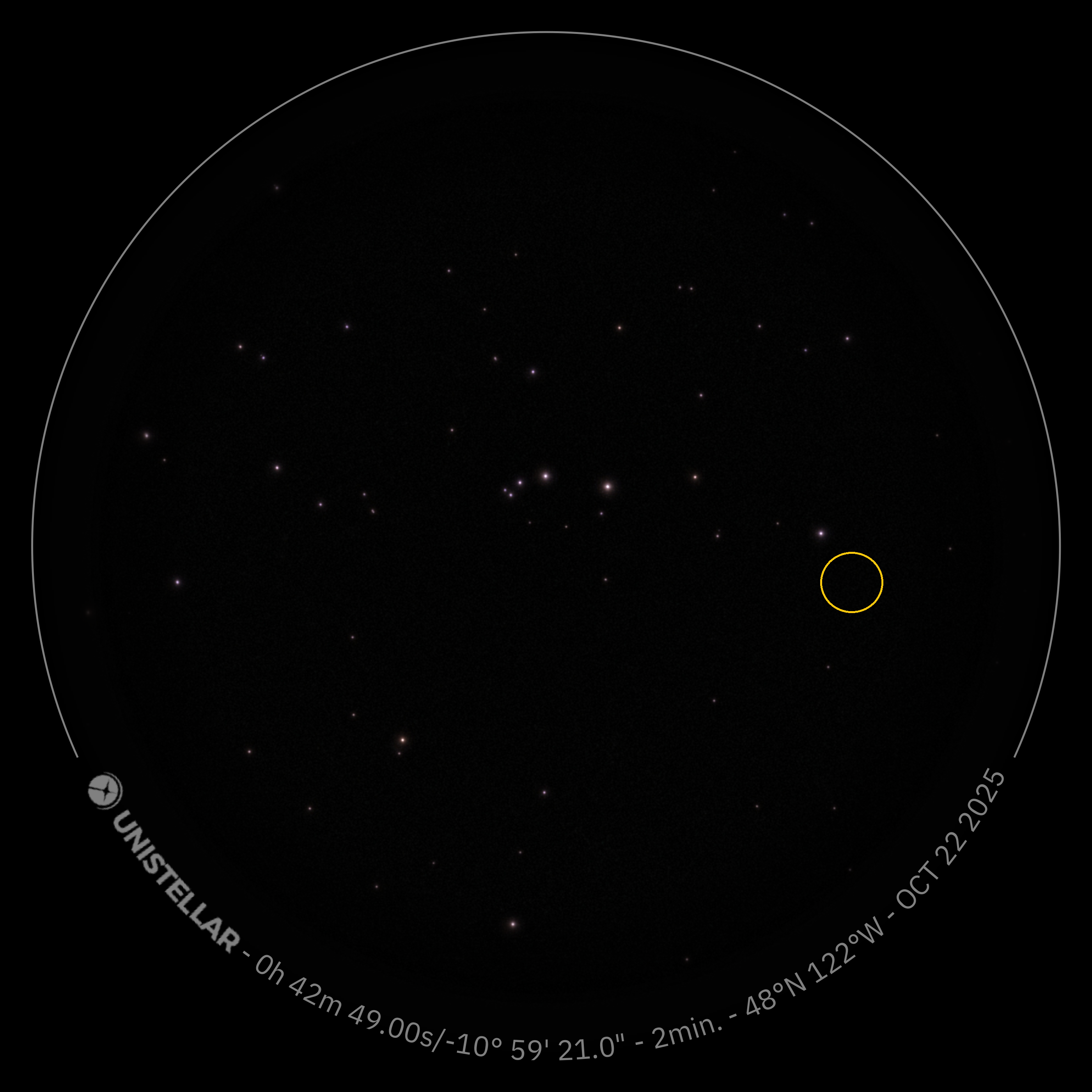
Ceres
2m
2025-10-22
I used a sky map tool, and according to that tool, on that night and from Seattle, Ceres is in the yellow circle. I might see a small smudge there? Maybe? If it’s there, it’s tiny.
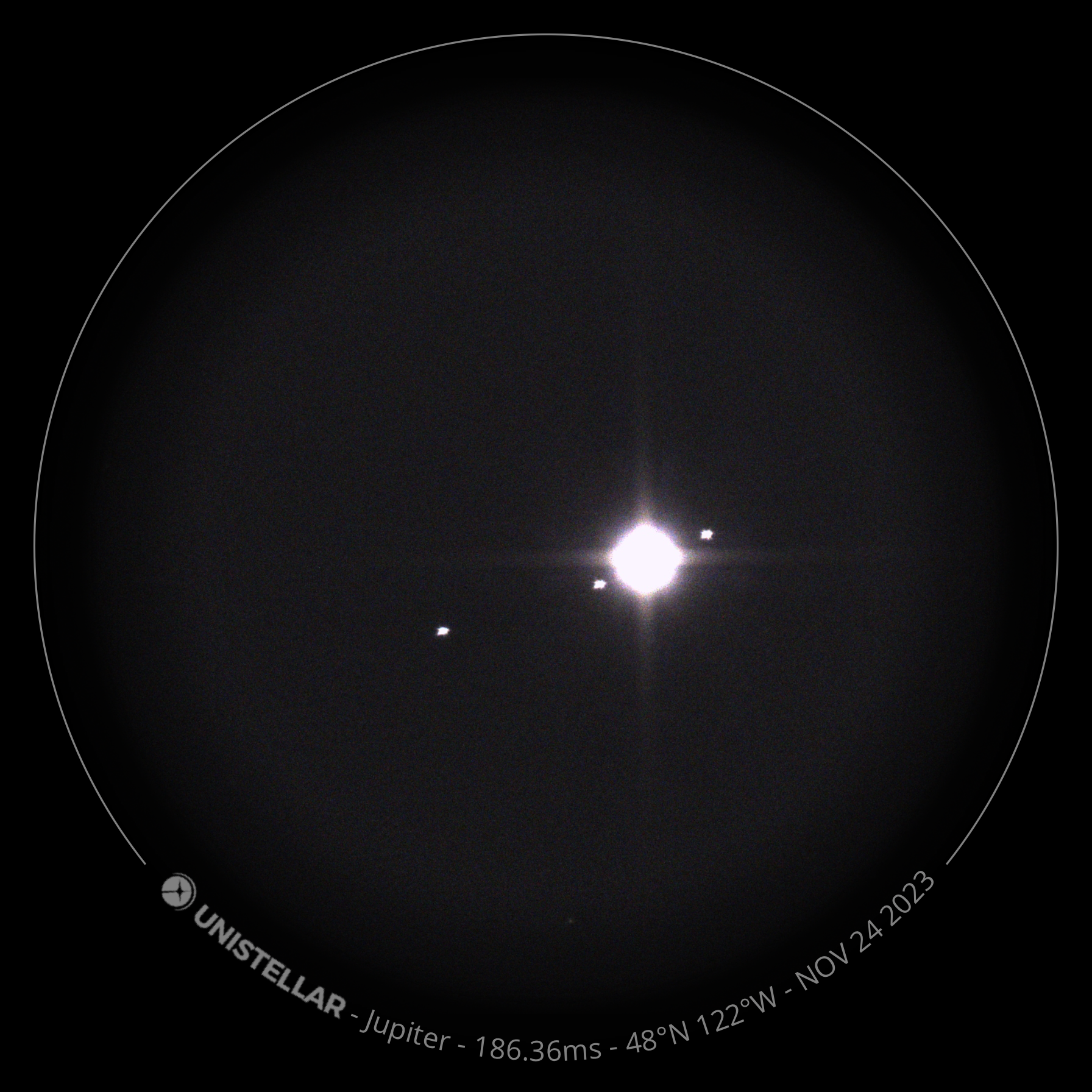
Jupiter and moons
snapshot
2023-11-24
Planet’s aren’t the eVscope’s forte – you can either play with the brightness & gain to see the moons, or use the default settings to see the planet.
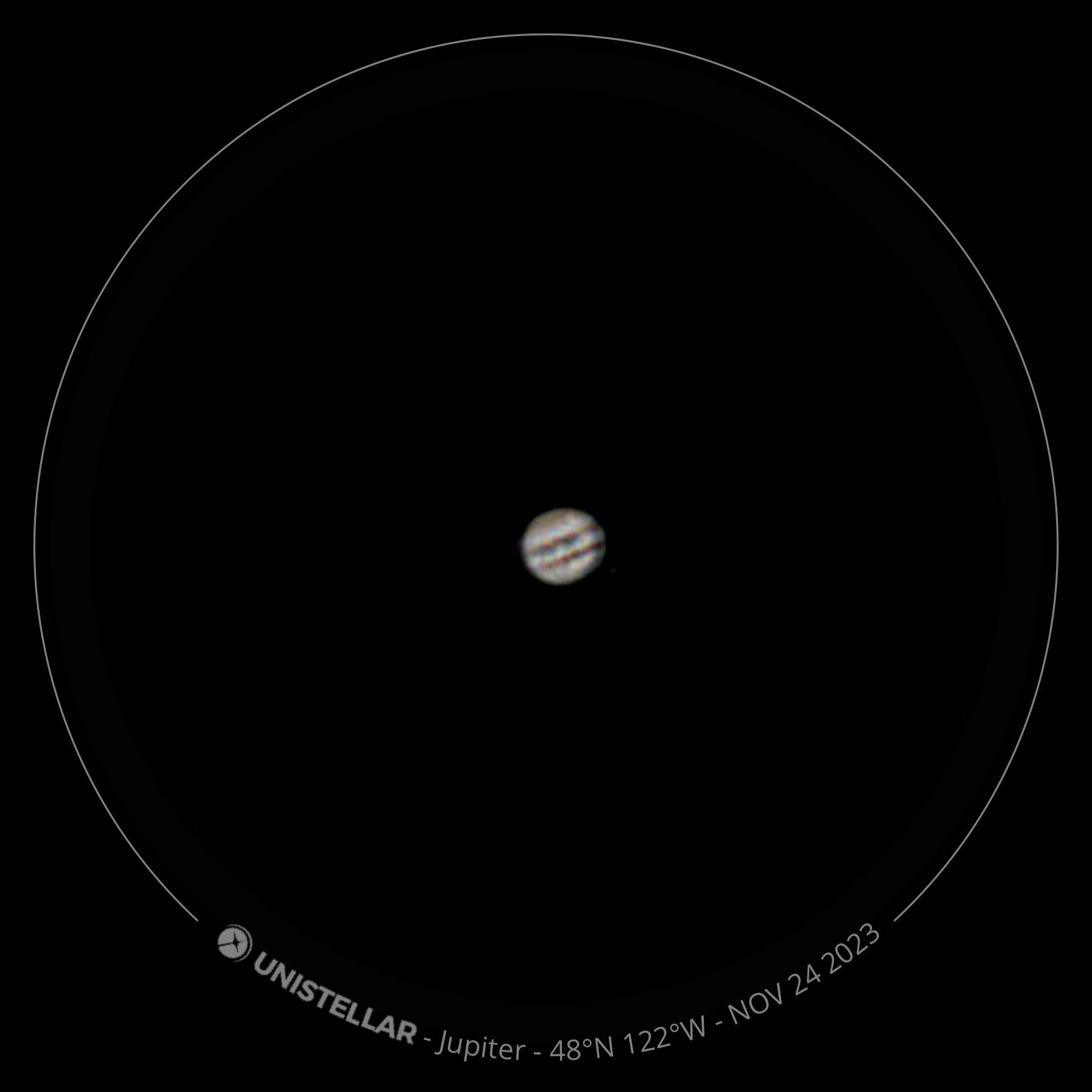
Jupiter
snapshot
2023-11-24
Unfortunately, since you can’t zoom the eVscope, you can’t get larger or better resolution than this (although it’s pretty good).
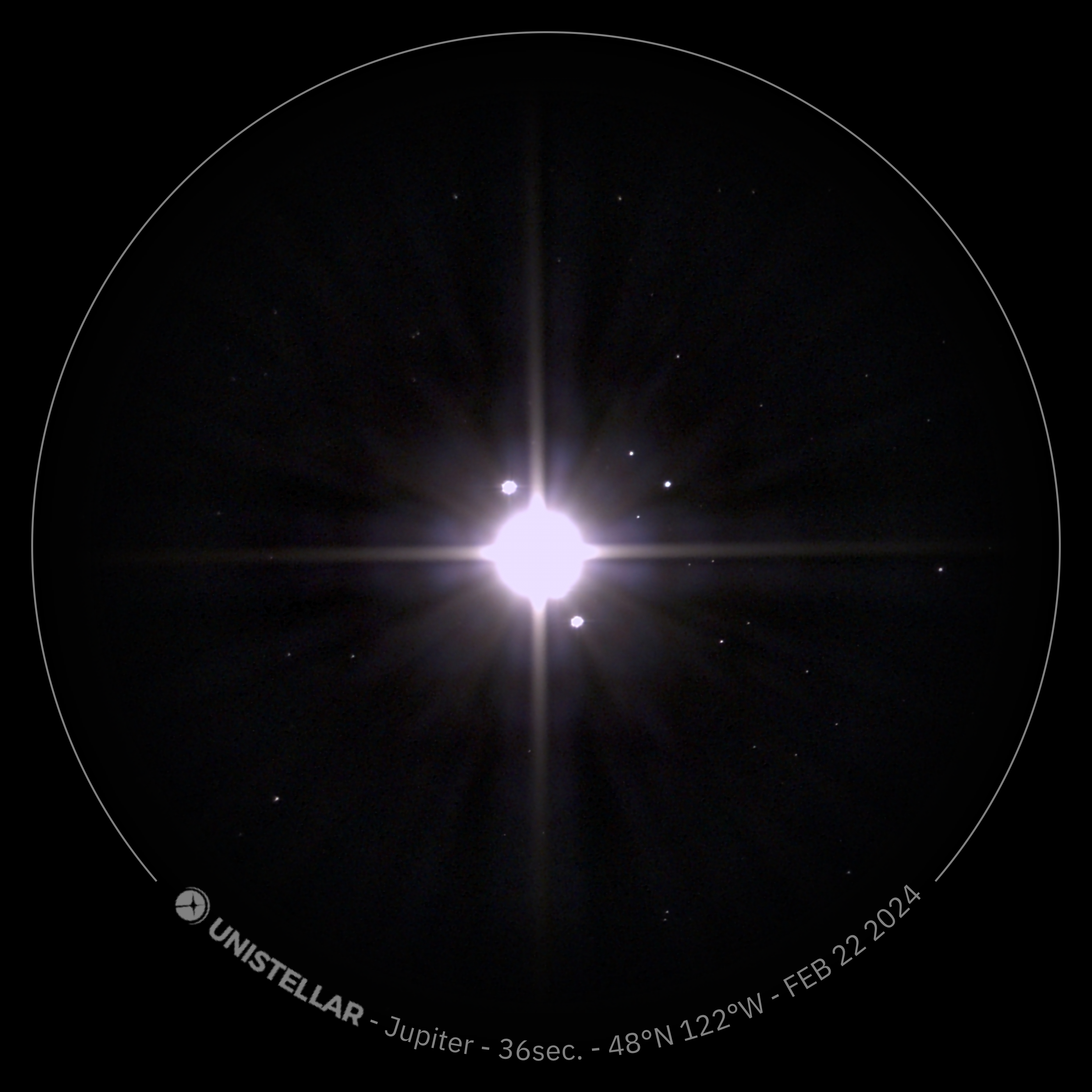
Jupiter
36s
2024-02-22
Two of the moons of Jupiter are clearly visible on either side of it.
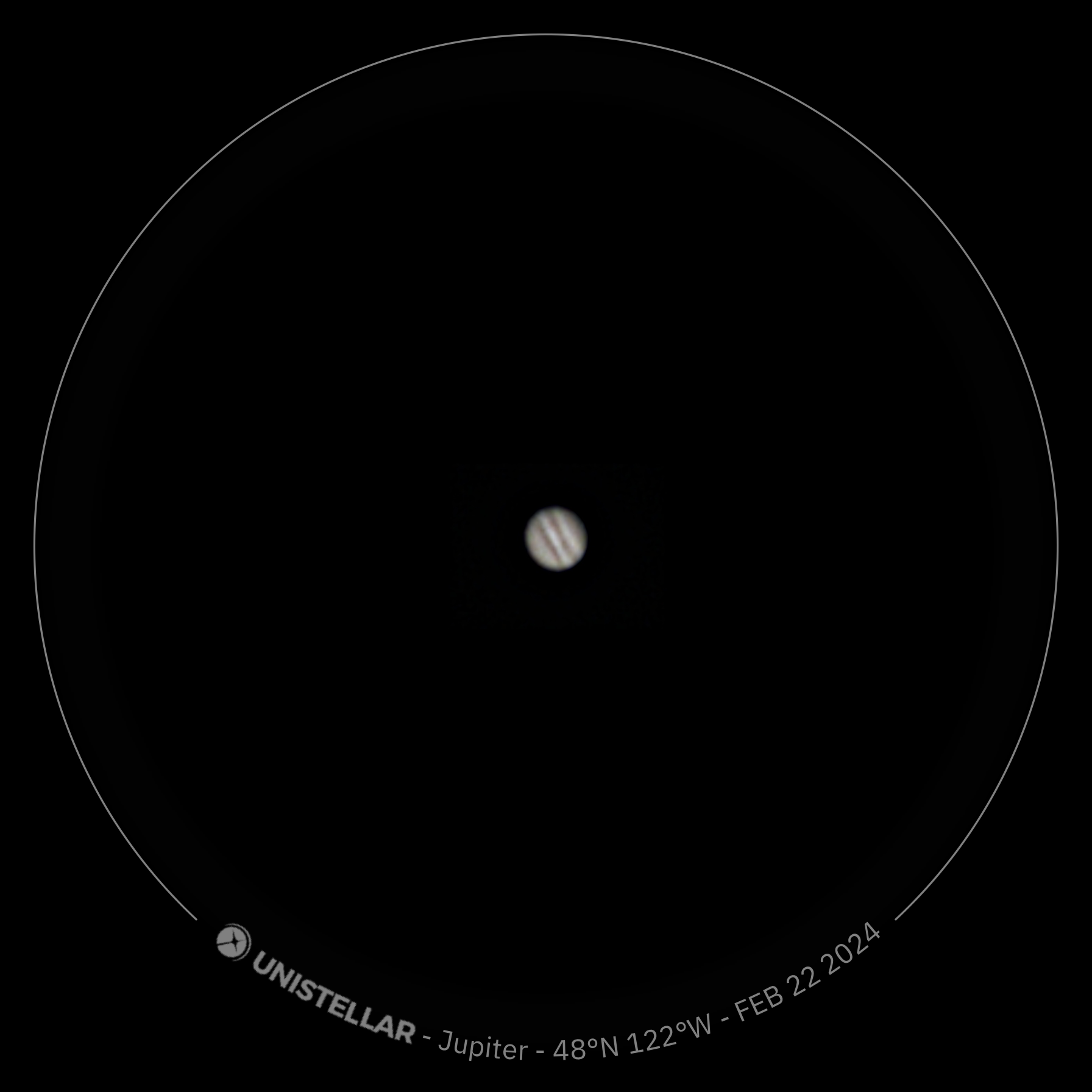
Jupiter
snapshot
2024-02-22
This is the same resolution as the above image, just with the gain and brightness turned way down. Because of this, you can’t see the moons, like you can in the picture above.
Jupiter
snapshot
2025-01-25
Not the best shot.
Jupiter
snapshot
2025-02-28
Pretty good shot.

Jupiter – eclipse by Io
snapshots
2025-04-03
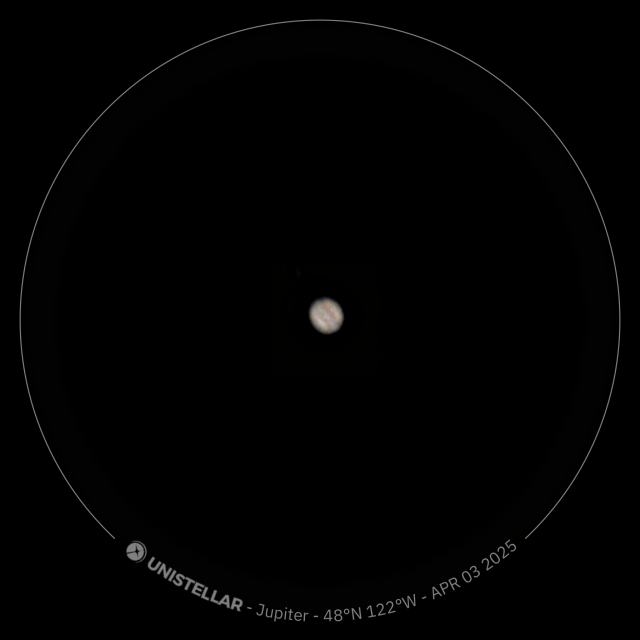
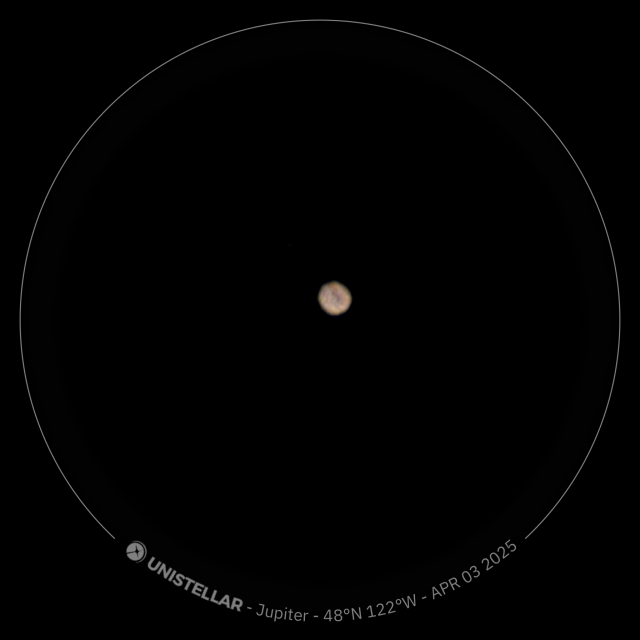
In early April 2025, Io passed between Jupiter and the sun, casting a shadow (an eclipse) onto Jupiter’s clouds. Since Jupiter is small in the eVscope’s field of view, this is at the upper limit of the resolution of the camera. But if you look closely, starting in the top (near the very end of the upper of the two dark bands of clouds), you can just see a bite out of the edge in the first image. In the second, there’s definitely a distinct dark spot just below the upper band, and in the third and fourth image, the shadow smears out and keeps moving down and to the right. It’s not perfect, but I don’t think I’m imagining seeing it.


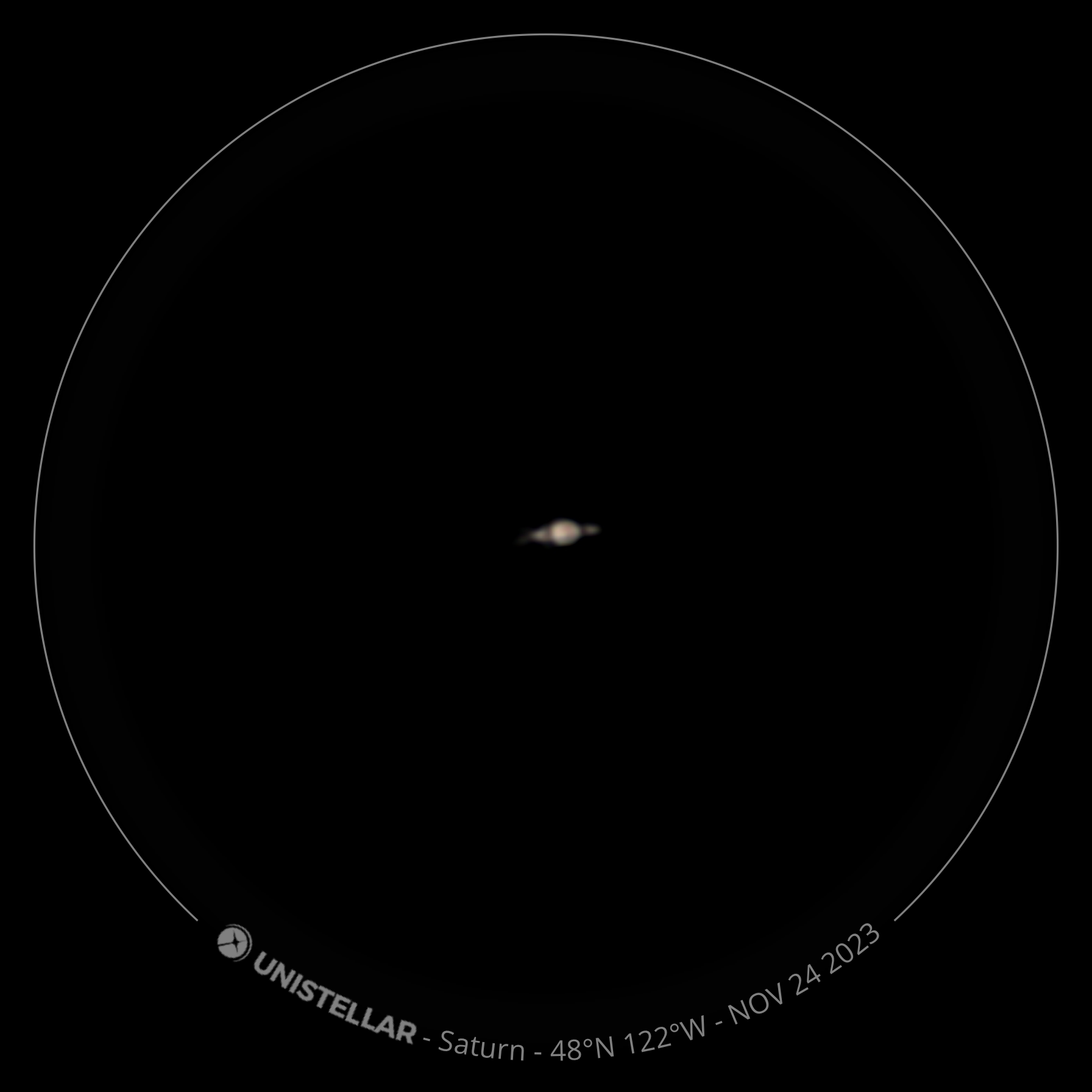
Saturn
snapshot
2023-11-14
Saturn
snapshot
2024-09-01
Not a bad one of Saturn, with the rings almost edge-on.
Saturn
snapshot
2024-09-01
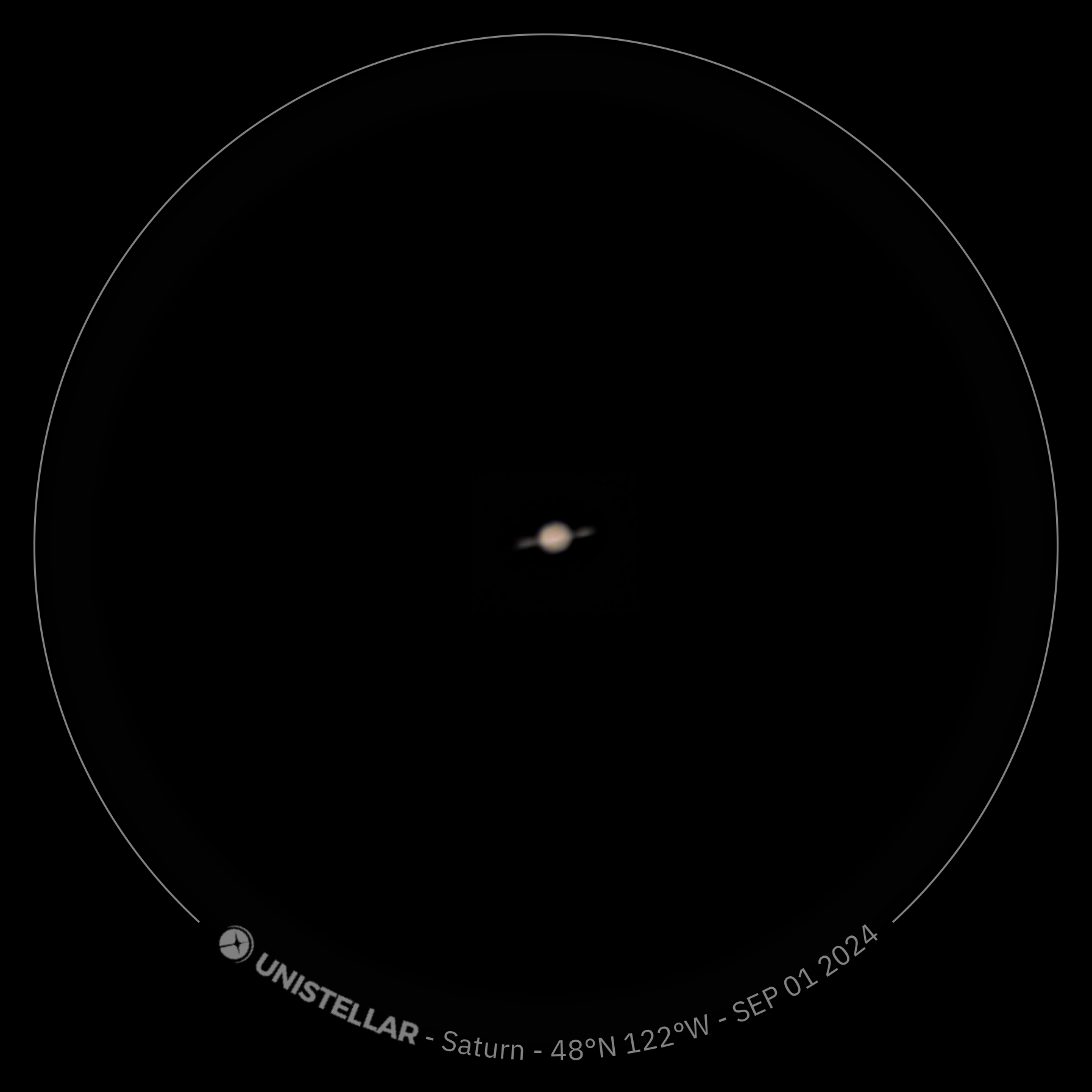
Same night, a bit later, and the earth’s rotated just a bit (which is why Saturn appears to have rotated a bit from the above image).

Saturn
snapshot
2024-11-12
Not a great one, but since Saturn is so small in the eVscope’s field, it’s hard to get much better.

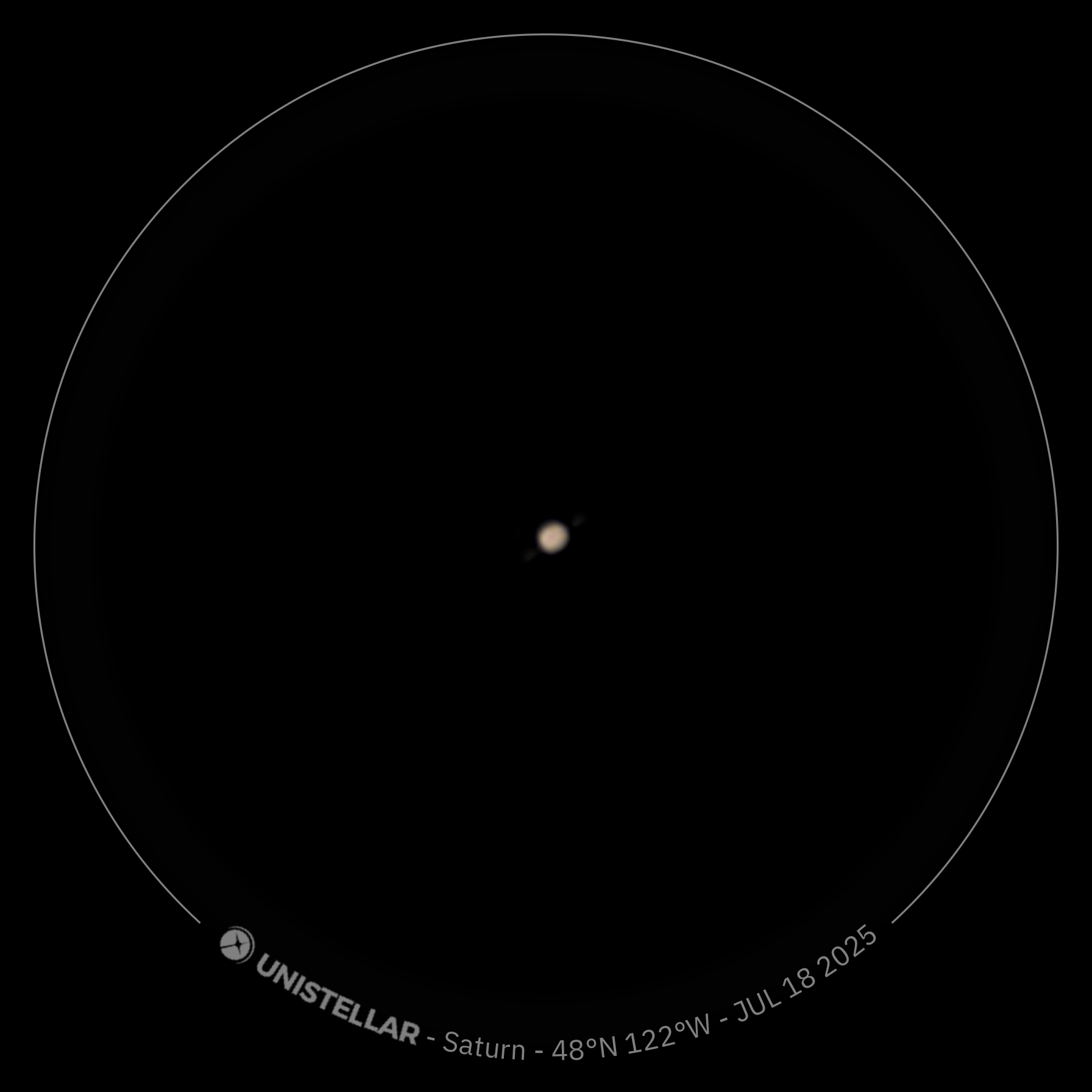
Saturn
snapshot
2025-07-18
An attempt to capture Titan casting a shadow on Saturn. Unfortunately, the resolution isn’t high enough to make out the details.
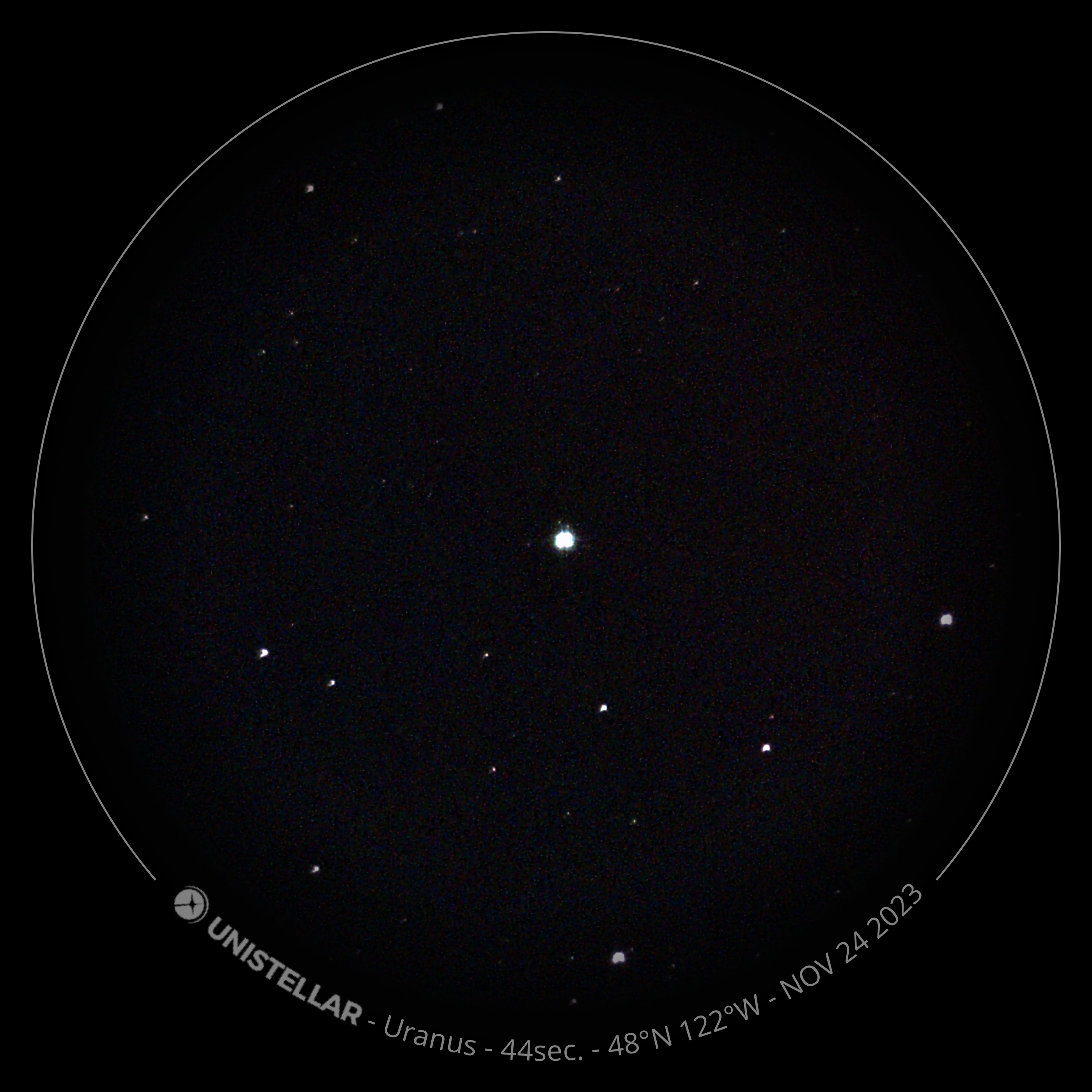
Uranus
44s
2023-11-24
I should probably go back and re-image Uranus, with the new software (which enhances & does color stretching). I wonder if the blue will come out more.
Neptune
60s
2023-11-24
I guess technically you can see it…

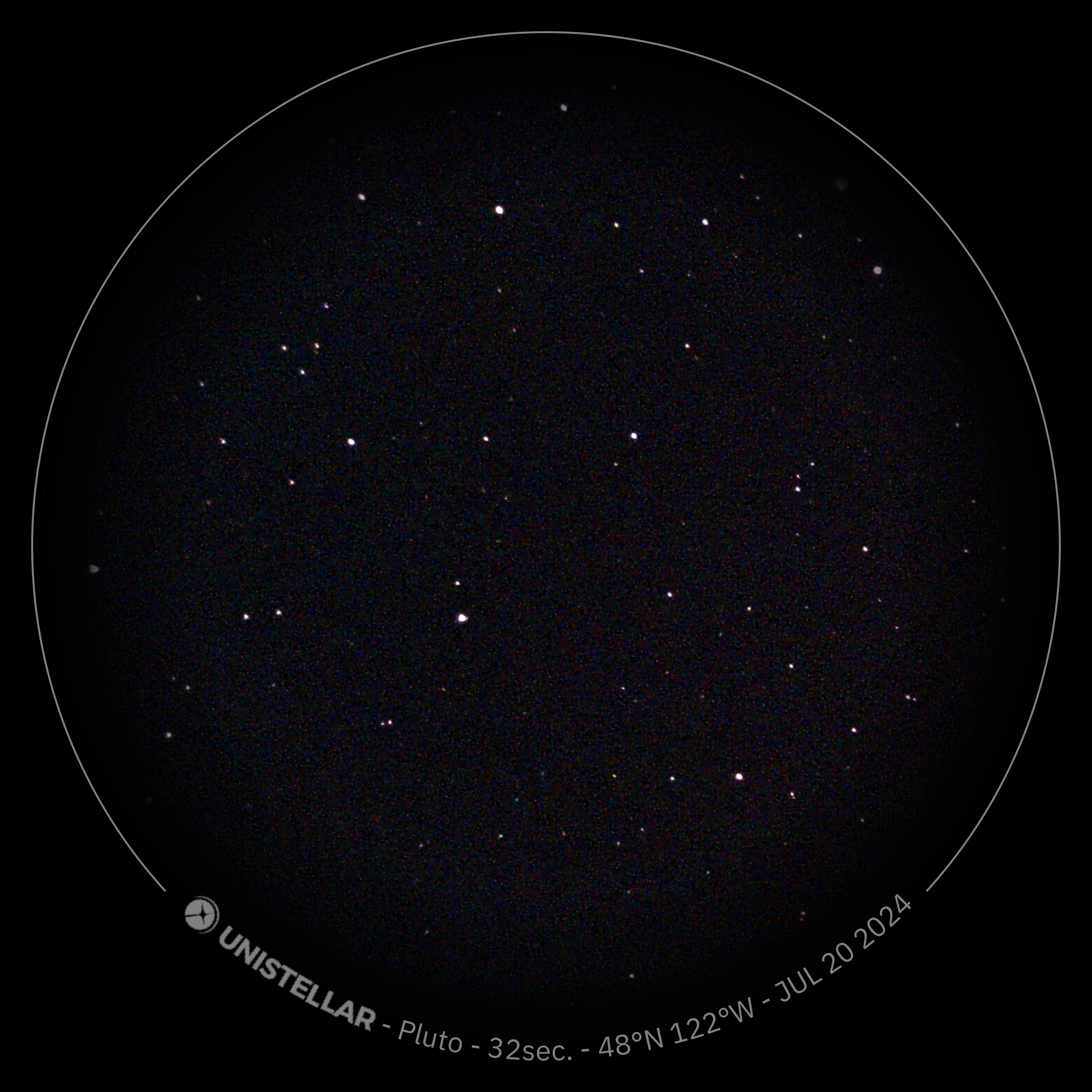
Pluto
32s
2024-07-20
Probably naive to think that I could get Pluto on only 32 seconds of dwell time. I’m not even sure it’d show up with 60 minutes. Still, it’s supposedly … right about there?