I bought a Unistellar eVscope2 back in 2022, and I’ve been setting it up occasionally on the back deck of my house in Seattle. These are some of the pictures I’ve taken with it.
This page is for star clusters that are NOT galaxies – frequently these are referred to as globular clusters. They’re dense concentrations of stars and star formation, usually a couple hundred light-years across or less. They’re also distinct from nebulae, which tend to be smaller (but also often have a lot of star formation). These clusters often have star densities up to 100 times that of our local neighborhood. In other words, instead of the closest star (Proxima Centauri) being 4 light-years away, it might be only about 15 light-DAYS away. Given that our Oort cloud stretches out to about 0.4 light years, that means there would be about 10 stars within that radius. That’s lots of comets whizzing around, more than a few colliding stars, and probably not very many planets.
While star clusters do well in the eVscope2’s field of view, they’re not it’s forte. The eVscope is great for dim objects like galaxies and nebulae, whereas most clusters are easily visible with simple telescopes or even binoculars. Even so, I did learn that longer dwell times on these clusters can produce interesting results.
I’m also going to include the few stars I’ve captured on this page – not many, because they’re not super exciting – but I have a few.
M2
8m
2025-10-13
M2 is a dense little globular cluster in Aquarius. It’s both one of the oldest (about 12.5 billion years old) and one of the largest (175 light-years in diameter) clusters in the Milky Way. It’s possibly part of an ancient galaxy that collided with the Milky Way 8-11 billion years ago.
M3
68s
2022-05-21
One of the earliest photos for me. M3 is one of the largest clusters, at 226 light-years across.

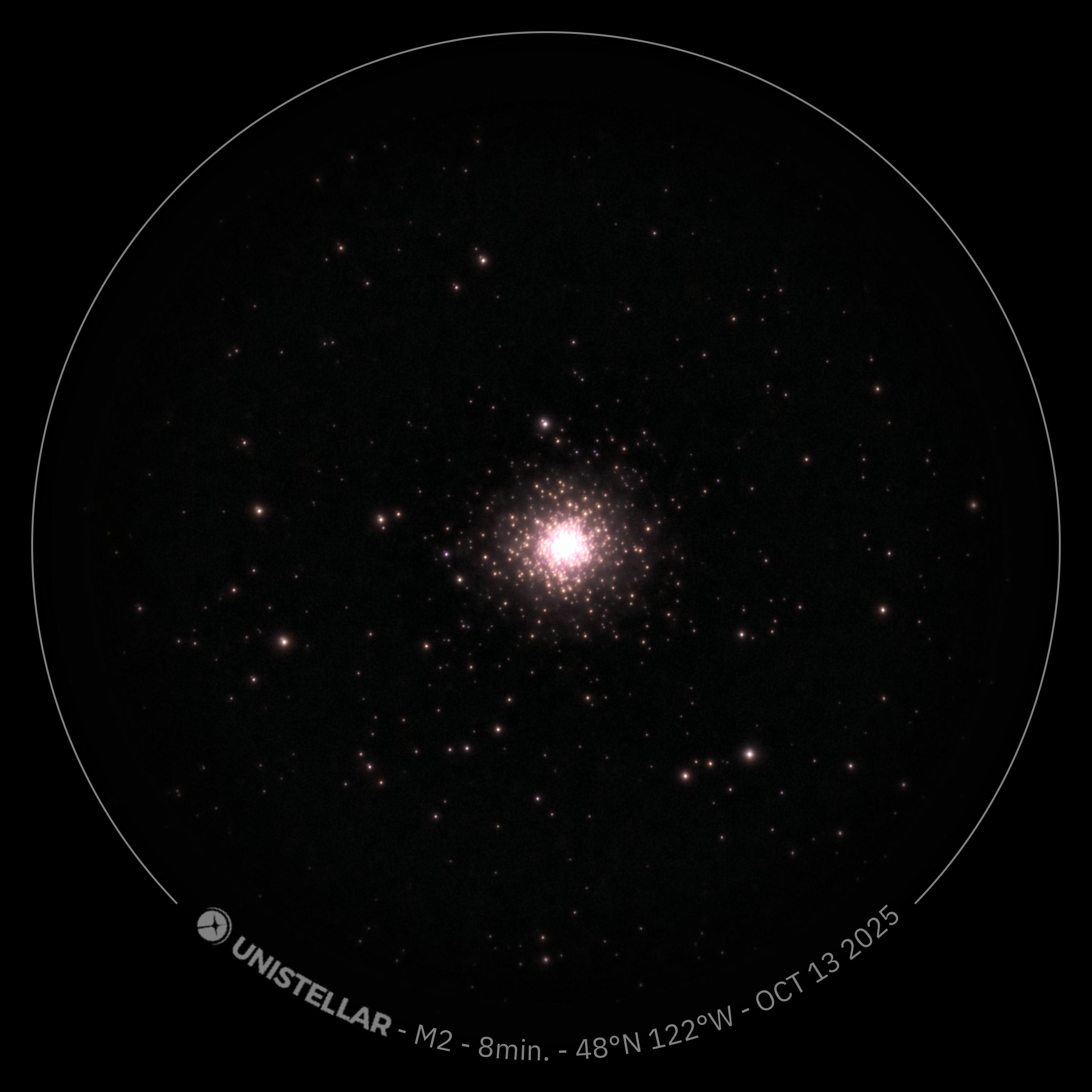
M3
2m
2022-07-21
M3 is also technically outside the Milky Way, a bit over 30,000 light years above the galactic plane. So it’s close — the Milky Way is over 100,000 light-years across — but not TOO close. I bet the Milky Way would look pretty amazing from one of these stars.
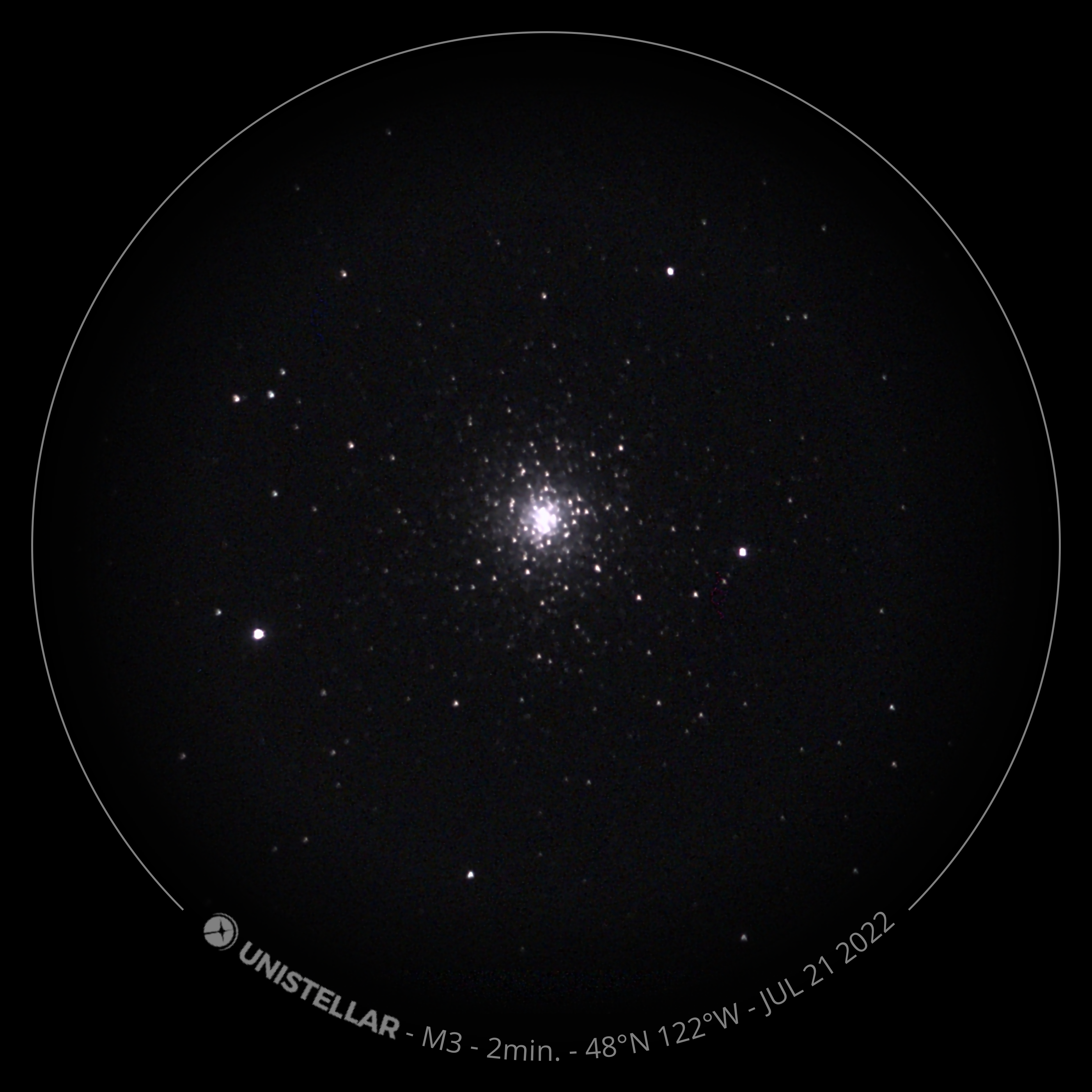
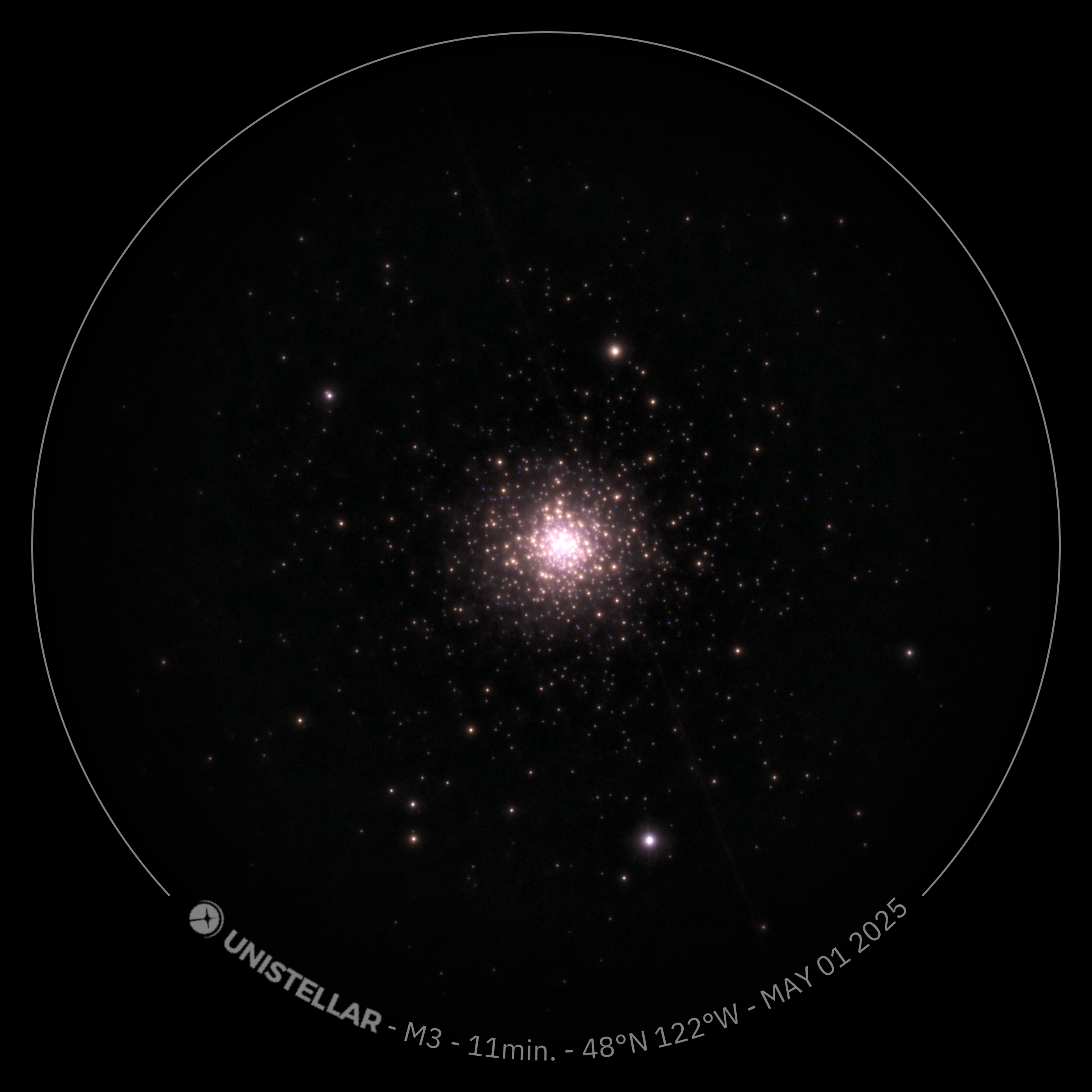
M3
11m
2025-05-01
After the launch of Unistellar’s new software to add sharpening and color stretching, you can see that the colors have become much richer than previous shots, even just for stars. I also figured out that even for globular clusters, a longer dwell time can produce much more interesting images.
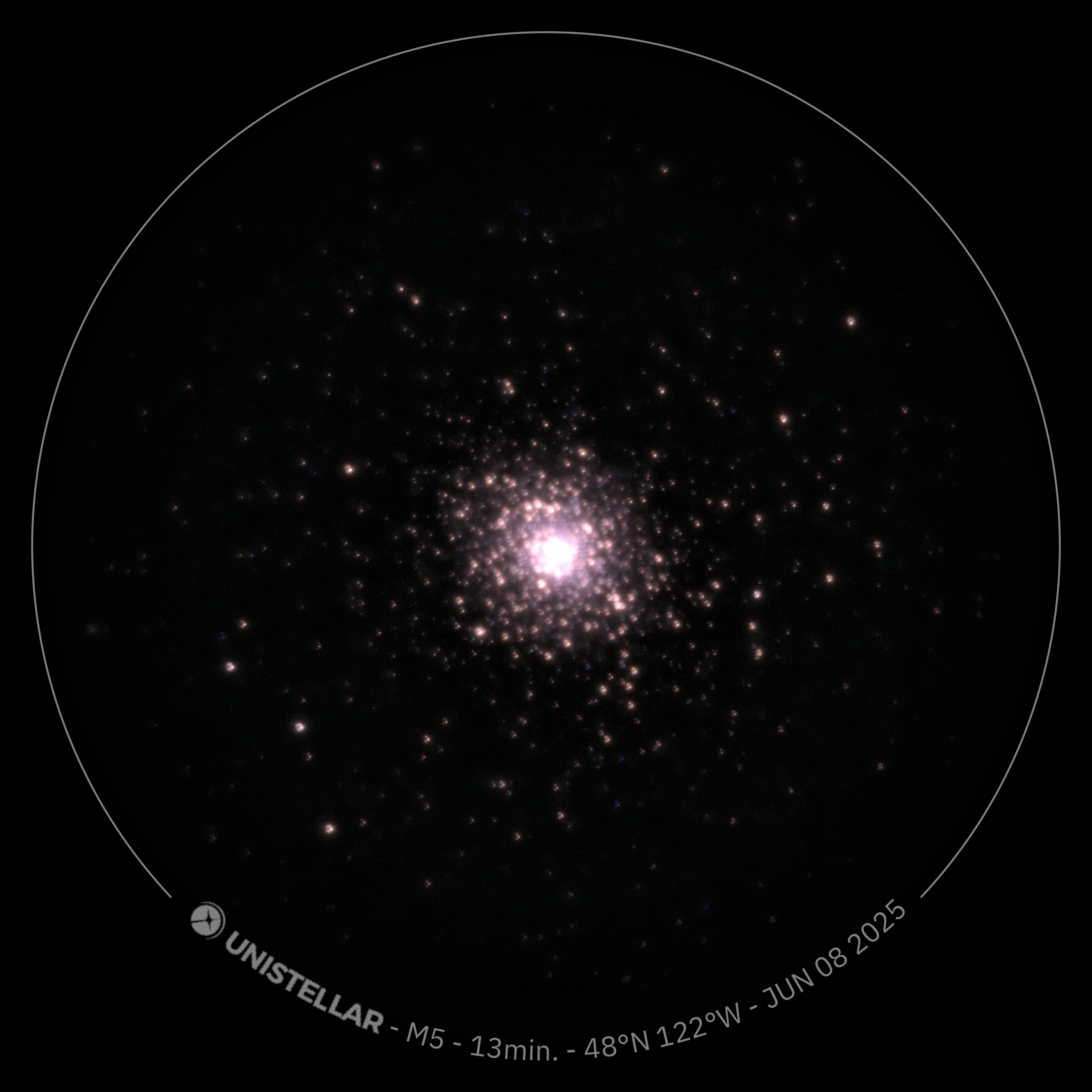
M5
13m
2025-06-09
This cluster’s core is so bright that it can sometimes be mistaken for a faint star by the naked eye.
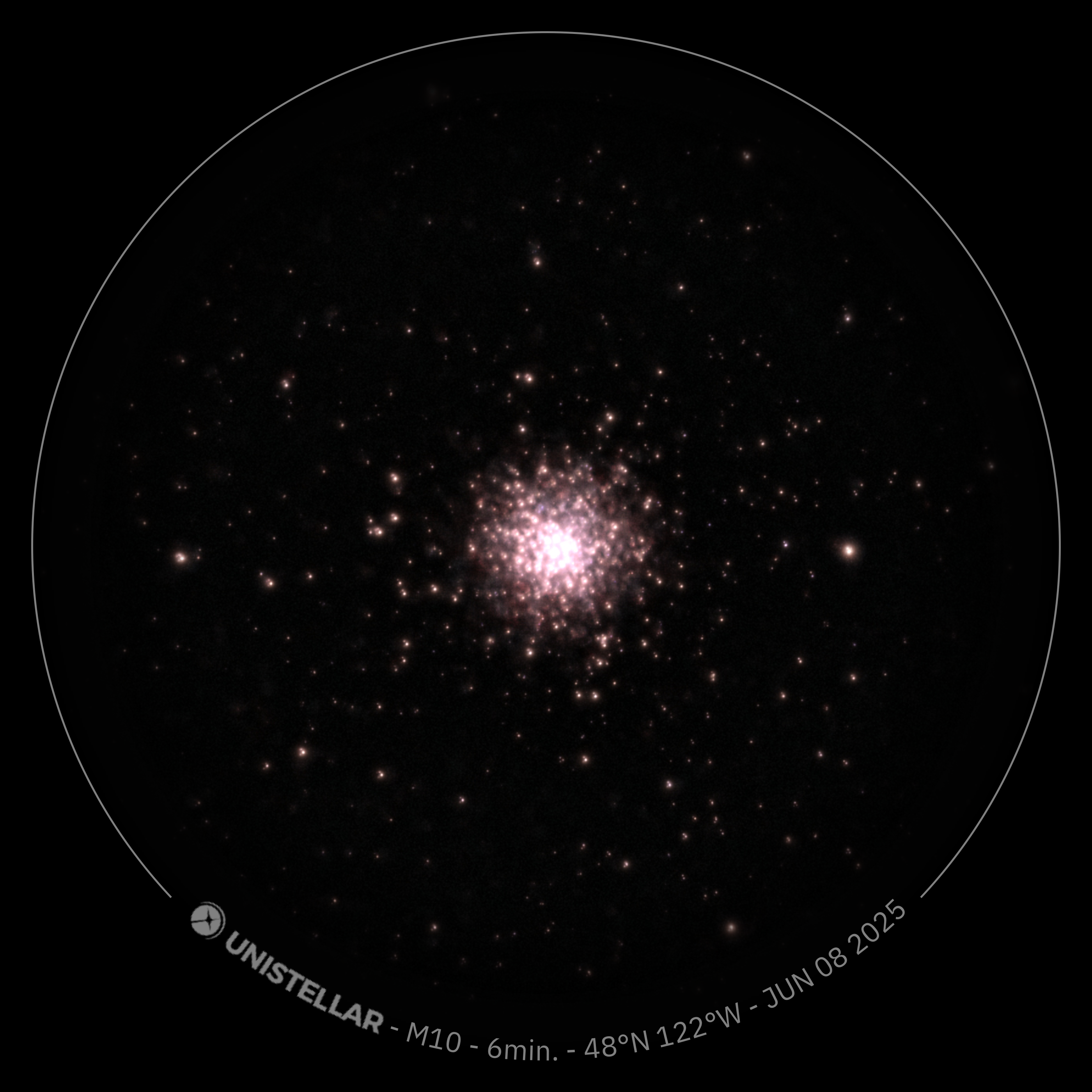
M10
6m
2025-06-09
A nice little cluster, the bright core of stars is only 35 light-years across.
M11 – Wild Duck Cluster
48s
2023-11-06
Somewhat sparse compared to other clusters, but still a nice spray of salt on the black background of space. It’s just under 200 light-years across.

M13 – Hercules Globular Cluster
72s
2023-07-01
A very dense globular cluster. M13 is old, consisting mostly of population II stars, with much less metal and heavy elements than population I stars like our sun.
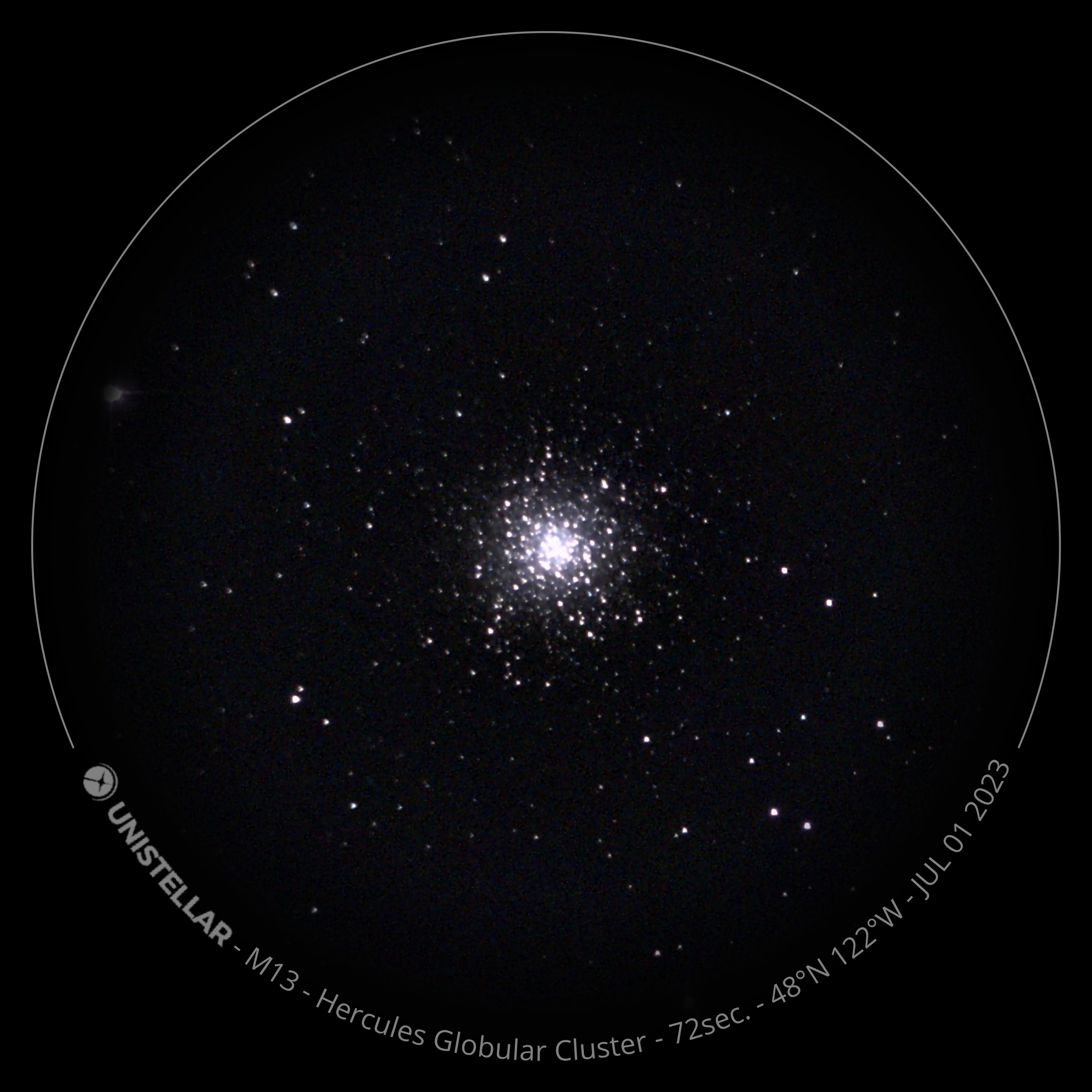
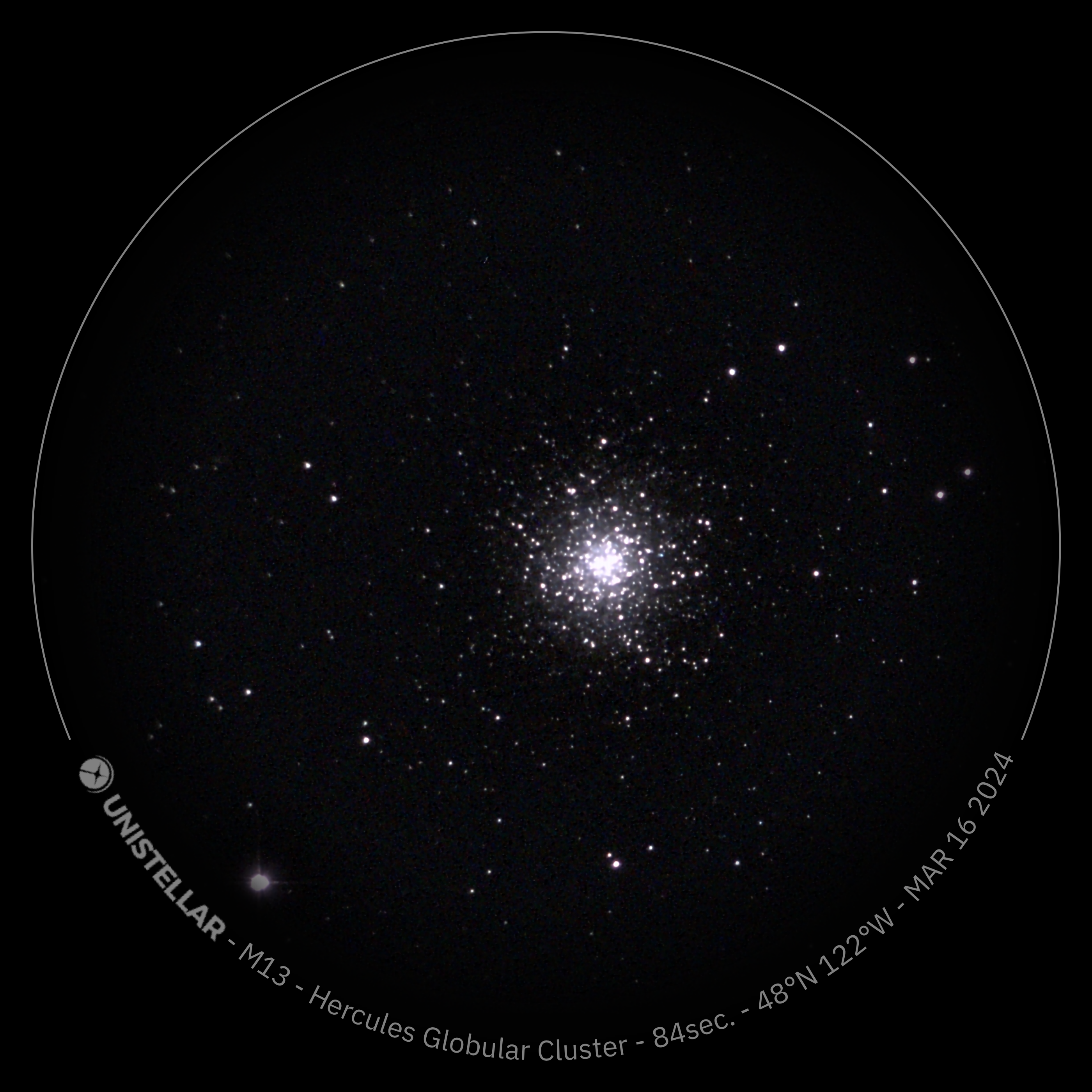
M13 – Hercules Globular Cluster
84s
2024-05-16
M13 is also where the Arecibo Message was sent towards. Ironically, because the cluster is moving relative to us, and because light takes time to travel, it’s probably going to completely miss the cluster.
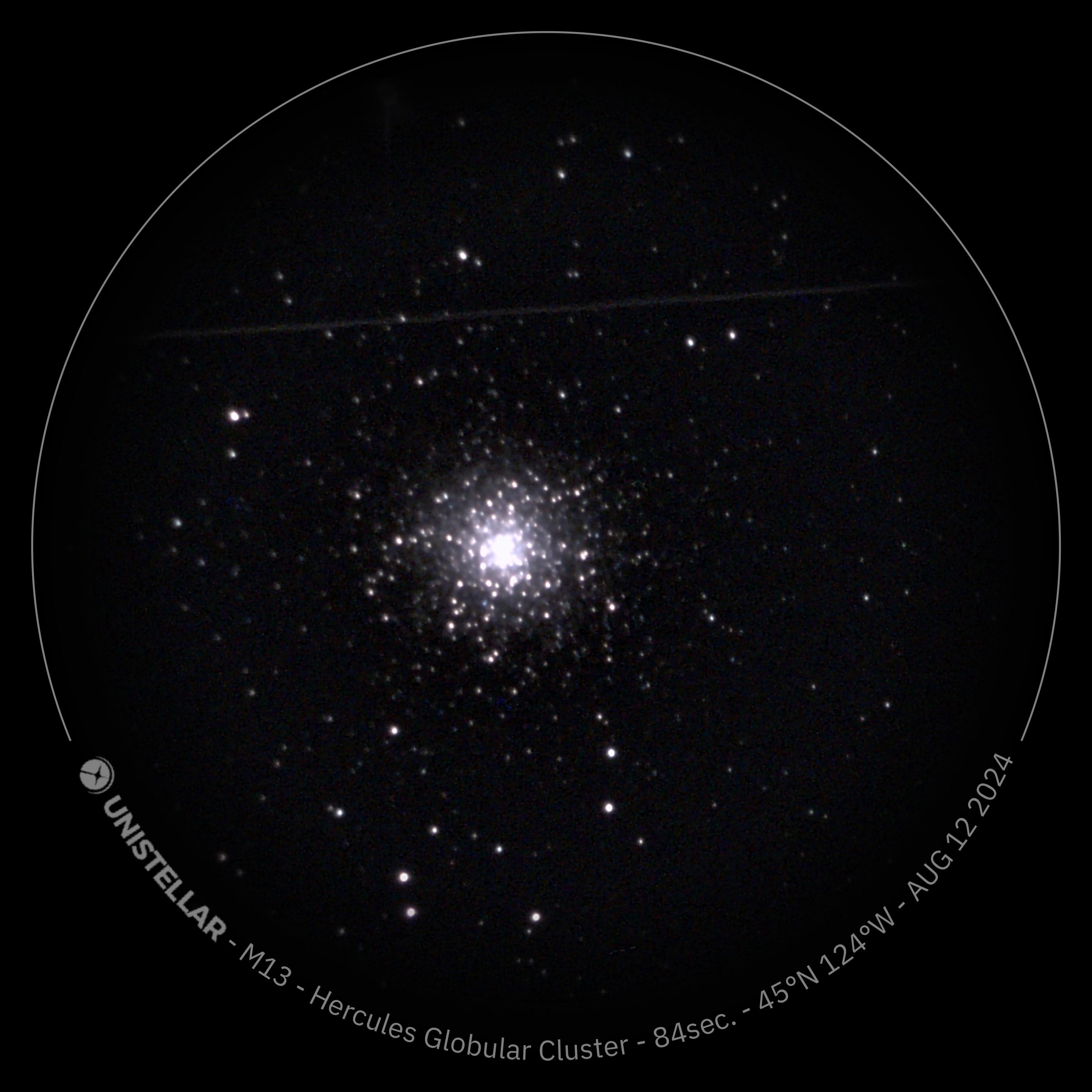
M13 – Hercules Globular Cluster
84s
2024-08-12
Hey look! A satellite! It’s that line across the top. All the new Starlinks and other satellites have created problems for long-dwell and long-exposure astrophotography.
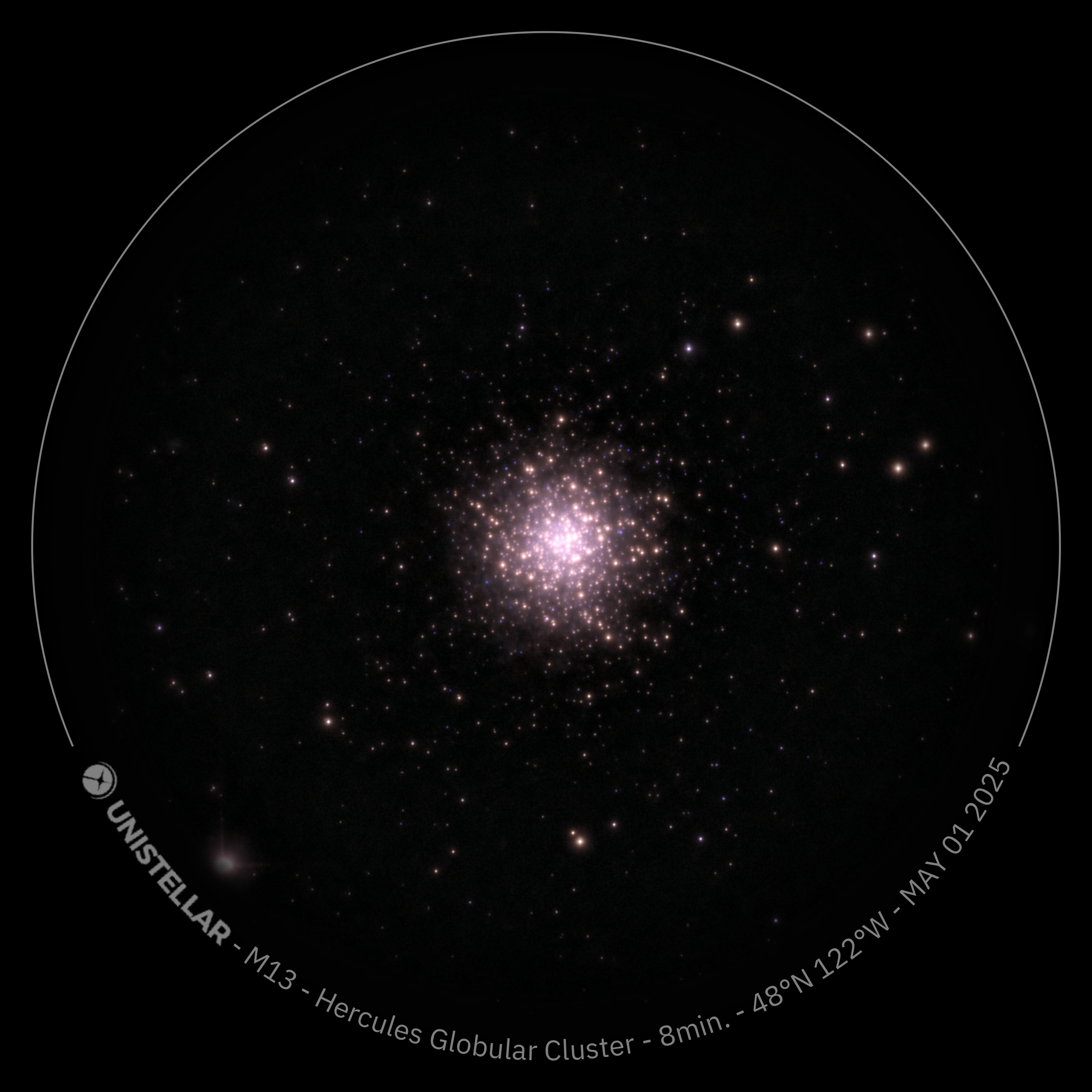
M13 – Hercules Globular Cluster
8m
2025-05-01
A much better shot, vastly improved by both the longer dwell time and the color stretching.
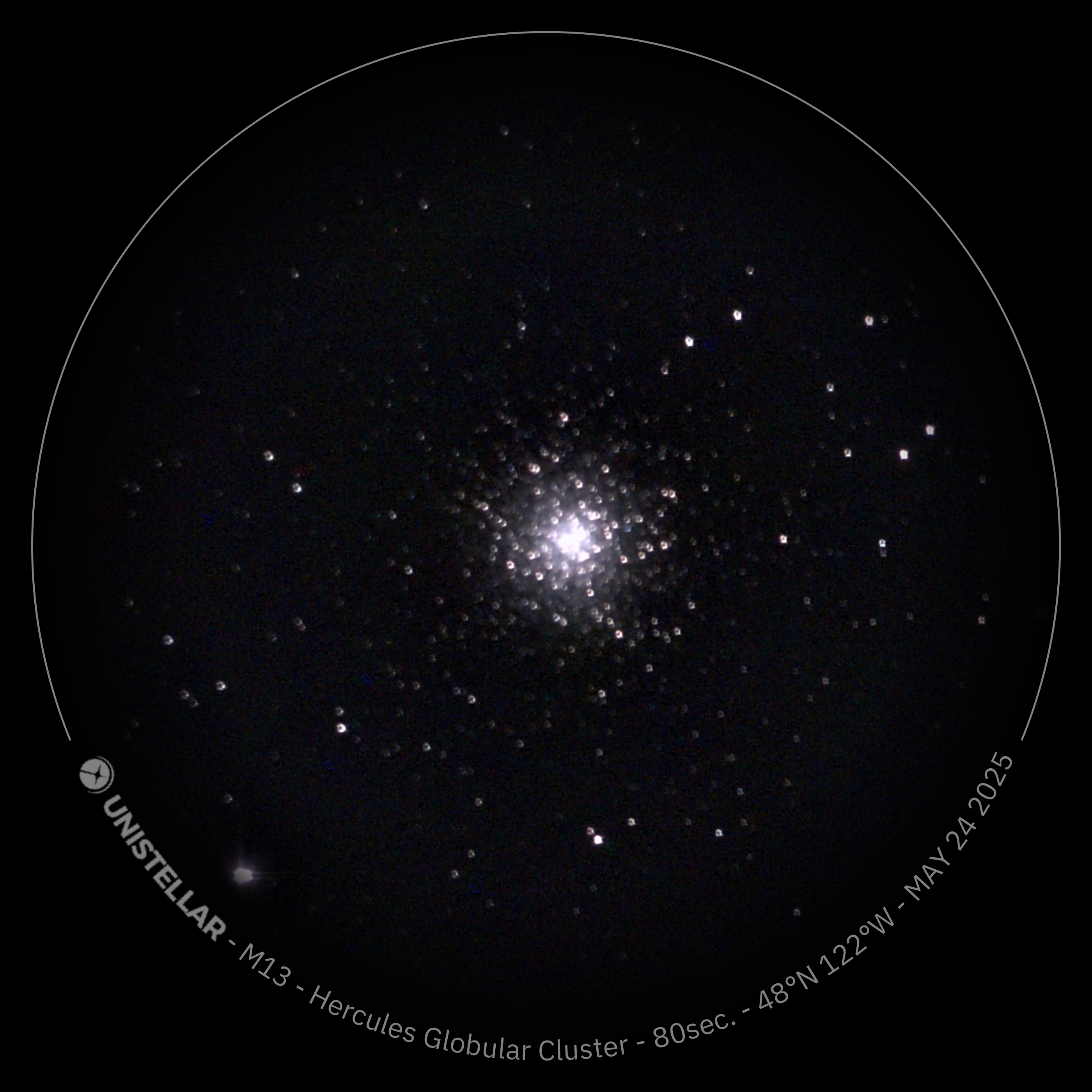
M13 – Hercules Globular Cluster
80s
2025-05-24
You can tell from this one that my telescope was slightly out of focus, unfortunately.
M15 – The Great Pegasus Cluster
6m
2025-10-13
M15 is one of the most densely packed clusters in the Milky Way, with over 100,000 stars inside a diameter of only 175 light-years. Its bright center is a dense sphere of closely-packed stars, possibly orbiting a central black hole.

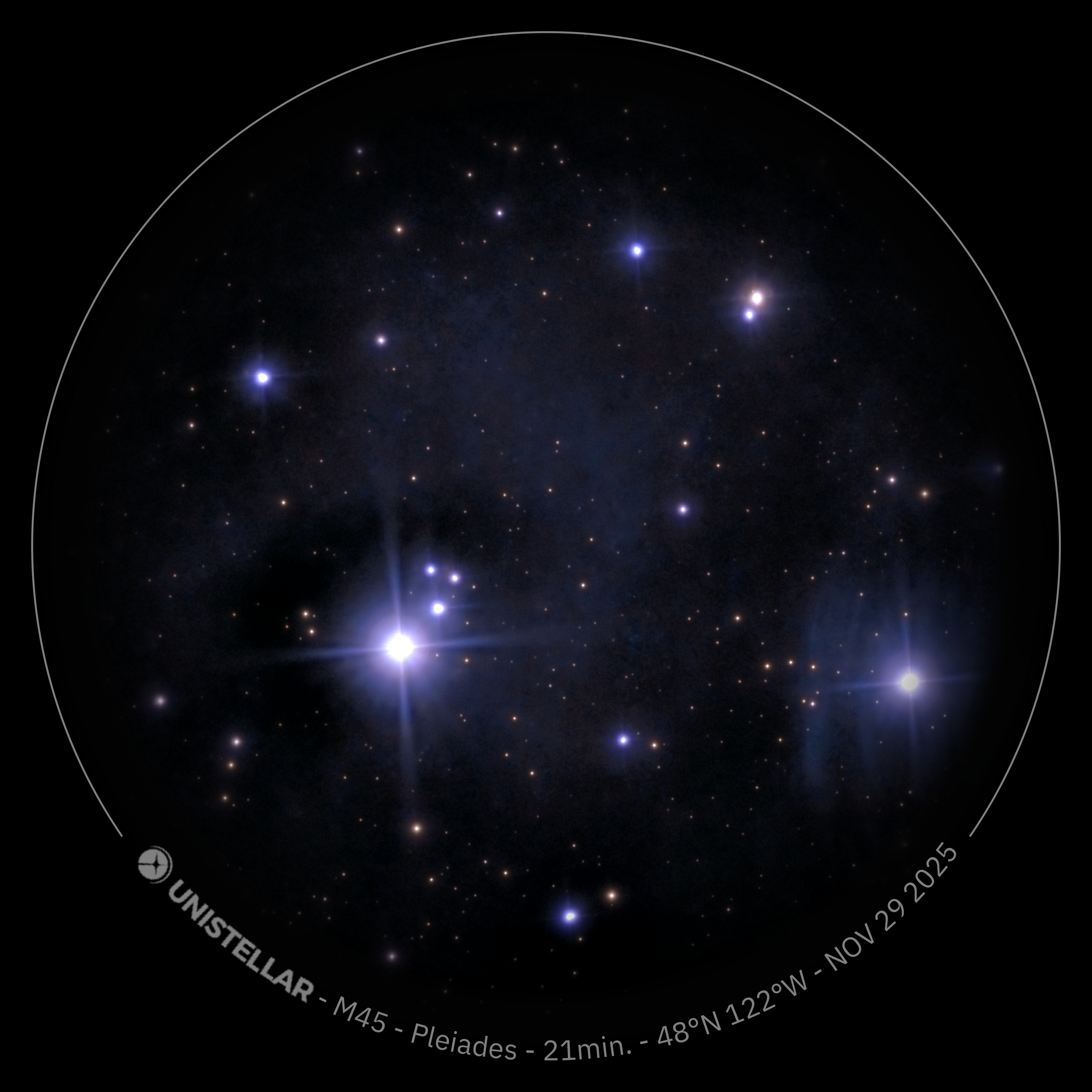
M45 – Pleiades Cluster
21m
2025-11-29
Something I knew: the Subaru logo is based on the Pleiades. What I learned: it also contains a reflection nebula of ionized hydrogen (often referred to as a H II region). Super cool!
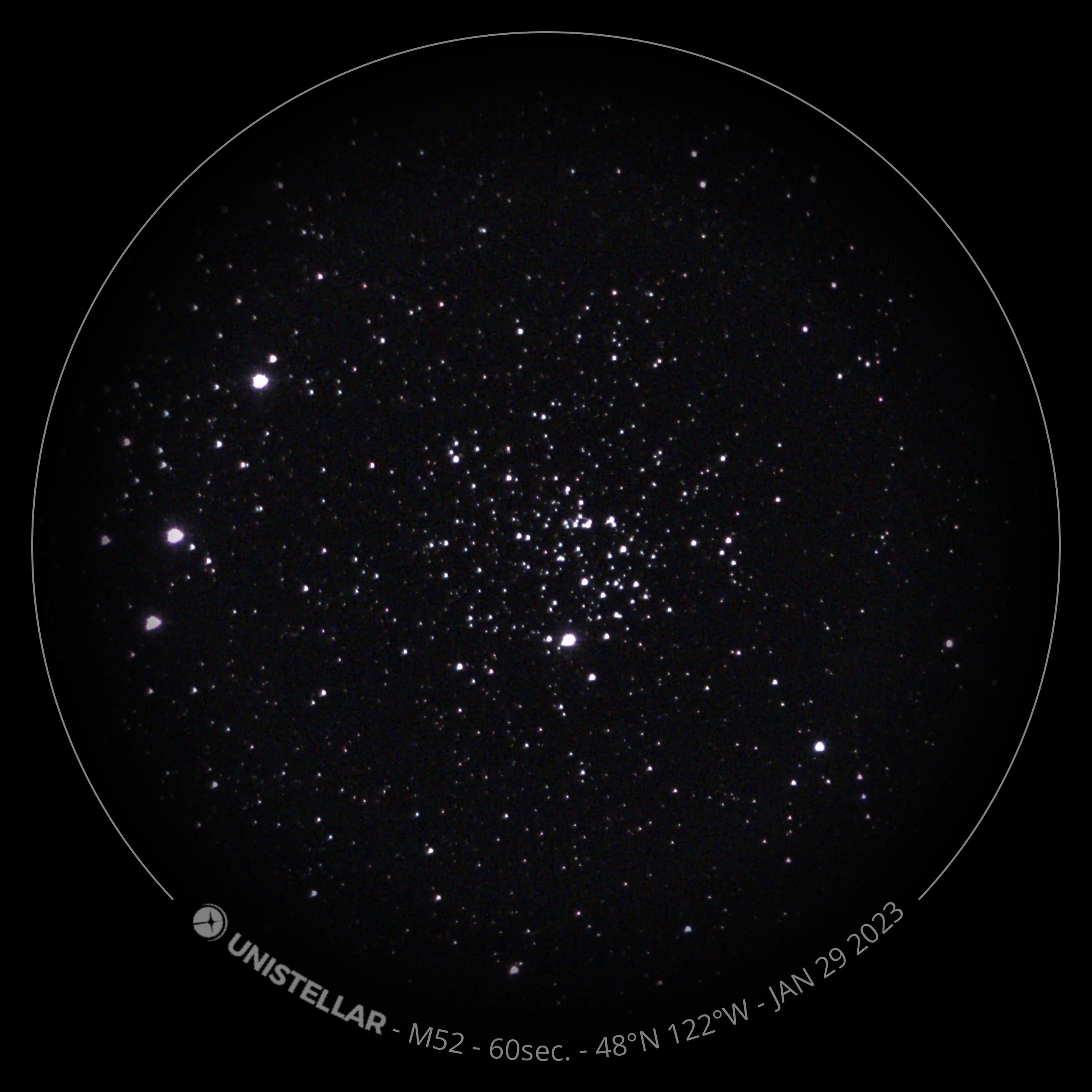
M52
60s
2023-01-29
Another small and relatively sparse cluster.
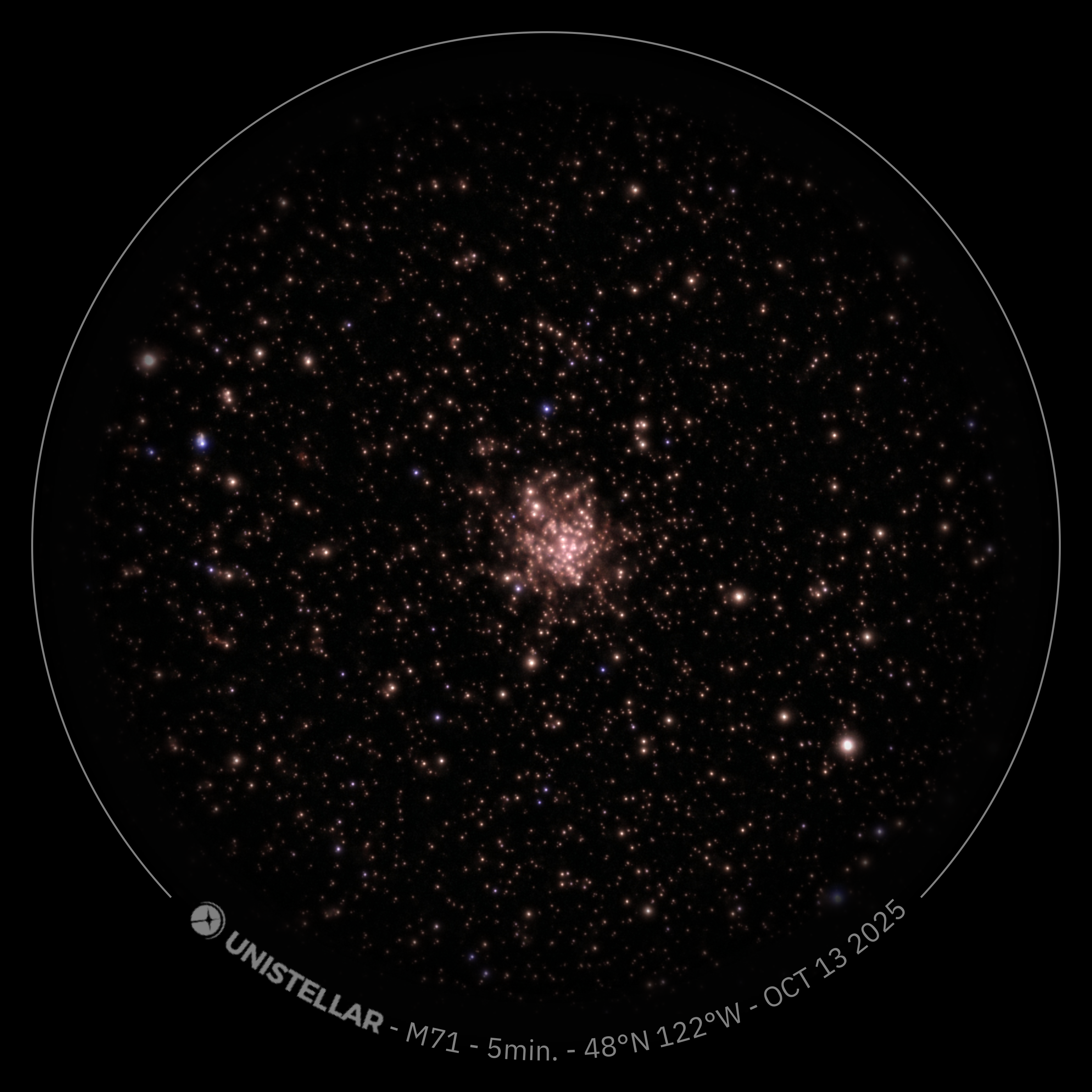
M71
5m
2025-10-13
The M71 globular cluster is a new one for me. It’s only about 27 light-years across, and is about 13,000 light-years away.
M92
64s
2024-09-01
A small cluster with a dense center.

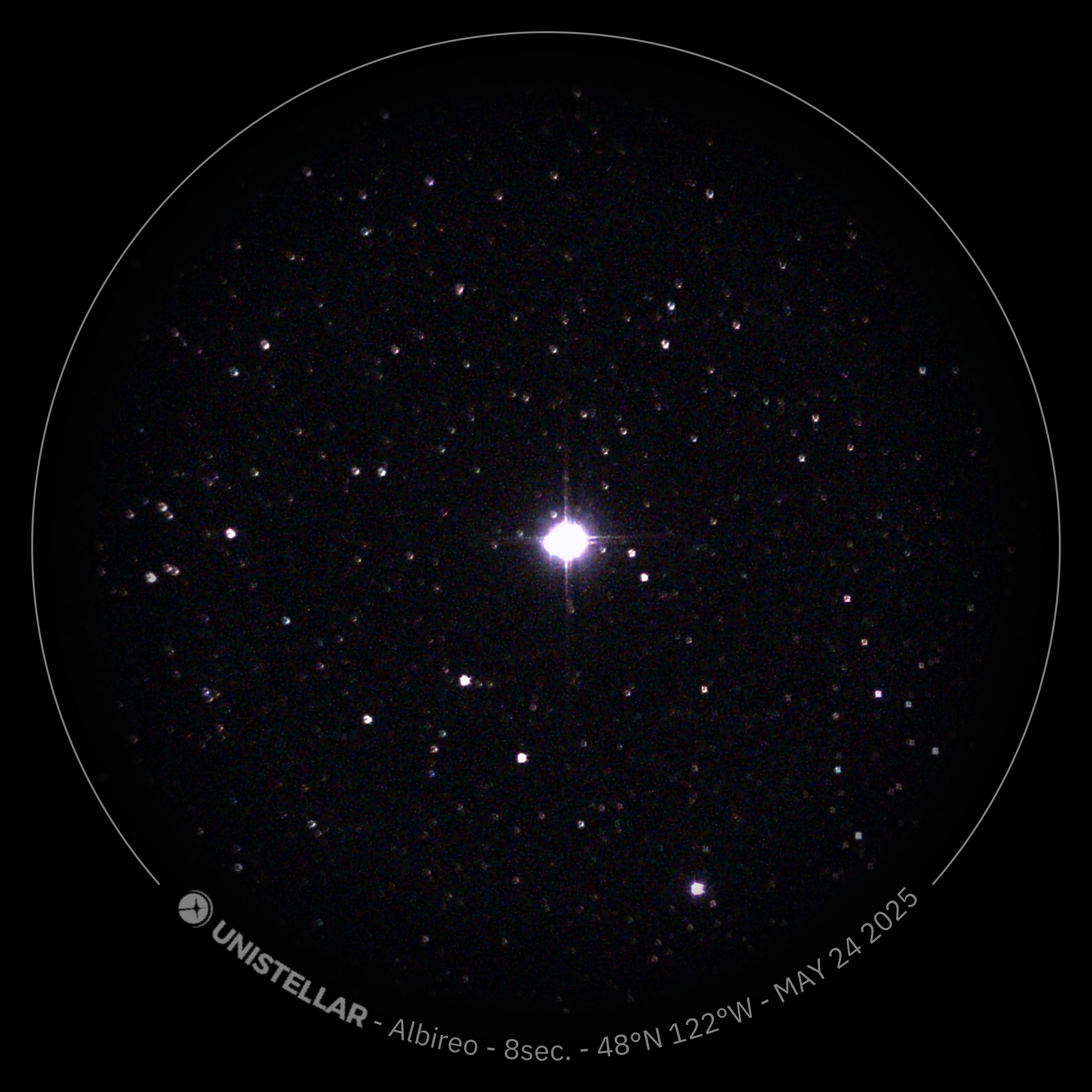
Albireo
8s
2025-05-24
You can’t really see it here (and I forgot to take a picture with a lower gain & brightness), but Albireo is a visible double star – you can see both stars with a simple telescope or binoculars.
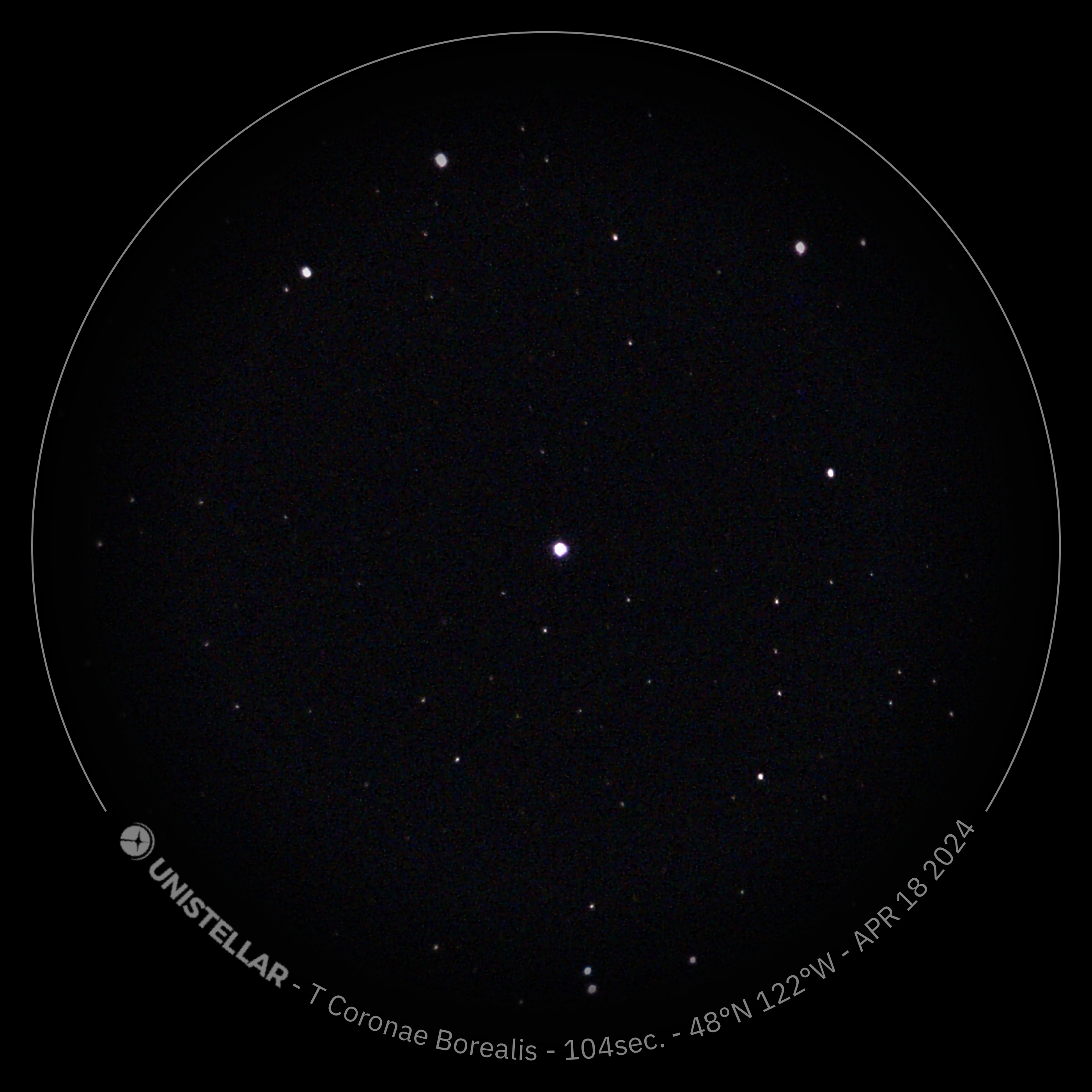
T Coronae Borealis
104s
2024-04-18
T Coronae Borealis is a recurrent nova star, meaning it predictably explodes every 80 years or so. It’s supposed to blow up … today? Tomorrow? By all accounts, it’s actually late at this point. I have this picture pre-nova, in case it goes boom in the next few months or years. If it does go kablooie, then I’ll try to photograph it and post it here.
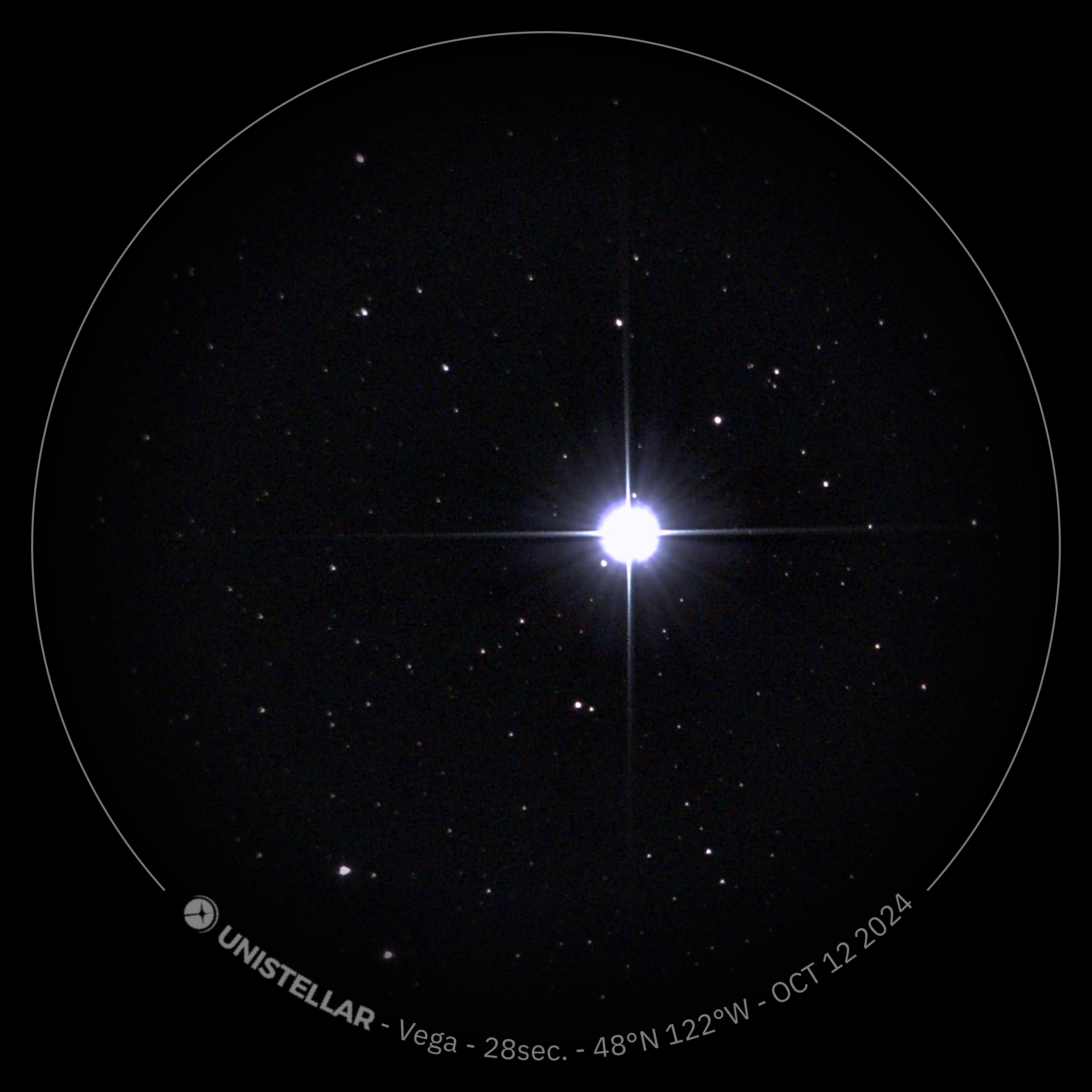
Vega
28s
2024-10-12
Man, that’s a bright star.