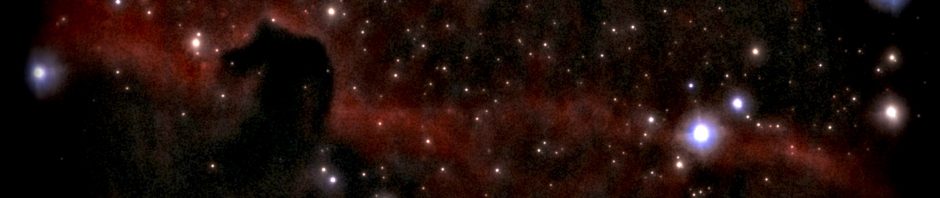
So I’ve been looking for more targets that were (a) appropriately sized, and (b) of sufficient brightness, given my location.
For the eVscope and in terms of size, the best targets are around 10-30 arc-minutes, since they fit in the field of view nicely. Smaller targets are doable, but you really don’t want to go below 2 or 3, and anything bigger than ~35 is larger than your visible area. For scale, the Dumbbell Nebula comes in around 8 arc-minutes on its long axis, while the Ring Nebula is about 1.5 arc-minutes across. At the large end, the full moon is just over 30 arc-minutes, or about the width of the field of view.
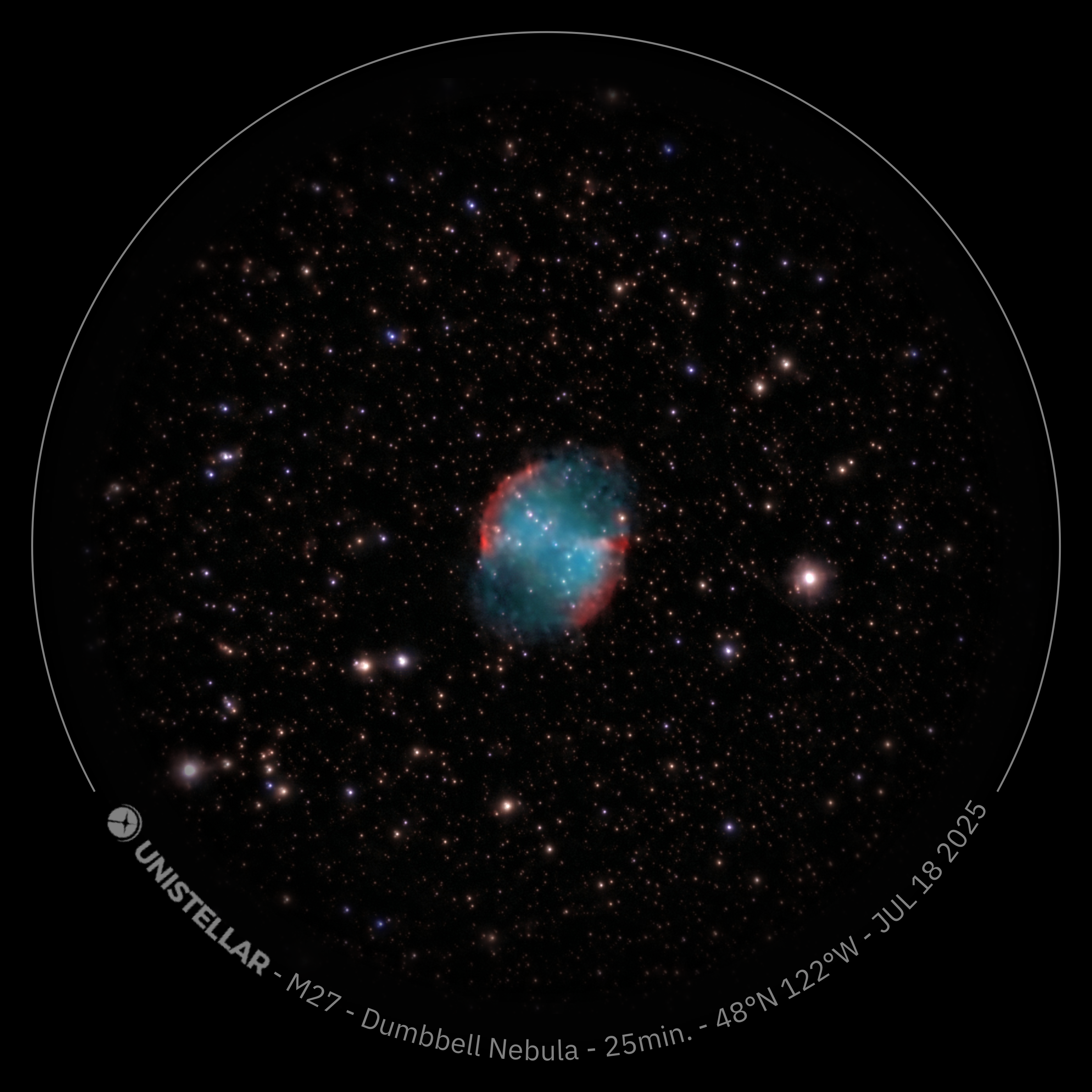 | 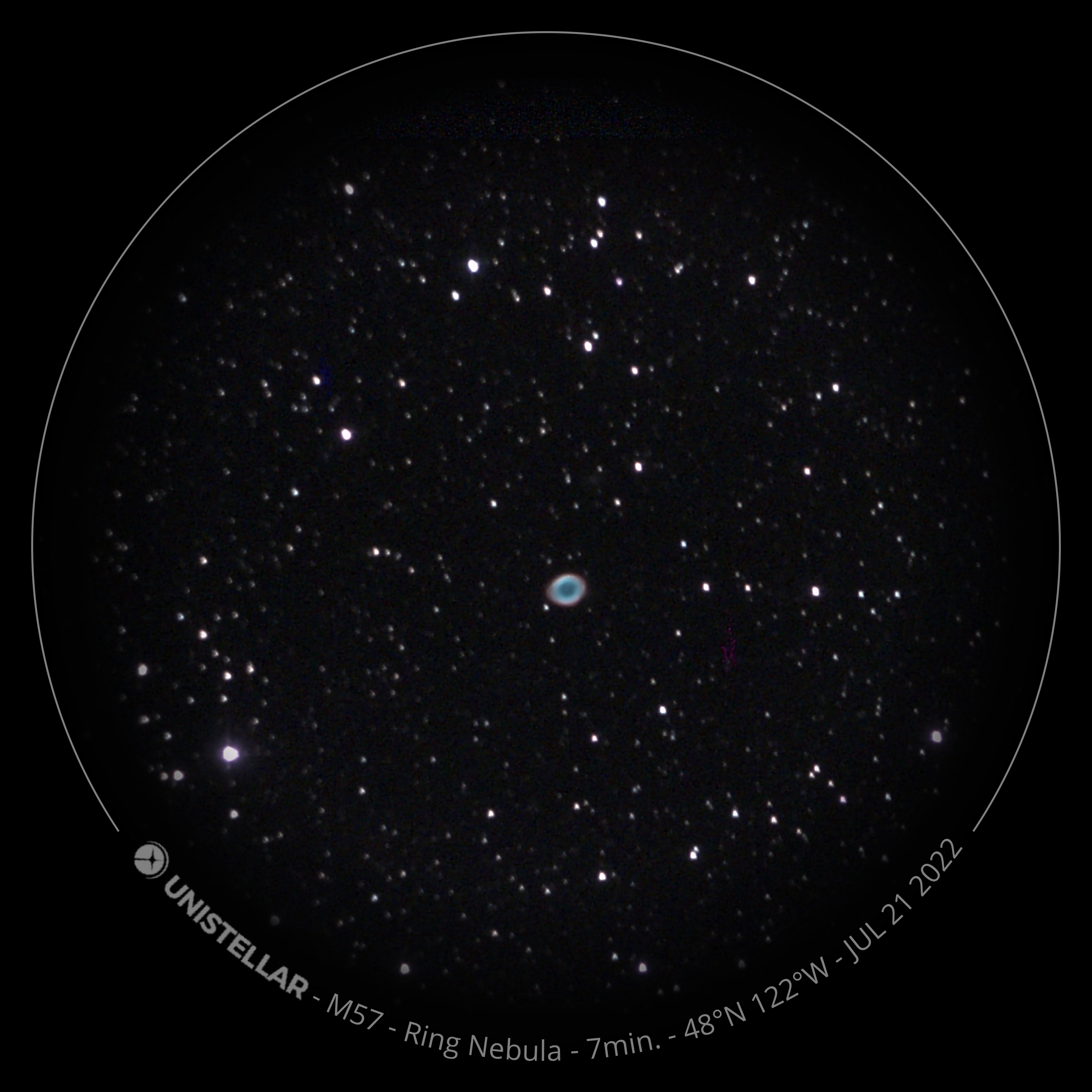 | 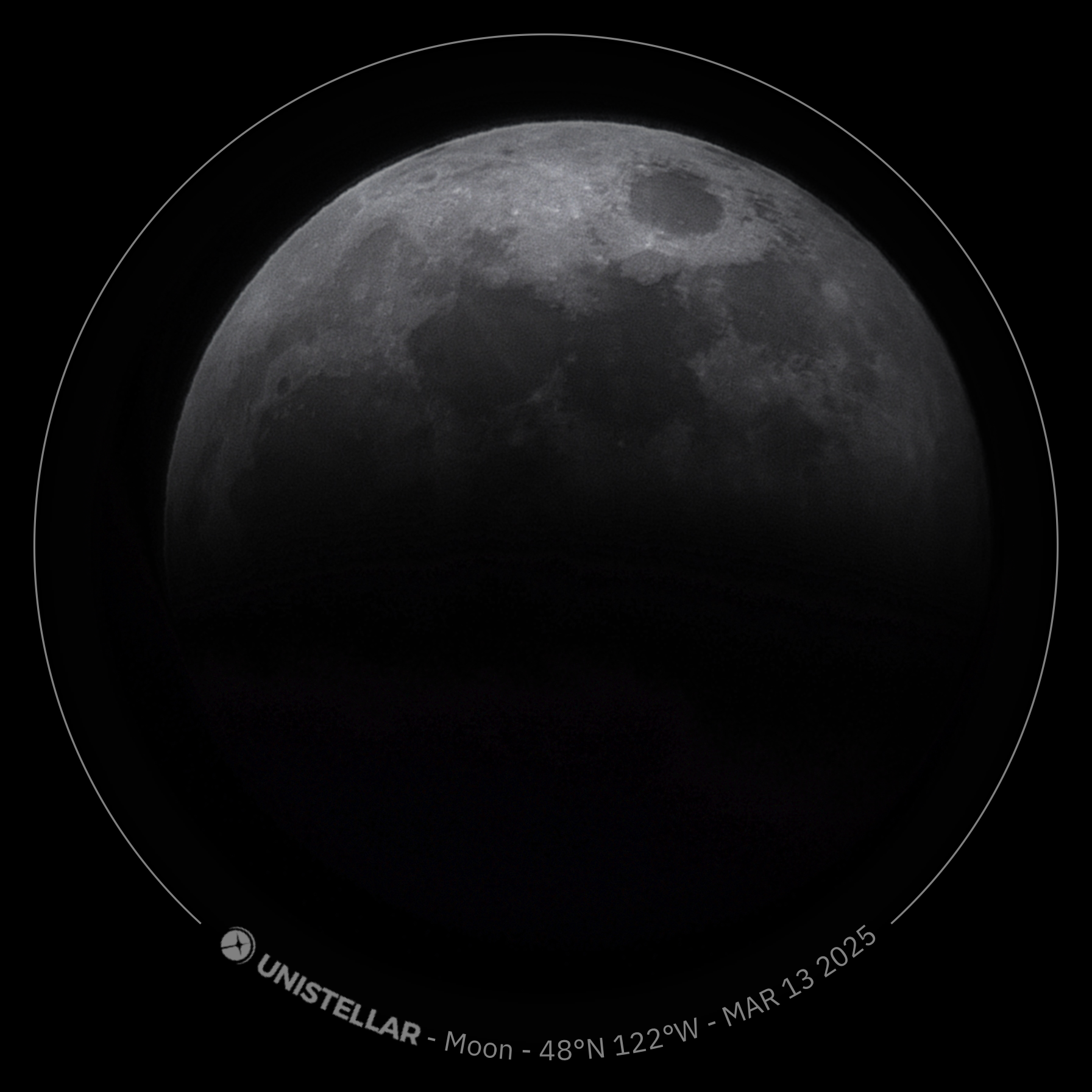 |
| The Dumbbell Nebula 8 x 5.7 arc-min | The Ring Nebula 1.4 x 1.0 arc-min | The Moon 31 arc-min |
For brightness, what your telescope can capture varies a lot based on your location. I’ve only really used the telescope from within the Seattle city limits, which is a poor environment from the standpoint of both (a) how close I am to sea level and therefore have a LOT of atmosphere to get through, and (b) the significant amount of light pollution. For reference, brightness is measured opposite to your expectations – the larger the number, the DIMMER it is. Bright stars like Polaris (the north star) is almost exactly 2, the brightest star (Sirius) is -1.46 (yes, negative, meaning really bright), and so on. Furthermore, it’s logarithmic, but not base-10 or base-e or anything – each step up is 2.5(ish) times dimmer than the last. So a brightness 3 star is 2.5 times dimmer than a brightness 2 star; a brightness 6 nebula is 2.5 times brighter than a 7. You can read up as to why – it involves the ancient Greeks and Victorian British astronomers, so it’s a bit of a convoluted tale.
Ultimately, my goal with the pictures below was to get a pretty good sense of the impacts of both brightness and size, and how much they matter for this particular telescope. What I learned was that brightness for nebula is based on their TOTAL brightness. That means that large nebula which I’ve tried to catch before (like the California Nebula or the North American Nebula or the Elephant Trunk Nebula), even though they have high brightness numbers, have very low brightness at any given pixel. So even with long dwell times, in a light-polluted environment, you’re going to lose a lot of the details at the scales I’m trying to observe with this telescope.
NGC 281 – Pacman Nebula
27m
2026-09-18
At an angular size around 35 arc-minutes, it’s sized nicely for the telescope. But at a brightness around 7.4, and given that size, only the brightest elements show up.
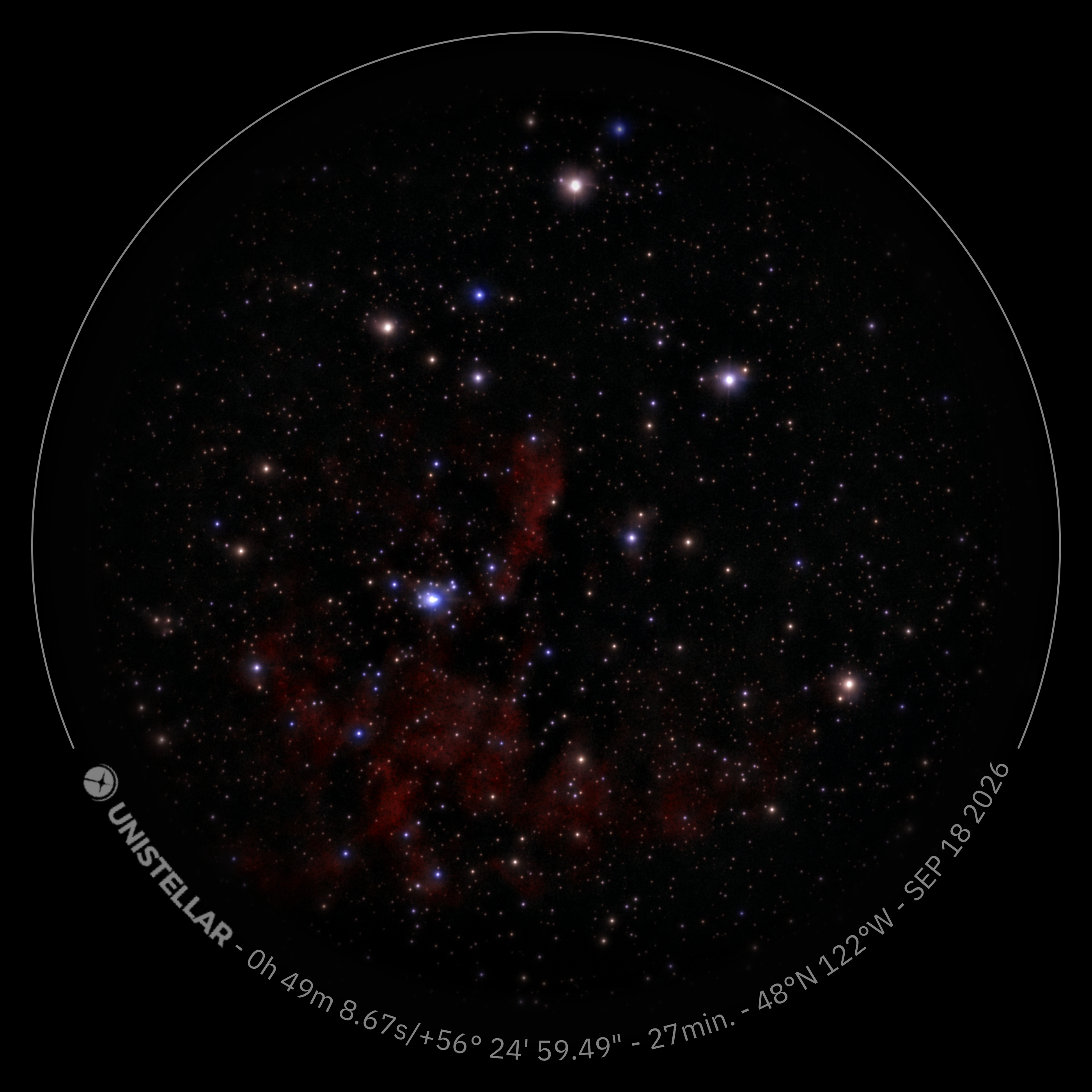
Compare the above to the Horsehead Nebula (6.8, or 1.75 times brighter) or the Lagoon Nebula (which varies from 4.6 to 6, so up to 13 times brighter), and you can see why there is so little detail in the Pacman. Even the Ring Nebula has a much lower brightness (8.8), but since it’s so small, it shows up quite distinctly because the brightness is so much more concentrated.
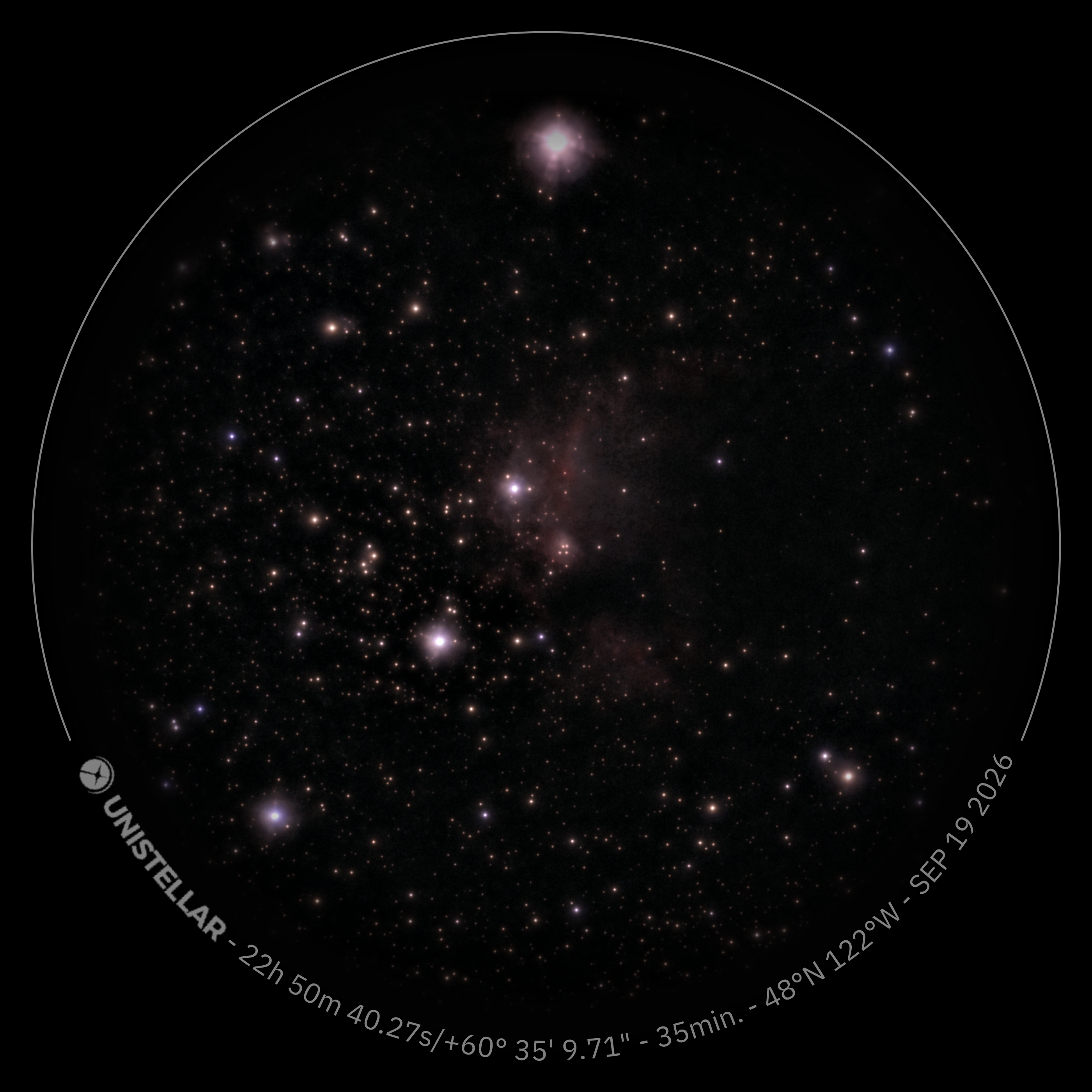
Caldwell 9 – Cave Nebula
35m
2026-09-19
At a brightness of 7.7, this is one of the dimmest objects I can observe, and at 50 arc-minutes across, it’s extremely diffuse. This might be worth revisiting in a remote location with low light pollution.
NGC 7380 – Wizard Nebula
35m
2026-09-19
At a max brightness of 7.2, you can make out some of the brighter elements, but miss a lot of the detail. Its size of 25 arc-minutes make it almost ideal, though. Probably worth revisiting in a low-light area.
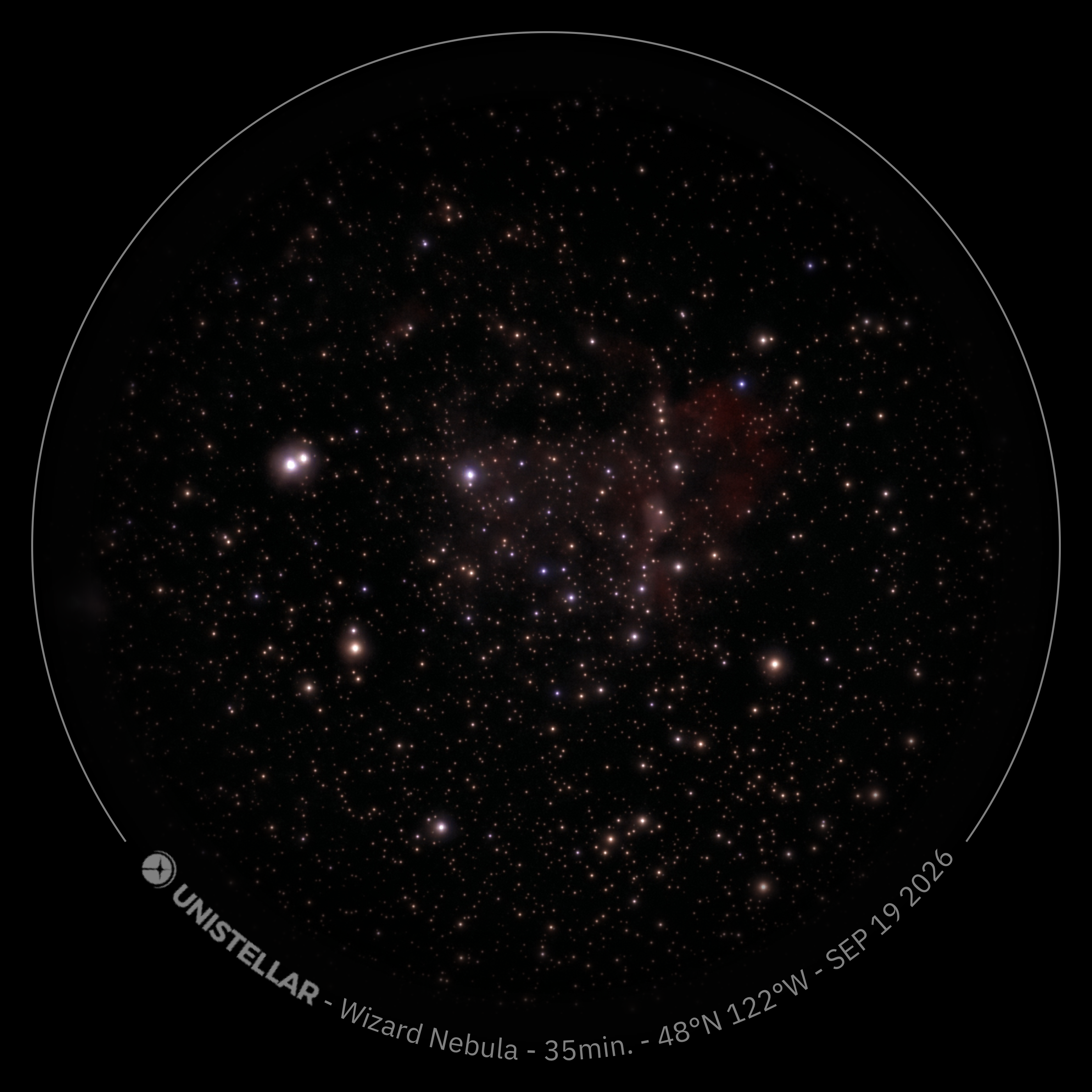
Another example where size (25 arc-minutes) and magnitude (7.2) interact, so that the actual brightness at any given point is pretty low.
IC 5146 – Cocoon Nebula
29m
2026-09-19
I like this one, because even though the brightness is only 7.2, it’s consistently bright enough to make out a lot of the detail. At 12 arc-minutes across, it’s a great target for the eVscope, too.
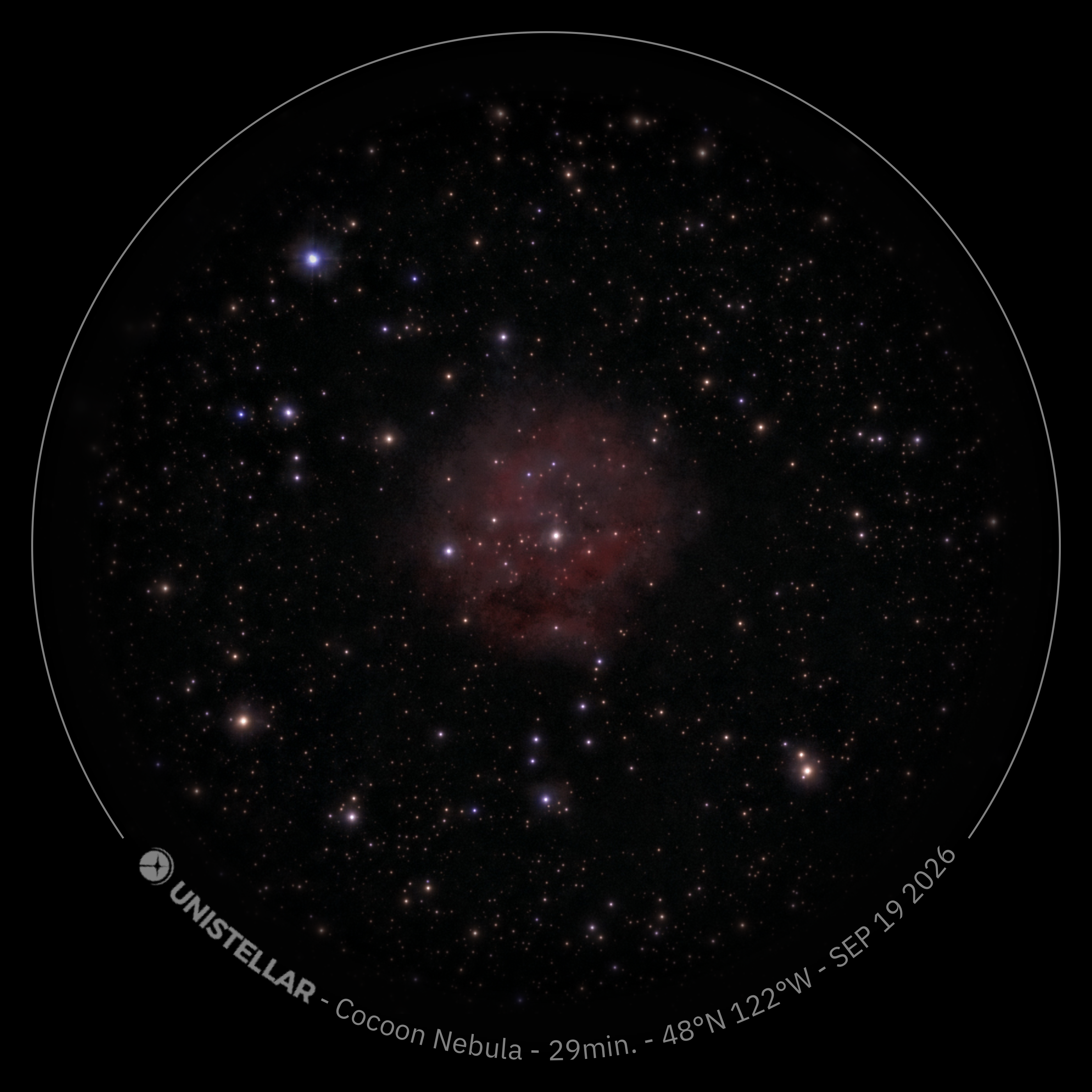
A perfect example: compare how bright the Cocoon Nebula is to the Wizard Nebula – they’re the same numeric brightness, but since the Cocoon is less than half the size of the Wizard, it’s brighter at any given point.
Discover more from Space on the back porch
Subscribe to get the latest posts sent to your email.

